Black metal and churches burnings are headlines once again, making for one of the more unsettling aspects of 2019 thus far. February of this year witnessed the release of
Lords of Chaos, a fictionalized account of the rise of the pioneering
black metal band
Mayhem. By April, a budding black metal musician by the name of Holden Matthews was arrested for setting fire to three
historic black churches in the state of Louisiana. Of course, Louisiana has its own dark history of black churches being burned. But churches burnings have very much became one of the founding myths of the black metal community.
This too traces back to Mayhem. The group had been founded in 1984. Throughout its initial run (until 1993), the driving force had been
Øystein Aarseth, who went by the name of Euronymous. By the early 1990s, the band had generated much hype around itself despite having only issued a handful of demos, bootlegs, and one EP. Their proper debut album wouldn't even be issued until 1994, after the first incarnation of the band was defunct.
Despite this, band members were largely able to focus on the group full time without being burdened with holding down a job. Euronymous was even able to procure his own record store in 1991,
Helvete (which means "hell" in Norwegian), which generated little to no income, but which served as a rallying point for the emerging Norwegian black metal scene. How exactly Mayhem was able to establish a reputation within the metal community and financially support themselves with so little output from the band (which rarely played live either) is one of the more curious aspects of their saga that has been little explored.
 |
| Helvete, which since become something of a shrine for black metallers |
According to
Dayal Patterson's
Black Metal: Evolution of the Cult, at least some of the funding for Helvete came from Euronymous' parents, of whom few details are available on. Presumably, they also helped financially support Euronymous during his time with Mayhem in addition to the record label he launched around the time of opening Helvete. Another future Mayhem member,
Varg Vikernes (of which much more will be said below), also appears to have come from a well-to-do family. Lena Bore, Vikernes' mother, reportedly gave
$20,000 to a neo-Nazi clique in 1997 to break Varg out of prison after he was convicted of murdering Euronymous.
But what of the other band members and hanger-ons? In Patterson's work, it is hinted that some supported themselves through various illicit acts, most notably selling drugs and firearms. But this may not have been the case in the early days. Many of the participants in the early scene are described as coming from solid middle class background, but even the middle class of the 1990s would have struggled to come up with $20, 000. On the whole, one is left with the impression that there was some real money backing up the early scene, though naturally few researchers have explored this angle.
The band's reputation is a bit harder to pin down. Certainly, the shock factor was a big part of it. In 1991,
Per "Dead" Ohlin, one of the band's early singers, committed suicide in 1991 at Euronymous' house. Euronymous did not immediately report the suicide to the police, but rather took pictures of Dead's corpse and collected pieces of his skull, which were later used to fashion necklaces with. One of these pictures was later used on the cover of the infamous bootleg live album
Dawn of the Black Hearts.
 |
| Dead (left) and Euronymous (right) |
Needless to say, this was the type of thing that draws attention. Still,
Black Hearts was not released until 1995, well after the band had become legends in the metal community. Sure, rumors of these types of activities were making the rounds in said community years before, but would this have been enough to establish Mayhem as a pivotal act with so little actual output?
The Inner Circle
Regardless, things took a truly radical turn in the aftermath of Dead's death. When Mayhem had first been founded in the 1980s, Euronymous and his cohorts approached their pioneering brand of black metal with tongue firmly in cheek. There was a sense of humor to the whole thing, in other words. But by the early 1990s, Euronymous appears to have firmly bought into what he was preaching. His philosophy has been described as "nihilistic hatred, colored by the brooding, depressive morbidity often associated with the negative side of the Scandinavian psyche" (
Black Sun, Nicholas Goodrick-Clarke, pg. 204). Satanism had long played a role in this scene as well, but solely for the shock value during the 1980s. But by 1992, Euronymous became very serious about creating a Satanic underground. Fortunately, several of the more extreme denzies of Helvete found a certain appeal in this vision.
"Well he was perhaps exaggerating his own importance for dramatic effect, there's no doubt that Euronymous played a major role in setting the scene for the culture of destruction taking place across Norway. The 'militant people' he spoke of – along with some aware but uninvolved in their activities – would become known as the Inner Circle, Black Circle, or Black Metal Mafia, though more recent statements from those involved highlight that this was not as formal or organized a group as such phrases might suggest. Nonetheless, black metal's anti-Christian/Satanic ethos had, for the first time, been turned into significant direct action, and activities such as grave desecrations and church arson became relatively common.
"Pinning down exactly what inspired the situation isn't easy, and it's important to note that the majority of those involved came from untroubled middle-class backgrounds and weren't involved in other illegal activity. With a few exceptions, drugs were only notable in the scene by their absence, and though drinking with some, it was not widespread at that time. Some members of the circle, such as Mortiis and Vikernes, didn't drink or use drugs, and the use of intoxicants was criticized by several bands in interviews. Though certainly not true today, the Norwegian scene of that period could actually be quite militant and even puritanical, especially compared to most other youth music cultures, not least within metal itself."
(Black Metal: Evolution of the Cult, Dayal Patterson. pg. 161)
Patterson goes on to note that quite a cultish atmosphere grew out of this scene:
"Undoubtedly, there was more at work behind the arsons than simply an ideological opposition to the church. There was, for a start, a somewhat cultish atmosphere, wherein young participants (mostly those carrying out these activities were in their late teens) wished to be accepted within the scene by older members, such as Euronymous. And a culture had been created by charismatic individual such as Dead, Euronymous, and Vikernes, that celebrated evil, hate, misanthropy, and Satanism.
"Interviews of the time saw bands attempting to break every taboo still standing, glorify murder, torture, suicide, arson, and more, often tying this to an overtly spiritual, even supernatural, theme, with frequent references to the devil, spirits, hell, and the like. At the same time, music and art were being created that far surpassed what had come before – recordings whose timelessness has been proved by their enduring popularity. For those swept up in all this, the lines between everyday reality, art, ideology, and the glorious melodrama of black metal were blurred in what must have been an intoxicating mix."
(ibid, pg. 164)
Perhaps "
psychodrama" would be a more apt description of what the Norwegian scene had unleashed. Curiously, this militant approach to black metal began to spread throughout Norway, creating local scenes that had no initial links to the
Oslo-based scene of Mayhem. One especially notorious scene was the one that developed around the city of
Kristiansand. This scene spawned musicians such as
Terje Vik Schei (who performed under the pseudonym Tchort, a Slavic word for devil), who would go onto to work with such acts as
Emperor,
Satyricon, and
Carpathian Forest.
"As Terje confirms, the Kristiansand scene was notably extreme even by the standards of the time, with members attacking Christians in the street with knives in the middle of the day. Going some way beyond mere anti-Christian ideology or even straightforward antisocial behavior, these activities were entrenched in the destructive Satanic culture similar to the one that had grown up in Oslo. Like Mortiis (whom he would replace in Emperor), Terje admits a certain 'saturation' of extreme ideas. Even for Terje himself – no longer a Satanist and now married with children – this period is quite surreal to look back upon.
" 'I have to force myself in order to recall these events,' he admits. 'The actions were extreme, but so were we all at that time. Living off human blood, decorating your flat with tombstones, animal carcasses, digging up graves and shit, does something to you, and what is considered extreme didn't seem so extreme back then. Again, it was more about the atmosphere, the emotions and feelings and pushing our limits that led to stuff like animal sacrifice, drinking blood, etc. We didn't see this as part of the music scene we now "belonged" to, but as part of the life situation we were experimenting with. We had some books and ideas on how rituals were performed, but we followed our own instincts – or lack of them – more than anything else. I remember that I passed out on the street on one occasion as I had been living off animal blood solely for quite some time.' "
(Black Metal: Evolution of the Cult, Dayal Patterson, pg. 166)
 |
| Tchort |
Charming. Later, these Kristiansand lads would make the pilgrimage to Oslo where they encountered Euronymous in all his glory. Reportedly, he tried to recruit them as the "muscle" for some of the projects then being discussed among the Inner Circle.
Enter Varg
Easily the most notorious member of the Inner Circle, and a pivot figure in launching the church burning spree that made the scene infamous, was Varg Vikernes. After playing in several
death metal outfits, Varg founded
Burzum in 1991, a black metal band in which he was the only member. Euronymous signed Burzum to his fledgling record label, Deathlike Silence Productions. Vikernes later joined Mayhem as their bassist in 1992. Vikernes' arrival at the Oslo scene is generally credited with unleashing the wave criminality that followed.
"... Having introduced a devil-worshiping called in the Norwegian black metal, Euronymous and Vikernes began to proclaim their readiness to commit outrages. On 6 June 1992 the beautiful old wooden stave church of Fantoft, one of Norway's architectural treasures dating from the twelfth century, was burned to the ground by arson. By January 1993, fire attacks occurred on at least seven other major Norwegian stave churches. Vikernes was subsequently convicted of the murder of Euronymous in August 1993 and of three of the church arson; he was sentenced to twenty-one years in jail. Sensational publicity during the trial period guaranteed Vikernes the media role of an arch-satanist."
(Black Sun, Nicholas Goodrick-Clark, pg. 204)
Euronymous more accurately deserves the credit for the Satanic cult, as he had been working towards such a thing well before Vikernes enjoyed the scene. What Vikernes really deserves credit for, in addition to turning Euronymous' fantasies into action, was the introduction of far right politics into the scene. Reportedly a former skinhead, Vikernes would become deeply infatuated with Nazism and other extreme right ideologies during his incarceration.
"While in jail, Vikernes began to formulate his nationalist heathen ideology using materials from Norse mythology combined with racism and occult National Socialism. These essays were published in various underground publications and in Filosofem, a neo-Nazi magazine published by Vidar von Herske, another member of Burzum, who migrated to France. Vikernes' articles typically revolved around esoteric interpretations of myths in the Edda, with discussions of Odin, his magical ring, ravens and wolves. Vikernes identified himself with Wotan or Odin: 'I am his flesh and blood, his soul and spirit; for I am his posterity and the archetypes in our race are his.' Other articles focused on Norse cosmology and magical practices. With his increasing racial nationalism, Vikernes sees himself as a successor to Vidkun Quisling, the Norwegian political leader who headed the collaborationist government during the Nazi occupation of the Second World War. In particular, Vikernes is interested in Quisling's mystical doctrine of 'Universalism,' which combines pantheism with a Nietzschean will to power. He has also written a book Vargsmal, underlining his role as chieftain of his Norwegian Heathen Front."
(ibid, pgs. 204-205)
 |
| Varg |
Curiously, one of the leading figures in creating the mythos surrounding the Norwegian black metal scene also has extensive links to far right politics. This would be none other than
Michael Moynihan, the co-author of
Lords of Chaos. As
Lords was for years the chief source of information Americans had on black metal (its biggest market being the US), Moynihan has played an enormous role in how the genre is perceived here. As such, Moynihan has been accused of
exaggerating the fascist tendencies within the movement. And generally speaking, it does not appear that extreme right politics had a significant influence on black metal in the early days. Euronymous had in fact long identified with Communism, for instance.
 |
| Moynihan |
Still, there's no question that a far right variety has became firmly entrenched within the genre --consider, for instance, the rise of
National Socialist black metal (NSBM). In recent years, scholars have attributed these developments to
Moynihan himself and how he framed black metal in
Lords.
The Curious Associates of Mr. Moynihan
This would hardly be the first time Moynihan has attempted to launch a far right movement. In 1989, he joined a curious entity known as the Abraxas Foundation. Founded in 1984 by industrial musician (and fascist sympathizer)
Boyd Rice, Abraxas has been described as a "social Darwinist think tank." Other figures linked to Abraxas have included
Adam Parfrey, the legendary founder of
Feral House, and
Zeena LaVey, the daughter of
Church of Satan (CoS) founder
Anton. It probably goes without saying, but Abraxas maintained links with the CoS.
It also forged ties with cult leader
Charles Manson at some point during the 1980s as well. It was through Manson that Moynihan was introduced to
James Mason, the head of the
Universal Order (which Manson had provided the name for). Mason was a longtime far right activist who had joined
George Lincoln Rockwell's
American Nazi Party in 1966 while still a minor. A decade later, Mason joined the more militant
National Socialist Liberation Front (NSLF) and began editing a publication known as
Siege. There, he advocated urban warfare and cultish murders as to destabilize the system. Eventually, Moynihan collected
these writings into a book he published, which was also titled
Siege. Moynihan's publication of
Siege would become a cult classic among neo-Nazis and ultimately spawn more militant groups such as the
Atomwaffen Division, which has recently be linked to
several murders across three states.
 |
| James Mason |
Mason is not Moynihan's only link to the old American Nazi Party either. Another organization Moynihan has been affiliated with is the
Asatru Alliance (AA), an "Old Norse and Germanic religion" movement that grew out of 1960s Norse revival. The Norse revival, in turn, has long been linked to the far right in these United States.
"... Odinism began its modern career with the establishment of the Odinist Fellowship in 1969 by Else Christensen. Born at Esbjerg on the Danish West Coast in 1913, Else Oscher was involved in revolutionary unionism and politics in Copenhagen during the 1930s. She was eventually attracted to the left-wing Strasserite wing of the emerging Danish National Socialist Worker's Party, and in 1937 married Alex Christensen, who had served as a senior aide to the party leader later ousted in 1933. Following the Nazi occupation of Denmark in 1940, Alex was briefly imprisoned as a dissident. In 1951 the Christensens emigrated to Canada, where they settled in Toronto. Else Christensen's interest in racial radicalism brought her into contact with Willis Carto, a leading figure of the American far right, and James K. Warner, New York organizer of Rockwell's American Nazi Party. Carto introduced her to the writings of Francis Parker Yockey, Oswald Spengler's American eulogist and author of Imperium. Abandoning the idea of using Odinism as the religious counterpart of National Socialism in America, Warner gave Christensen his Norse material, which included the writings of Alexander Rud Mills."
(Black Sun, Nicholas Goodrick-Clarke, pg. 259)
According to the great William Turner in
Power on the Right, the above-mentioned Rockwell lieutenant James K. Warner had relocated to Los Angeles in 1966 to establish what was described as the "Odinist Religion and Nordic Faith Movement," of which he was the high priest of. Warner would continue promoting Odinism in LA until the late 1960s, at which point he turned his material over to Christensen and embraced
Christian Identity theology.
Nor is Warner the only connection the American Odinist movement has to the American Nazi Party. During the 1970s, two Arizona-based ANP members, "Valgard" (Michael) Murray and Elton Hall, would join Christensen's Odinist Fellowship. Murray would eventually become the vice-president of the group and go on to found the AA in 1987. Hence, the ANP has longstanding ties to the American Odinist movement.
Another crucial figure in the AA was Robert Nicholas Taylor. Prior to hooking up with the AA, Taylor had been deeply involved with the
Minutemen, one of the earliest post-WWII far right militias. The Minutemen had many interesting connections, including the
US intelligence community, noted before
here. Taylor was allegedly the
"director of national intelligence" for the Minutemen and boasted of setting up "the first guerrilla training schools ever to exist in the United States."
 |
| Minutemen "promotion" material |
On the whole, Moynihan appears to have had extensive links with especially militant sections of the far right. As such, his fixation on Varg Vikernes and the fascist aspects of black metal are most unsettling. While working on
Lords, did Moynihan see Varg and black metal as being capable of establishing the type of revolutionary movement that he appears to have been working towards for decades?
Bouchet and the Sith Lord
Moynihan was not the only far right activist to become smitten with Varg either. In France, he found a staunch supporter in the highly controversial figure of
Christian Bouchet. In recent years, Bouchet has gained something resembling respectability in French politics. In 2008,
he became a member of the
Front National (FN), the party of
Marine Le Pen. Since then, he has stood for election as an FN candidate in several contests, most recently in
Nantes, France's sixth largest city.
This is quite curious in light of Bouchet's longstanding interests in far right ideology and the occult. As to the former, Bouchet had been the head of the Radical Unity party. In 2002 one of its members,
Maxime Brunerie,
attempted to assassinate then-president
Jacques Chirac. The group was disbanded by the French government soon thereafter. Apparently this type of militancy did not dissuade the FN from embracing Bouchet.
Bouchet's occult interests are equally extreme. He is credited with being at the forefront of the rediscovery of
Francis Parker Yockey, an American far right philosopher recently embraced by the
alt-right. Yockey was hardly Bouchet's only point of reference, however.
"The link between the current Yockey revival and the occult is equally clear in the case of the French 'third-positionist' Christian Bouchet, who helped found a new European Liberation Front in homage to Yockey. Bouchet has been associated with the French branch of the Ordo Templi Orientis (OTO), and his occult journal is named Thelema in homage to Aleister Crowley. He is a leading figure in Nouvelle Resistance, whose journal Lutte du Peuple he also edits.
"... Bouchet... tried to turn the 'Satanic' or 'black metal' music scene in a fascist direction... Bouchet's group, Nouvelle Resistance, meanwhile, is behind the music fanzine called Napalm Rock. Napalm Rock has embraced a leading Norwegian black metal musician named Varg Vikernes..."
(Dreamer of the Day, Kevin Coogan, pg. 620)
 |
| Bouchet |
Bouchet has continued to defend Vikernes, who relocated to France after his incarceration, as
recently as 2013. Between Varg,
Crowley, and Yockey, Bouchet certainly has some curious occult influences. But for our purposes here, it is the origins of Bouchet's occult beliefs that are of greatest concern.
"... The national-revolutionary Bouchet was previously influenced by both Evola and Thiriart, and despite being very far from Marine Le Pen's alleged 'normalizing' line, he was still a FN candidates in the 2012 general elections and maintains a significant party role at the local level. A former member of Organisation Lutte du Peuple and Troisieme Voie (Third Way), and founder in 1991 of the (now disappeared) pan-European and national-revolutionary Nouvelle Resistance (New Resistance), this French activist has been constantly spreading the works of Evola, Mutti, Adinolfi, and many others..."
(Transnational Neofascism in France and Italy, Andrea Mammone, pgs. 223-224)
That would be
Julius Evola, the infamous Italian philosopher and occultist. In the twenty-first century, Evola is more influential than he has ever been. Most recently aspects of his ideology have been embraced by the
American alt-right, the
Greek Golden Dawn,
Russia's Alexander Dugin, and so many more. Indeed, it would seem that Evola has even managed to influence the architects of neo-fascist black metal. While Varg Vikernes apparently finds Evola's work at times to be too "
oriental oriented," he has none the less
recommended Evola's books to his fans. And then there's Moynihan, who has been at the forefront of the Evola revival. Moynihan founded the journal
Tyr to promote a brand of
Traditionalism inspired by Evola and has even
edited and published one of Evola's most influential works.
Notre Dame
Of course, it would be impossible to write about church burnings in 2019 without addressing
the fire that engulfed the
Notre Dame de Paris. While many individuals looking for occult significance in the fire have focused on
its connection to the
Knights Templar, there is a much more recent connection.
On May 21, 2013, the 78-year old
Dominique Venner strolled into the ancient cathedral. After laying a sealed envelope on the altar, he pulled a Belgian-made pistol from his pocket, placed the firearm in his mouth and pulled the trigger. When the contents of the note were read, in addition to a blog post the journalist and historian had written shortly before his death, it was revealed that his suicide was
in protest of the recent legalization of gay marriage.
To many Americans, this may have seemed quite a curious event. After all, France has quite the reputation for sexual liberation. And to further muddy the waters, Venner was an openly acknowledged pagan and had been for some time.
 |
| Venner |
How then did this state of affairs come about?
To be sure, Venner's journey to Notre Dame was a curious one. He had served as a paratrooper during the
Algerian conflict, which likely introduced him o far right politics. As Andrea Mammone notes in
Transnational Neofascism in France and Italy, something of a cult surrounded the elite paratroopers in France during the 1950s and these elite units would be at the forefront of the attempted coup against de Gaule in 1961. Later, they would serve as the backbone of the
Organisation Armee Secrete (OAS), a paramilitary organization links to numerous terrorist, including multiple on
de Gaulle's life.
Venner would sign up with the OAS shortly after the organization was founded and would end up serving 18 months in prison after he was captured. Upon his release in 1962, he would take a more intellectual approach to far right activism. He wrote a book,
Pour une critique positive (Towards a positive change), which some have described as the Right's
What Is to be Done?. Then, in 1963, he founded a movement known as European Action (EA), which also featured a journal of the same name. EA would feature many of the guiding lights of what became known as
Nouvelle Droite (ND ---New Right) in France. Among them was journalist and writer
Alain de Benoist, who would become one of the leading intellectuals of the French right in the post-war years. De Benoist founded the highly influential think tank known as
Groupement de recherche et d'études pour la civilisation européenne (GRECE), of which Venner was also a member. EA and GRECE would do much to provide academic respectability to far right activism from the 1970s on wards.
 |
| Alain de Benoist |
Both the EA and GRECE, in addition to the broader ND, were heavily influenced by the Traditionalism of Evola.
"Like the Italian theorist Gramsci, Evola was especially read among the followers of the ND. Setting aside some differences in the meaning of concepts such as traditionalism, Alain de Benoist, remarkably, pointed out the importance of the Evolian thinking for the Nouvelle Droite:
We think that some of Evola's criticisms in particular seem likely to inspire a reflection which pays attention to the evolution of modern world.... The Evolian critique of the nation state, for example, maintains a strong relevance in an era where the political entity, which is emblematic of modernity, appears every day a little more struck by impotence and obsolescence... Evola also had the great merit... to denounce any general conception of life or society based solely on economic terms strongly.... But ultimately, and as always with Evola, it is probably in the area of ethics which one can find his most inspiring considerations for our everyday thinking... In these pages, both men and women can take some lessons.
Some important and cross-national connective links may be observed between Evola's and de Benoist's intellectual and doctrinal productions along with the parallel apolitia and the criticism of the modern world, contemporary ideologies, and the Americanization of European societies. Similarities can, in fact, be found in a number of different domains. An example of this is the common Europeanism and the embracing of a post-national stance. Bar-On to find this as the 'dream of a pan-European empire': a kind of transnational place where the objective was to preserve a homogeneous European identity. As we know from the previous chapters, this 'Nation Europe' had fascinated part of the extreme right since 1945. However, this was also a spiritually defined and hierarchical Europe, and it represented another commonality between these ideologues. The state (and the community) itself had, in sum, to be possibly organized on sovereignty and a caste system (probably not on theories of mass democracies)...
"Also strong was the common attack on the West and the Judeo-Christian paradigm, which was also made through the promotion of pagan thinking. It is well-known that Evola was one of the precursors of this paganism, and that the ND borrowed a considerable amount from this doctrine, even if there were differences in tone and understanding of it. Unsurprisingly, the new rightist Editions Pardes had many contributions on the subject and on traditionalism, as well as some of Evola's manuscripts (such as Imperialisme paien). For Evola and de Benoist, paganism went along with a concept of humankind based on pre-Christian hierarchy, although also with an importance given to 'magic,' symbols, and the 'myth' perceived as moving forces."
(Transnational Fascism in France and Italy, Andrea Mammone, pgs. 169-170)
As such, it is all but certain the paganism of Venner was influenced to some degree by Evola. This would, in turn, explain Venner's objection to gay marriage. Needless to say, Evola was not especially impressed with homosexuality.
"Thus overall, when homosexuality is not 'natural' or else cannot be explained in terms of incomplete inborn forms of sexual development, it must have the character of a deviation, a vice, or a perversion. And if some instances of extreme erotic intensity in relations between homosexuals should be adduced, the explanation is to be sought in the possibility of the displacement of eros. Indeed, it is enough to go through any treatise on sexual psychopathology to see in how many unthinkable situations the erotic potential of a human being can be aroused, sometimes to the level of orgiastic frenzy (from fetishism even to animal sodomy and necrophilia). The same anomalous background could include the case of homosexuality, although the latter is much more frequent: a displaced eros for which a being of the same sex can service a simple, occasional cause or support, as in so many cases of psychopathy, although it must wholly lack every profound dimension and every meeting higher than experience because of the absence of the necessary ontological and metaphysical premises. As we shall see in certain aspects of sadism and masochism, it is possible to find elements that can be included in the deep structures of heterosexual erotics and that become perversions only when freed from limitations. No similar recognition can be given in respect to homosexuality."
(Eros and the Mysteries of Love, Julius Evola, pgs. 65-66)
Earlier in the same work, Evola linked the increase in homosexuality and what would now be considered transgenderism to the egalitarian nature of the West.
"... It may be that the governing power on which the sexual nature of a given individual depends (a nature that is truly male or truly female) may grow weak through neutralization, atrophy, or reduction of the latent state of the characteristics of the other sex, and this may lead to the activation and emergence of these recessive characteristics. And here the surroundings and the general atmosphere of society can play a not unimportant part. In a civilization where equality is the standard, were differences are not linked, where promiscuity is in favor, where the ancient idea of 'being true to oneself' means nothing anymore – in such a splintered and materialistic society, it is clear that the phenomenon of regression and homosexuality should be particularly welcome, and therefore it is in no way a surprise to see the alarming increase in homosexuality and the 'third sex' in the latest 'democratic' period, or an increase in sex changes to an extent unparalleled in other eras."
(ibid, pg. 64)
 |
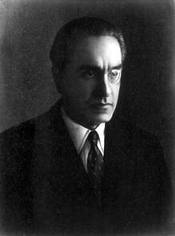
| Evola |
In this context, the increase in homosexuality and transgenderism could only be seen as further evidence of the West's decline as it moved further and further from "traditional" society. Specifically, as the distinction between the genders has declined, it is theoretically inevitable homosexuality and gender fluidity would become the norm. Surely, this is the context that fueled Venner's suicide.
Egregores
There is no question that Venner's suicide was a highly symbolic act, committed at an equally symbolic location. And in this context, I can not help but be reminded of the occult concept of
egregores. Egregores are defined as psychic entities composed of and influencing the thoughts of groups. They are collective entities, sometimes referred to as "thought forms," that can formed around nations, states, religions and sects, and draw power from the beliefs of the individuals who occupy these things. As such, egregores can be likened in a sense to the collective unconscious as they are the product a collective group mind. Egregores are sustained by belief, ritual, and sacrifice and are dependent upon the devotion of the group that gave it life.
As with humans, egregores can also die and be destroyed. An especially potent means of destruction can be achieved by fire.
"To remove oneself from the influence of an egregore, particularly a religious, esoteric, or even political one (especially when a ritualistic formula is actively present, such as in National Socialism, Communism, and any form of idolization of the leader or the particular creed or code), the objects connected with the organization or movement must be destroyed. Fire is the principal means of separating the energetic link and destroying it. This separation and destruction is on a personal level but can also be extended to the larger group as well.
"This is why occupying armies often destroyed the symbols of their defeated enemy. For example the revolutionaries in France in 1789, the Soviet Union to Nazi Germany in 1945, the Chinese Communists in Tibet in 1959, the period of the Cultural Revolution 1966 to 1976, and the destruction of monuments, texts, and places of worship by various Islamic fundamentalist paramilitary forces are among the most obvious examples in modern history. While the spiritual or intelligence aspects of the egregore will continue to live for a very long time period of time without a physical anchor, devotees, or rituals to feed it, its emotional or astral counterpart will not be able to sustain a presence in the physical world as a result of such acts of destruction."
(Egregores: The Occult Entities That Watch Over Humanity, Mark Stavish, pgs. 103-104)
In this context, the return of black metal-inspired church burnings to pop culture, the fire at Notre Dame and the numerous arsons committed at Christian sites that have characterized 2019 thus far can be seen as a full blown assault on Christianity by attacking this particular egregore where it is most vulnerable: its places of worship.
This may be driving the push by the neo-liberal elite to rebuild Notre Dame as "
secular shrine" that more accurately reflects modern France. While the idea of making Notre Dame more inclusive may be quite appealing to academics and capitalists, the fresh wave of
Yellow Vest protests that broke out
days after the fire does not indicate that the public is getting a warm, fuzzy feeling about it.
This researcher would suggest that, regardless of whether there was a plot or not behind the sudden fire (chalked up to a "
computer glitch"), powerful forces had already been set in motion years before the cathedral went up in flames. Egregores are born out of emotion energy. This energy can in turn be focused upon highly symbolic acts --such as a suicide in a symbolically loaded location.
Such a potent act would no doubt be seen as a sign of things to come. And it just so happens, a magical circle Evola would become affiliated with during the 1920s bore witness to such signs during the prior decade.
"Hence, some egregores may be reinvigorated even after centuries or millennia of disuse, which is a closely kept secret of operational magic. According to an article published in 1929 in an esoteric journal edited by Julius Evola... it was efforts to revive the egregore of the Roman Empire that led to the political ascendancy of Benito Mussolini. The initial signs were seen in 1913 and were fully realized in 1919...."
(Egregores: The Occult Entities That Watch Over Humanity, Mark Stavish, pg. 104)
Six years separated the early signs from the realization of the objective. Six years also separate Venner's suicide and the fire at Notre Dame. Naturally, the fire broke out of April 16, which also happens to Venner's birthday.
Powerful signs and portents, indeed. And further evidence that the neo-liberal elite are losing the plot.