Showing posts with label Fortean. Show all posts

Friday, March 15, 2024

The Fortean Mysteries in LA


It is my great pleasure to announce my upcoming appearance at Los Angeles' Philosophical Research Society --yes, the same outfit founded by Manly P. Hall. And I've got the perfect subject for this engagement: the original Fortean Society

While often overlooked, the Forteans had a considerable presence in Los Angeles. They rubbed elbows with early Hollywood and surrealist circles, providing an intriguing lineage to later movements such as the Discordians. But more importantly, they laid the foundation for the most esoteric interpretation of the UFO phenomena. 


And they did it nearly a year before the famous Kenneth Arnold sighting. It took almost a quarter century before folks like Jacques Vallee and John Keel embraced the metaphysical implications of the phenomena as the Forteans had. 

If you're in the LA area, please consider dropping by. I've got a great presentation planned and the venue is first rate. PRS is worth the price of admission alone, but you also get all kinds of Fortean LA madness. I call that a bargain. 

I'll be making the scene on April 24, 2024 --which is a Wednesday. The presentation starts at 7 pm pst. Tickets are available here.

Sunday, October 18, 2020

Bloody 37th


Hellier fans are no doubt anticipating the upcoming Penny Royal podcast. It's going to provide a much more in-depth account of the mysterious Somerset, KY that plays such a crucial role in the second season of Hellier. Satanic cults allegedly linked to the military and implicated in drug and sex trafficking are hardly the only curiosities that Somerset has witnessed over the years. Not by a long shot. 

As I'm involved in the Penny Royal project I'm not doubt biased in this regard. But the synchronicities are quite incredible, as I hope to illustrate in this post. One particular aspect of Somerset and Hellier that the show invoked was the location of either town upon the mysterious 37th parallel. In recent years, the 37th has developed a reputation as the "UFO Highway" or "Paranormal Highway" due to the staggering amount of high weirdness reported along it:

"Stretching from the Chesapeake Bay to Santa Cruz, CA, the 37th Parallel has been called the “UFO Highway” and the “Paranormal Highway.” From sea to shining sea, this line on the map is littered with histories of cattle mutilations, UFO sightings, reports of underground military bases, and ancient native sacred sites. The phenomena zone stretches about 70 miles either side of the 37th — roughly, the area between the 36th and 38th parallels, 150 miles of anomalous real estate."

Its not just high weirdness that has an uncanny ability of cropping up along the 37th, however. Indeed, there are some disturbing indications that something darker is at a play. Let's just consider a few of the other locations along the 37th parallel. 


In my beloved West Virginia, the 37th stretches through Mingo County. One local history dubbed this region one of "the bloodiest counties in America." It played a significant role in the infamous Hatfield-McCoy feud and the Battle of Matewan. The latter paved the way for the Battle of Blair Mountain, the nation's largest ever labor uprising and the largest armed insurrection since the Civil War. Mingo provided many of the miners who fought at Blair Mountain, which unfolded in neighboring Logan County. Naturally, Logan is also on the 37th. 

The kind of lawlessness that long characterized Mingo can be seen in a place like Dingess. Between 1900 and 1972, some seventeen local lawmen were murdered in addition to numerous other residents. In recent years, Mingo has been decimated by opioid abuse and resulting crime. More painkillers were shipped to this county than anywhere in the US, with just three pharmacies there receiving over 30 million opioid pain pills. It probably goes without saying, but this strongly indicates a massive drug ring was operating there well into the second decade of the twenty-first century. 

So yeah, that's Mingo. More on some of the strangeness in this area, including what appears to be a ritual murder committed during the early 1930s, can be found here


Lost Boys

What about sunny California? The 37th stretches through there and it's every bit as disturbing as the ghosts of Mingo. In particular, the 37th runs through the city of Santa Cruz, The beloved 1980s vampire flick The Lost Boys was set in Santa Clara, which the film proclaimed to be "the murder capital of the world." Santa Clara was actually a fictionalized version of Santa Cruz, which bulked at the murder capital designation. While an exaggeration, it wasn't that far from the mark, at least during the late 1960s and 1970s. 

"To briefly recap, no fewer than six serial killers/mass murderers – Charles Manson, Stanley Baker, Edmund Kemper, Herbert Mullen, John Lindsey Frazier, and the Zodiac – were all spawned from the Santa Cruz/San Francisco metropolitan area in the span of just over four years, at a time when 'serial killers' were a rare enough phenomenon that they hadn't yet acquired a name. And another serial killer was said to be at work not far away during the same timeframe. As Bundy chronicler Richard Larson recounts, the bodies of at least fourteen young women and girls were found, nude and with their belongings missing, in Northern California between December 1969 and December 1973. In the immediate vicinity of each of the bodies 'was found an elaborate witchcraft symbol of twigs and rocks.' Remarkably enough, the crimes collectively attributed to these men did not even account for all the ritualized homicides that occurred in the Bay Area during that time. For example, the murder of Fred Bennett, the captain of the Oakland chapter of the Black Panthers whose mutilated remains were found scattered in the Santa Cruz hills, was never solved. And many of the young students who were reported missing from local campuses were never found, either dead or alive, and were therefore never listed as homicide victims.

"On December 12, 1974, the birthday of Aleister Crowley, student Arliss Perry was brutally murdered and left on display in the Stanford Memorial Church on the campus of Stanford University, nestled in the shadows of the Santa Cruz Mountains. Perry was left lying on her back, with her head toward the altar and her legs spread wide. She was nude from the waist down and an altar candle protruded from her vagina; another altar candle was wedged between her exposed breast. Her jeans had been neatly arranged in an inverted V-shape placed across her splayed legs, forming the Masonic symbol of the compass on the square..."

(Programmed to Kill: The Politics of Serial Murder, David McGowan, pgs. 136-137)

In addition to the serial killers, there were also a litany of cults active in the Bay area (which is largely located along the 37th) during this time. There was of course the Manson family and the Process Church of the Final Judgment. Also present were Jim JonesPeoples Temple and a rogue branch of the Nation of Islam implicated in the Zebra murders. The Church of Satan was founded and long headquartered in San Francisco while Colonel Michael Aquino pimped the breakaway Temple of Set while stationed at the Presidio during the 1980s. Yes, the same Presidio (which is certainly located along the 37th) that turned up in the daycare abuse of children during the 1980s. 

Finally, there were the radical political groups --the Symbionese Liberation Army (SLA) and the Weather Underground had a significant presence the Bay area, while Oakland housed one of the more storied chapters of the Black Panther Party. Years ago I did an extensive series of the Zebra killings and a lot of these other curiosities in the Bay area during that era, which can be found here

Interestingly, the campuses of both Stanford and SRI (which were united until 1969) are located along the 37th parallel. Those of you who caught my Strange Realities Con presentation will recognize the significance of this. For those of you who did not, it revolved around those two campuses embarking upon the most epic experimentation in human consciousness ever. This is a topic that I will be exploring in much greater depth during the next year. I may drop a few more hints when I appear on Skeptico in a few weeks, so stay tuned on that front. 


Mormon Best Friends

For now, let us turn our attention to another super creepy locale off the 37th: Colorado City, AZ. Colorado City, former Short Creek, is the home base of one of the most infamous "fundamentalist" Mormon sects, the aptly named Fundamentalist Church of Jesus Christ of Latter-Day Saints (FLDS). In recent years, this cult has been taken over by Warren Jeffs, whose currently runs this outfit from prison. He's serving life for child sexual assault. 

Jeffs

For decades, the FLDS has ruled Colorado City as a full blown theocracy, controlling all aspects of the local government and police. Jeffs himself "married" multiple girls while still teenagers, including one as young as 12. He kept a series of safehouses across the American West where he could entertain these "wives" and other such girls.  

Interestingly, about 40 minutes away is Kanab, UT, the longtime headquarters of the Best Friends Animal Society (BFAS). While now largely seen in a positive light due to its association with the popular show DogTown, the BFAS actually has its origins in the Process Church of the Final Judgment. It arrived in Kanab in 1984, while working under the name of the Foundation Faith of the Millennium. This was a Christian fundie rebranding the Process undertook to cash-in on the Jesus Freak movement during the 1970s. 

As longtime readers of this blog are well aware, this researcher is very dubious in regards to the longstanding allegations surrounding the Process. Still, one of the most disturbing and widely acknowledged aspects of the Process is especially relevant here: the abuse and disappearance of various children under the care of the Process. In particular, what became of many of the children sired by Process members still remains a mystery, many having disappeared off the face of the earth. This is especially ominous in light of allegations that a fundamentalist Mormon sect in Mexico was providing the NXIVM cult with teenage girls

I should emphasize that there is no direct evidence of a connection with these Mexican Mormon fundamentalists (who are related to the infamous LeBaron family, a cult in their own right) and Jeffs' outfit. What is curious is the disturbing habit some fundamentalist Mormon sects have of "losing" the children they produce. The Process had a similar problem, which is why its so interesting that its successor ended up within close proximity one of the most storied fundamentalist Mormon sites in these United States.

Colorado City was known for its polygamist ways for decades. There's no way the Process/Best Friends were unaware of what their neighbors were up to when they relocated there. And conversely, with the kind of control the FLDS exorcised over Colorado City and the surrounding area, its unlikely they were not aware of the origins of the Best Friends when they relocated there either. But apparently both were okay with one another, which isn't especially surprising. Birds of a feather and all. 

One of the Hellier team first being told about the alleged Satanic cults in Somerset

 
Throughout this scene he's wearing a Best Friends Animal Society T-shirt

Closing Thoughts

As our brief examination of the 37th parallel has hopefully demonstrated, high weirdness was hardly the only thing unfolding along that thread. In the cases of Mingo County, WV; Santa Cruz/San Fran; and Colorado City/Kanab; there are some disturbing patterns present. On the one hand, regions along the 37th parallel appear to be lightening rods for violent and bizarre crime, addiction, and mental instability. As such, it's hardly surprising that many of these same regions also feature staggering amounts of radicals, serial killers, and cults. 

Whether some type of Byzantine conspiracy is at play is highly debatable. But certainly these are some odd and disturbing synchronicities none the less. Synchomystics, Ufologists, occultists and other chronicler of high weirdness tend to focus on Fortean phenomena that congregate in certain geographical regions. But as this small sample seems to indicate, certain regions can also have tragic effects on the people who inhabit them. 

And Somerset, KY, and the broader Pike County appears to attract the same type of sinister forces. Be sure to tune on October 21st for the launch of Penny Royal to see how this enigmatic region of Kentucky measures up. And with that, I'll be signing off for now. As always dear readers, stay tuned till next time.

Sunday, January 29, 2017

Fringe: The Strange and Terrible History of the Far Right and High Weirdness Part VI


Welcome to the sixth installment in my examination of the bizarre relationship the far right have to high weirdness. Over the course this series the far right has been considered through the prism of various NPOs and think tanks linked to the military-industrial complex such as the Committee on the Present Danger (CPD) Mach I and the American Security Council (ASC). As for high weirdness, I am using this as something of a catch all for a host of arcane topics such as UFOs, psi, psychedelics, the occult and human potential.

The first part of this series considered the curious Sikh temple shooting of 2012 and the possible deep political implications behind it in addition to the divide between the traditional conservative establishment, personified by organizations such as the Council on Foreign Relations (CFR) and other such long time bugaboos of the conspiratorial right, and their far right counterparts. With the second installment I moved along to the origins of the military-industrial complex. Therein we found that it was largely the creation of a cabal of middle managers linked to Secretary of War (and Bonesman) Henry Stimson and the emerging technocrat class, personified by the enigmatic Vannevar Bush.

Vannevar Bush
Part three considered the linkage of the far right to the military industrial complex. This was largely achieved by General Douglas MacArthur and the network of military officers that had served under/with MacArthur in the Pacific Theater of World War II and/or Korea. I also began to consider the extensive ties the MacArthur clique had to Roswell. With the four installment I continued in this vein, exploring the claims of Colonel Philip J. Corso presented in The Day After Roswell and weighed in on what was really behind the Roswell incident (or Working, as the great Christopher Knowles dubbed it).

Many of the MacArthur men played a key role in establishing the American Security Council, the premier think tank for the military-industrial complex throughout the Cold War. The ASC was also a vast private intelligence network linked to a host of outrages, including blacklisting, drugs and arms trafficking, terrorism, death squads, the Kennedy assassination (addressed here), Watergate (noted here), Iran-Contra and possibly even Project ARTICHOKE (noted before here and here). For those of you unfamiliar with the ASC, this blog has chronicled in depth before here. The great Institute for the Study of Globalization and Covert Politics has an excellent article on the ASC as well.

Unsurprisingly, the ASC has many little-remarked-upon ties to the UFO question as well. In part five I began to consider these, noting the extensive, decades-spanning overlap between the ASC and National Investigations Committee on Aerial Phenomena (NICAP), the premier UFO investigation network from the late 1950s until its dissolution in 1980.


Hangar 18 and Blue Book

After addressing the ASC's ties to NICAP I would now like to consider a few odds and sods related to UFOlogy where the ASC also crops up during the late 1960s and early 1970s. One of the more curious connections is in relation to the mysterious Hangar 18, reputedly the location of the debris recovered from the Roswell crash.

The origins of the Hangar 18 rumors appear to originate with the highly controversial Behind the Flying Saucers by Frank Scully. Despite being widely viewed as a hoax now, Scully's work originally linked alien bodies and recovered technology to Wright Patterson Air Force Base, reputedly home of Hangar 18. It was not until 1974, however, that Hangar 18 appears to have formally entered the lexicon. This was thanks to the claims of University of Florida professor (and former author for Weird Tales) named Robert Spencer Carr.

Robert Spencer Carr
Carr, who almost entirely based his allegations upon Scully's dubious claims, has alleged to have been a security guard at Wright Patterson for a varying degree of time. It was here that he apparently first learned of Hangar 18.

On the whole, Carr was a curious figure. He moved to the Soviet Union in 1932, apparently to take part in the "Utopian society" Stalin was creating. Disillusionment set in, and he returned to these United States in 1938. Despite having spent over half a decade living in the Soviet Union, he does not appear to have ever elicited serious scrutiny from the national security state. Given the political climate in these United States at the onset of the Cold War when McCarthyism was at its peak, this could indicate that Carr was carrying out some state-sanctioned function in the USSR. Certainly many lives were ruined during this era over far less dubious connections to the Soviets than spending six years in the USSR.

Carr would largely abandon his writing career in the late 1940s. He apparently took up UFOlogy around this time, but did not start making his extraordinary claims until the 1970s. In addition to spreading the Hangar 18 rumors, he would also play a key role in what would become the "alien autopsy" hoax many years later.


The ASC was not far behind Carr. It would appear that by 1975 at least one ASC luminary was dropping hints concerning Hangar 18 of his own.
"... Senator Barry Goldwater, former chairman of the Senate Intelligence Committee, visited Wright-Patterson hoping to get permission from General Curtis LeMay to examine the UFO evidence stored there, but was refused. Copies of letters from Goldwater to various researchers (in my files) are worth quoting here. In a letter to Shlomo Arnon on 28th of March 1975, he wrote:
The subject of UFOs is one that has interested me for some long time. About ten or twelve years ago I made an effort to find out what was in the building at Wright-Patterson Air Force Base where the information is stored that has been collected by the Air Force, and I was understandably denied this request. It is still classified above Top Secret. I have, however, heard that there is a plan underway to release some, if not all, of this material in the near future. I'm just as anxious to see this material as you are, and I hope we will not have to wait much longer. [Emphasis added]
"On 11 April 1979 Goldwater wrote to Lee Graham. 'It is true I was denied access to a facility at Wright-Patterson,' he confirmed. 'Because I never got in, I can't tell you what was inside. We both know about the rumors.' The room that the Senator tried to visit is called the Blue Room, and according to my information it contains UFO artifacts, but not craft or bodies. In another letter to Lee Graham, dated 19 October 1981, Goldwater wrote:
First, let me tell you that I have long ago given up acquiring access to the so-called blue room at Wright-Patterson, as I have had one long string of denials from chief after chief, so I have given up.
In answer to your question, one is essentially correct, I don't know of anyone who has access to the blue room, nor am I aware of its contents and I'm not aware of anything having been relocated. . . .
To tell you the truth, Mr. Graham, this thing has gotten so highly classified, even though I will admit there is a lot of that has been released, it is just impossible to get anything on it. [Emphasis added] 
(Above Top Secret, Timothy Good, pgs. 404-405)
Barry Goldwater
Nearly twenty years later Goldwater, a long time member of the American Security Council who was the Republican nominee for the US presidency in 1964, was still standing by these claims. The great Nick Redfern notes:
"On more than a few occasions, the subject of UFOs featured heavily on Larry King Live. On one occasion, specifically in 1994, the person that King had on his show to talk about UFOs was none other than Goldwater himself, who told King:
" 'I think at Wright-Patterson, if you could get into certain places, you’d find out what the Air Force and the government does know about UFOs. Reportedly, a spaceship landed. It was all hushed up. I called Curtis LeMay and I said, "General, I know we have a room at Wright-Patterson where you put all this secret stuff. Could I go in there?" I’ve never heard General LeMay get mad, but he got madder than hell at me, cussed me out, and said, "Don’t ever ask me that question again!" ' "
Curtis LeMay, another member of the ASC also linked to Roswell (noted in part three), has long been associated with Goldwater's claims. LeMay died in 1990 and never appears to have publicly refuted  Goldwater's allegations.

This is most interesting as their is absolutely no evidence that Hangar 18 existed. Wright-Patterson apparently has never even possessed a "Hangar 18" during its history. There was a "Building 18" that was used to conduct experimental research during the 1950s that is presumed to have been the inspiration for Hangar 18. There is no evidence of a "Blue Room" either.

And yet Goldwater, a one time presidential candidate and long serving US Senator, would continue to make these claims until practically right up until the time of his death. And General Curtis LeMay, long linked to Goldwater's claims, never refuted them either and this was a man who had served as Chief of Staff of the Air Force at one point. LeMay and Goldwater were very powerful figures within the deep state, in other words, and yet they never tried to distance themselves from what superficially appears to be a rather baseless claim originating from very dubious sources.

General Curtis LeMay
Was there more to these claims than meets the eye? Certainly there is compelling evidence that something was shipped to Wright-Patterson in the wake of Roswell and that it was overseen by General Nathan Twining, another ASC luminary (noted before in part three). Curiously Twining, who was close to LeMay and active in the ASC with Goldwater, was never brought into this conversation.

Wright-Patterson would have been a logical location for especially exotic technology. It is the home of the National Air and Space Intelligence Center, previously known as the Air Technical Intelligence Center (ATIC) and the Foreign Technology Division, the principal department of the Air Force tasked with analyzing foreign technology. And the Roswell debris, if they in fact existed, certainly would have constituted foreign technology.


Interestingly, the ATIC was the original agency tasked with investigating UFO reports. General Nathan Twining initiated the first wave of investigations at Wright-Patterson when he ordered the creation of Project Sign (noted before here). Project Sign would eventually morph into Project Blue Book, which appears to have remained under the direction of the ATIC until at least the 1950s. There may have been a shakeup after the ATIC became the Foreign Technology Division in 1961, but Blue Book was still based out of Wright-Patterson until the project was shuttered in 1968.

And it just so happens that the head of the Foreign Technology Division at the time of Blue Book's closure was another ASC member: Colonel Raymond Sleeper. Sleeper reportedly considered Blue Book to be a massive waste of resources and viewed the UFO question as baseless in general. And yet he would receive patronage from at least two powerful military officers with a keen interest in UFOs. One was Curtis LeMay, who Sleeper served under in the Pacific Theater of World War II.

Another was Admiral Arthur Radford. During the early 1950s Sleeper headed the Air War College at Maxwell AFB. While there he concocted Project Control, a plan for massive nuclear strikes against the Soviet Union. Radford, who would serve as the Chairman of the Joint Chiefs of Staff during Eisenhower's first term, was a major proponent of Project Control. He also reportedly encountered a UFO himself during this time and launched a Navy investigation into the phenomenon (noted before here). Radford also had dealings with Donald Keyhoe of NICAP and was likely one of his sources during this era as well. Naturally, Radford would end up with the ASC after retiring from the Navy in 1957.


Admiral Arthur Radford
Thus, Sleeper appears to have been surrounded by military officers with a keen interest in the UFO question both during his time in the Air Force and later while working with the ASC. And yet he remained a public skeptic throughout his life and apparently played a key role in shuttering Blue Book. Was Sleeper simply following his conscious, engaging in a cover-up, or was there something more at work?

Certainly it is is interesting that one ASC man, Nathan Twining, appears to have initiated the predecessor to Blue Book while another ASC man is the one who shuttered the project. Is it possible that Air Force opted to shutter Blue Book because its purpose had been served and TPTB were now poised to move on to the next phase of this hall of mirrors? But what was the next phase? To answer that, we must now turn to a legendary figure in UFOlogy.


Hynek, Vallee and Regnery

One of Colonel Raymond Sleeper's likely subordinates while heading the Foreign Technology Division was J. Allen Hynek, for years the personification of "scientific UFOlogy." Hynek was an astronomer educated at the University of Chicago who would later work for Ohio State, John Hopkins Applied Physics Laboratory, the Smithsonian Astrophysical Observatory and Northwestern University. He had been engaged in classified research during WWII (which will be addressed in a moment) and would serve as a civilian consultant to Sign, Grudge and Blue Book over the span of two decades. He was also a participant in the CIA's Robertson Panel that promoted an official campaign of disinformation concerning the UFO question by the Agency (this was addressed before here). 

Hynek was no quack, in other words, and had been engaged in highly classified research for years. He famously exposed the flaws in Blue Book's investigations in a letter to Colonel Sleeper shortly before the project was shuttered and which he later published. And yet there is much suspicion concerning Hynek's actual motives. He was, after all, one of the primary debunkers of UFOs throughout the 1950s and 1960s and only appears to have found religion around the time Blue Book was winding down. Many explanations have been put forth over the years concerning Hynek's reversal on the UFO question and the curious associates he kept for years. Here's a brief rundown of the controversy surrounding Hynek:
"... In the first place, Hynek was much more than a mere civilian scientist who helped out the air force. 1942 to 1946, Hynek took a leave of absence from Ohio State University to work at the Johns Hopkins University in Silver Springs, Maryland. While there, he was in charge of document security for the highly classified project sponsored by the navy to develop a radio proximity fuse. Along with radar and the atomic bomb, this is often considered one of the three great scientific developments of the war. The device was a radio-operated fuse designed to screw into the nose of a shell and timed to explode at any desired distance from target.
"Many scientists, of course, performed work for the defense establishment during World War Two. But Hynek's project was of considerable importance, and it does not appear that his main contribution was scientific: after all, he was an astrophysicist. Rather, one of his main efforts was in a security-related area...
"... rumors had abounded through the 1960s that Blue Book was a public relations facade, and that there was a 'secret study' of UFOs going on. Vallee, too, had his suspicions and broached the subject with Hynek every so often. Hynek inevitably rejected such opinions without reservation. Blue Book, Hynek maintained, was the real thing, albeit a project that was being done incompetently. Vallee was never quite convinced. He noticed Hynek's cagey attitude about UFOs, that he seemed to know much more than he usually let on about the subject, that he often appeared to be more interested in self-promotion than actual study of the problem, and that his personal records were in a state of near disaster. Then Vallee found the infamous 'Pentacle Memorandum' in Hynek's office. This was a highly classified document from January 1953, proving the existence of a separate study group of UFOs, and urging that the Robertson Panel be delayed until they had come to their own conclusions. Very strong stuff. In the mid-1960s, there was still no inkling among the wider public that there was any such study as this. Understandably, Vallee agonized before broaching this topic...
"During another conversation, Hynek mentioned to Vallee that the air force had sent him a new contract draft. He did not know whether or not he should sign it and gave it to Vallee to read. Vallee wrote:
The contract, I was surprised to read, was not really with the air force but with the Dodge Corporation, a subsidiary of McGraw-Hill. 'What's McGraw-Hill doing in the middle of all this?' I asked, without trying to hide my bafflement. 'Is that some sort of cut out?' 'Oh, they are just contractors to the Foreign Technology Division,' Hynek replied. 'By working through companies like McGraw-Hill, which is a textbook publisher, it's easier for them to hire professors and scholars to conduct some intelligence activities, keeping up with Soviet technology, for example. Many academics would be nervous saying they were working for the Foreign Technology Division.' The contract clearly puts Hynek under the administrative supervision of a man named Sweeney, who is not a scientist. And it clearly specifies Hynek's task as evaluating [original emphasis] the sightings of unknown objects to determine if they represent a danger for the security of the United States.
"Hynek's substantial air force money was passed to him through a third party. Thus, Hynek's relationship with 'security' continued right through the 1960s. We also learn from Vallee that Hynek, despite his monthly trips to Wright-Patterson AFB, almost never saw Blue Book chief Hector Quintanilla, but was received personally by the commander, who usually took him to lunch at the officers' club. When Vallee asked Hynek what they talked about, Hynek replied, 'innocently,' the weather and foreign cuisine."
(UFOs and the National Security State, Richard Dolan, pgs. 221-223)
J. Allen Hynek
On the whole, the actual agenda of Hynek appears to be murkier than many have imagined. Hynek is generally depicted as a genial, non-confrontational man who was led around by the nose by the Air Force until he finally found the courage to speak out concerning what he knew, or a super sleuth who duped many of his contemporaries, including the great Jacques Vallee.

And yet Hynek appears to have deliberately leaked highly classified information to Vallee. Above, Richard Dolan indicates that Hynek was involved in highly classified intelligence work related to "security," and yet he would leave a Top Secret document laying around that Vallee ultimately turned up? Or that he would need to consult with Vallee as to whether or not to sign a contract with McGraw-Hill related with his intelligence work? Not only does Hynek appear to be leaking information to Vallee, but he does not appear to have suffered any real blowback from his deep state backers for these indiscretions. In point of fact, they appear to have rewarded him.

In 1972 Hynek would publish the landmark The UFO Experience which firmly established his bona fides as being at the forefront of "scientific UFOlogy" while also revealing the incompetency of Blue Book. He followed this up in 1975 with The Edge of Reality, co-authored with his close associate, Jacques Vallee. By this time Vallee had already been making quite a name for himself in UFOlogy circles. Beginning in the mid-1960s he had published Anatomy of a Phenomenon, Unidentified Objects in Space - A Scientific Appraisal and Challenge To Science; The UFO Enigma, both of which were well-received. His 1969 work Passports to Magnolia is easily one of the most groundbreaking works ever published on the subject.

By the late 1970s Vallee and Hynek had become bona fide celebrities even beyond UFOlogists. Steven Spielberg's 1977 classic Close Encounters of the Third Kind (which derived its name from Hynek's classification system) features a pair of scientists that are thinly disguised stand-ins for Hynek and Vallee. Hynek even appears in a cameo in the film. Needless to say, both men were institutions within UFOlogy by this point.


Hynek and Vallee (top) and Spielberg's stand-ins for them in Close Encounters (bottom)
They achieved this degree of notoriety due in no small part to their groundbreaking works of the late 1960s and early 1970s. And these works share a curious connection beyond the friendship that Vallee and Hynek maintained for decades: the publisher, which was Regnery Press.

And would you be surprised to learn, dear reader, that the founder of Regnery Press, Henry Regnery, was also a founder of the American Security Council and for years one of its major backers (much more information on Regency's links to the ASC can be found here)? Yes, the same American Security Council that Hynek's old boss, Colonel Raymond Sleeper later joined despite Hynek outing his indifference to Blue Book in a book published by Regency. The same American Security Council that featured among its ranks numerous military officers such General Nathan Twining, General Curtis LeMay, General Barry Goldwater and Admiral Arthur Radford that displayed a keen interest in UFOs over the years.


The ASC and the Framing of the UFO Question

It is of course widely known now that the Rockefeller family, especially Laurance, has invested a considerable degree of money in UFOs and other New Age related topics for decades now. One of the earliest ventures in this vein was Esalen Institute, which Rockefeller money helped finance from the get-go. By the early 1970s the Rockefellers had launched a host of similar organizations on the West Coast such as the Lindisfarne Association, the California Institute of Integral Studies and the Institute of Noetic Sciences. By the 1980s they had become heavily invested in UFOlogy as well and by the 1990s were omnipresent within the scene. The great Institute for the Study of Globalization and Covert Politics notes:
"Laurance Rockefeller is primarily associated with UFO-related programs of the 1990s: the Rockefeller initiative to have Clinton open the books on UFOs and the financing of Dr. John Mack's alien abduction research, Colin Andrews' crop circle research, Steven Greer's Project Starlight, and ultimately the UFO Briefing Document: the Best Available Evidence, written by Marie Galbraith and Stanton Friedman's co-author, Don Berliner. The Human Potential Foundation, in which Laurance put a lot of money, financed a conference here and there, most notably the Cosmic Cultures event of 1995. Wonderfully reliable researchers as Zecheria Sitchin and Richard Boylan were invited here, not to mention John Mack."
Laurance Rockefeller
As I hope this series is beginning to reveal, the Rockefellers and allied families (i.e. the Bechtels) were not quite the only game in town. The ASC and related far right forces appear to have maintained a presence in such scenes from a very early date. They become involved with NICAP at practically its inception, as the ASC itself was getting off the ground, and by the late 1960s appear to have actively contributing to the zeitgeist of the times. The early works of Hynek and Vallee published by Regnery in the late 1960s and early 1970s had a profound and long-lasting effect on UFOlogy. Vallee in particular crafted what was arguably the most compelling explanation of the UFO phenomenon of the entire twentieth century, drawing heavily upon ancient accounts from mythology and the occult to explain the phenomenon.
"... Moving away from the stalemate between the extraterrestrial and null hypotheses, a number of innovative UFO researchers began to ask hard questions about the basic assumptions underlying current attempts to make sense of the phenomenon. The most influential of these 'New Wave' ufologists, Jacques Vallee and John Keel, argued forcefully that UFOs could not be pigeonholed into the slots reserved for our them by all sides in the debate since 1947.
"The works produced by these two writers could hardly be more different. Vallee, a successful computer scientist who worked closely with J. Allen Hynek for many years, provided a series of incisive analyses of the phenomenon that made it clear that the old assumptions could no longer be justified. His Passport to Magonia (1969) showed that UFO sightings could not be separated in any meaningful sense from accounts of apparitions and spiritual beings in the past. His more troubling Messengers of Deception (1979 broken even further from the UFO mainstream, tracing the uncomfortable links that united UFO sightings with alternative religious movements and military intelligence, proposing that UFOs might be used – and indeed might have been manufactured – as a way of shaping public opinion, by governments, secret societies affiliated with the occult, or some entirely nonhuman presence." 
(The UFO Phenomenon, John Michael Greer, pgs. 73)

Given where Vallee's early sponsorship came from, he was well placed to know. And indeed Vallee expressed concerns in both Messengers of Deception as well as Dimensions (1988) about the presence of the far right in the UFO community. I suspect that what he revealed in these works was only the tip of the iceberg of what he's encountered over the years. But lets us return now to Regnery for a moment.

The works by Hynek and Vallee were not the only ones issued by Regnery during this era that would profoundly shape the UFO question. Other landmark works included Charles Bowen's The Humanoids, another staple of scientific UFOlogy that featured accounts from Bowen, Vallee and Aime Michel (one of the first researchers to link the concept of "ley lines" to UFOlogy) and which was mined heavily by John A. Keel for his early work on "ultraterrestrials"; several of the early works by W. Raymond Drake, a Fortean who published several of the earliest works on "ancient astronauts," predating the more well known work of Erich von Daniken by several years; and several works by famed parapsychologist Hans Holzer.

These works arguably had quite a significant influence on the development of UFOlogy. For one, many of these titles were written by profession scientists, which added an air of competency lacking from early UFO accounts that were largely published by laymen. For another, they prepared the American public for some very revolutionary concepts that were later popularized by such celebrated works as Chariots of the Gods?, The Sirius Mystery and the general works of Keel and Robert Anton Wilson.


What's most striking to this researcher is the rather mystical take on UFOs presented by many of the Regnery books from this era. This is in stark contrast to the "nuts-and-bolts" school that dominated UFOlogy during the late 1950s and from the 1980s on up until the last decade or so.To be sure, parallels between the occult and UFOlogy had existed from almost literally the onset of the modern UFO era. Many of the early contactees such as George Adamski and George Hunt Williamson (who had ties to Silver Shirt founder William Dudley Pelley, as noted before here) had a keen interest in the occult and one finds ample references to Ouija boards and other forms of divination in the early literature. The Morning of the Magicians (1960) linked UFOs and the occult with a hipster sheen. But Vallee, a respected scientist, was the one who gave such notions legitimacy via his careful research.

The "nuts-and-bolts" school, which defines UFOs as space crafts piloted by extraterrestrial entities, was the view point that characterized NICAP throughout the Keyhoe era. But even then there appear to have been dissenters. As was noted in the prior installment, one of NICAP's most prominent early members, Admiral Herbert B. Knowles, appears to have developed some rather unorthodox views concerning UFOs by the early 1960s. His views would likely be more consistent with those expressed by Vallee several years later than Keyhoe.

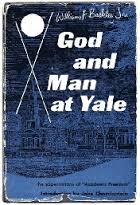
This researcher can't help but feel that by the late 1960s the ASC had adopted a very esoteric view of the UFO phenomenon and was actively engaged in filtering certain aspects of this view to the general public through the UFO-related titles published by Regnery during this era. Certainly this is the only real point when Regnery appears to have been active in New Ages topics. The publisher made its money off of highly conservative political manifestos such as Buckley's God and Man at Yale. Drake, Hynek and Vallee were certainly quite uncharacteristic of the staple of authors typically promoted by Regnery.


Was this then why Hynek appears to have kept receiving support from the deep state despite his incompetency in "security" concerns? Did they have a more important task for J. Allen, such as redefining UFOlogy? Hynek may not have been quite up to this task, but his close associate Jacques Vallee surely was and Vallee's theories are still at the forefront of much of the cutting edge of UFOlogy to this day.

But there has certainly been ample resistance to Vallee's theories and it appears to have largely come from the Rockefeller branch of UFOlogy. On the whole, the Rockefellers appear to favor a more secular explanation to New Age topics and UFOs were no exception. After a decade of highly innovative theories concerning the UFO phenomenon the nuts-and-bolts school made a vigorous comeback in the 1980s just as Rockefeller money appears to have begun flowing like water into the coffers of various UFOlogists and organizations.

In The UFO Phenomenon, John Michael Greer compellingly argues that the nuts-and-bolters whether further bolstered by an unlikely source: the Committee for the Scientific Investigation of Claims of the Paranormal (CSICOP). CSICOP has of course long been the absolute pinnacle of the debunker and skeptic community and they were especially hostile to the theories of Vallee and like researchers from very early on. CSICOP, which features several prominent members that have received funding from the Rockefellers over the years, further polarized the UFO debate and made it even more difficult for more esoteric explanations of the UFO phenomenon to gain traction for years.

Nor was Vallee the only fringe researcher the Rockefellers appear to have unleashed the skeptics upon. As was noted before here, Andrija Puharich suffered the same fate. But back to the matter at hand.

While the skeptics inevitably raked Vallee over the coals, he also appears to have endured several attacks from UFOlogists over the years as well. Steven M. Greer, who received much patronage from Laurence Rockefeller (noted in part one), took a thinly veiled swipe at Vallee in his best selling Hidden Knowledge, Forbidden Truth:
"In the mid-90s, I was invited by the Board of Directors of Noetic Sciences to do a briefing for their board. The founder of Noetic Sciences was there along with a number of very prominent people. I presented what we were doing, what our findings were, what the evidence was. They also had a few disinformation people present who, at one time, had done good work in the field, but who had since been bought off by the intelligence interests.
"One such asset of the Shadow Government made a presentation saying, 'This is all a mythology, and there are these little balls of light occasionally seen.' He completely whitewashed all the hard evidence that he once wrote about. It was a very interesting thing to watch. I then stood up and politely said, 'Well, on the contrary...'
"Also, he was proposing, 'Of course, these things don't actually exist in the physical world because they're inter-dimensional.' "
(Hidden Truth, Forbidden Knowledge, Steven M. Greer, pg. 142) 

If one is familiar with the utter bullshit Steven Greer has spewed over the years, one can't help think of the old kettle when he hints at Vallee being a disinformation agent. His faux outrage over Vallee's inter-dimensional theories is as unhinged as one would expect.

It would appear then that Vallee's theories were an early point of contention between the ASC and the Rockefellers interests. By the 1980s these differences would become more crystallized, with the Rockefellers attempting to demystify the whole phenomenon while applying a coat of Space Brothers claptrap to give everyone a warm and fuzzy feeling. This was increasingly in contrast to the ASC, which alternated between mystical and nuts-and-bolts explanations, but which always viewed the UFOs through the prism of a national security threat.

And with that I shall wrap things up for now. With the next installment we'll consider how another power broker of the far right helped shape the Human Potential Movement before moving on to the ASC's continued involvement in UFOlogy and other fringe pursuits in the 1980s. And be assured dear reader, it was not until the 1980s that these pursuits became truly strange and terrible. Stay tuned.


Saturday, October 15, 2016

The Soft Doctrines of Memphis Sam Part IV


"Call me Desdenova, eternal light"
--"Astronomy," Blue Oyster Cult


Welcome to the fourth installment in my examination of the Imaginos song cycle of recently deceased producer/manager/lyricist Sandy "Memphis Sam" Pearlman. Pearlman is of course most well known for his work with pioneering American heavy metal outfit Blue Oyster Cult, but his contributions to rock 'n' roll went far beyond this. As was noted in the first installment, he also played a key role in the careers of The Dictators, The Clash, Dio-era Black Sabbath and nearly signed the pioneering doom band Pentagram.

Beginning with the second installment I began to break down the "deep background" of the Imaginos story line. Based upon a series of poems Pearlman wrote in the mid-1960s entitled The Soft Doctrines of Imaginos, BOC songs since they debut would incorporate characters and concept from these poems and at times would be based upon them wholesale. As such, Soft Doctrines became something akin to Lovecraft's Necronomicon or Robert ChambersThe King in Yellow in BOC's lexicon, providing the backdrop to countless songs.


Fans of course had been aware of these implied connections for years, but it was not until the release of the Imaginos album in 1988 that part of the story line was revealed to the general public. And even then the sources that inspired Imaginos --alchemy, Vodun, Ufology, conspiracy theories, and so on --would remain obscure to the general public until the 1990s, when the rise of the Internet enabled fans to seriously research Pearlman's magnum opus.

As I was wrapping up with the second installment, I began to consider BOC's self-titled debut, the first album in the so-called "Black and White trilogy" (which also included their second and third albums, Tyranny and Mutation and Secret Treaties). The Black and White trilogy was recorded when Pearlman's influence over the band was greatest and when the Imaginos cycle was explored at the most regular intervals until the release of Imaginos in 1988. Across the debut's A side I considered Pearlman's penchant for sinister secret societies lurking at the fringes of the counterculture.

With the third and most recent installment I addressed the debut's B side and the entire Tyranny and Mutation album. Therein Pearlman's concepts of "transcendental models" as well as the possible influence of "esoteric vodoun" guru Michael Bertiaux on his work were considered, as well as Pearlman's ties to the legendary (or infamous, considering one's point of view) Warlock Shoppe and the heavily occulted substance of the Pearlman-written tracks on Mutations.


1974

BOC's landmark Secret Treaties album, the closet the band ever came to perfection and the most Soft Doctrines-centric album the group would release until Imaginos, was fittingly released in 1974. I say fittingly as 1974 was quite a banner year for high weirdness and political intrigues. Here's a brief rundown of such highlights from that year:
  • On January 29 the Chronicle received the last known letter from the Zodiac killer (and the first the newspaper had received in three years) in which he described The Exorcist as "the best saterical comidy that I have ever seen."
  • Heiress Patty Hearst was kidnapped in February of that year by the Symbionese Liberation Army (SLA). In the ensuing months she would actively aid the SLA and appear in a series of startling recordings on their behalf while demonstrating signs of brainwashing.
  • April 5 witnesses the publication of horror superstar Stephen King's first novel, Carrie
  • May Day 1974 witnessed simutaneous pre-dawn raids in San Francisco that allegedly rounded up the perpetrators of the "Zebra killings," a series of racially motivated killings in the Bay area that began in 1973 and ended in 1974, leaving 15 people dead. Much more information on the Zebra killers can be found on this early (and somewhat flawed) series
  • On May 17, 1974, the SLA would engaged in massive shootout with the LAPD and other California law enforcement agencies in what would be the first major use of a SWAT team (and thus the onset of the militarization of America's police forces). The SLA's leader, Donald DeFreeze, was killed during the shootout along with five other SLA members; DeFreeze had previously been a patient at the California Medical Facility at Vacaville, an institution compellingly linked to CIA behavioral modification experiments
  • Occultist and philosopher Julius Evola, who inspired so much of Italy's neo-fascist Renaissance, dies on June 11
  • On June 28 Vannevar Bush, the legendary American scientist who administered the Office of Scientific Research and Development (which oversaw the Manhattan Project, among other things) during World War II, shed his mortal coil. Bush has long been linked to the UFO question with many Ufologist linking him to the highly dubious Majestic 12. As noted before here, there is compelling evidence linking Bush to real UFO study groups and other black projects
  • Argentinean strongman Juan Peron, who had enabled so many "former" Nazis to flee via the "rat lines" using his nation, died on July 1
  • On July 15, news anchor Christine Chubbuck commits suicide during a live broadcast on WXLT in Sarasota, Florida. Reportedly, this was the first on air suicide. In some accounts, Chubbuck's death is held to have inspired Paddy Chayefsky's syncro-mystical masterpiece Network (addressed before here and here) while in others it is claimed Chaeyefsky had already started work on the script and Chubbuck's death was an eerie "coincidence."
  • Italy was rocked on August 4 by the Italicus Express train bombing that left 12 dead and over a hundred dead. This attack was carried out by neo-fascist groups long linked to Operation Gladio. More on information on these groups and Gladio can be found here
  • US President Richard Nixon resigns on August 8 as part of the Watergate scandal, the deep intrigues of which I chronicled before here, here and here
  • On November Ronald DeFeo Jr murders his entire family with a shotgun in Amityville (a village in the town of Babylon, New York "coincidentially") on Long Island, still home base for Blue Oyster Cult during this time. DeFeo's killing spree would inspire the Amityville Horror series, as well as what were almost surely fraudulent claims of hauntings at the murder scene by infamous paranormal investigators Ed and Lorraine Warren
  • the Arecibo message is beamed out from a radio telescope in Puerto Rico on November 16. This message was intended to give extraterrestrial civilizations information about Earth
  • Andrija Puharich's Uri is published at some point in 1974. While nominally a biographer of Israeli stage magician Uri Geller, this work presented the first public revelation of The Nine, alleged extraterrestrial intelligences that appear to have long fascinated the deep state. Much more information on this bizarre topic can be found here and here
  • Jonestown established at some point in 1974
  • the fantasy tabletop game Dungeons and Dragons, long linked to controversy, is first released in the United States at some point during this year
early D & D books
So yes, there was a lot of strangeness and intrigues abound --presidencies were toppling, cults and revolutionary outfits were growing increasingly violent, Nazism's robust resurgence was more evident and psi and UFOs were seemingly on everyone's mind. And into this fray emerged BOC's Secret Treaties. If there was a more perfect soundtrack to this turbulent era, I know not what it would have been. 


Secret Treaties: Artwork

While the artwork for Treaties was not as immediately striking as the classic Bill Gawlik covers that graced BOC's first two albums, it was no less esoteric. Here's a rundown of many of the key images depicted by the album's artwork:
"The record's Ron Lesser cover art depicted the band posing in front of an ME 262, a World War II fighter yet, pilot's seat filled with the figure of Death. Eric [Bloom, BOC frontman and guitarist --Recluse] dramatically caped, holding the reigns of four German shepherds, which, on the back sleeve are shown mysteriously (ritualistically?) slaughtered. The band is gone and the plane seems to be in motion, although this not clear. Another quirk of the cover art is the shadowy background scene, which appears to depict Mexican farmers, or perhaps images from another time, something like time warpage circa Imaginos
"The inner sleeve contained two slight variations of the outer front and back. The band shot is distinguished by a clearer background of an older city scene, something akin to Washington, D.C. The 'slaughtered dogs' shot depicts the jet parked on what looks like a desolate and dusty, urban Mexican street. Albert [Bouchard, BOC drummer --Recluse], on the credit for the concept says, 'Secret Treaties was created by the Columbia Records art department, because they really wanted to get involved. We wanted to keep control of the artwork, but after the first two records, which they thought were really great, they wanted a shot at it. So we let them do it and we didn't like it. The original cover was what was on the inner sleeve. They thought it was too graphic and so did we, so we ended up with this other thing that they did. They did two versions, the inside and the outside. How it ended up was that Sandy's idea was the front cover and Murray [Krugman, BOC's other early manager/producer --Recluse]'s idea was the back cover, with the dogs being slaughtered. But all in all, Secret Treaties was mostly Sandy's idea.' Another complication is the European release of the record sported red lettering; while stateside the text was green.
"The inner sleeve adds this cryptic note. 'Rossignol's curious, albeit simply titled book, the Origins of a World War, spoke in terms of secret treaties, drawn up between the Ambassadors from Plutonia and Desdinova the foreign minister. These treaties founded a secret science from the stars. Astronomy. The career of evil.' As is well-documented, the book does not exist. But the notation ties nicely the band's (most notably Pearlman's) recurring theme of conspirators (be they Rosicrucians, Illuminati, Masons, Gnostics, Hermetics, or secret divisions of the CIA, FBI and Yale!) causing wars and other human upheaval (i.e. Altamont), in addition to the link with beings from other planets and possibly other times."
(Agents of Fortune, Martin Popoff, pgs. 42-43) 
There's a lot to take in here. Let's start with the final paragraph concerning The Origins of a World War. Citing a quote from a fictitious book is very much in keeping with Pearlman's love of Lovecraft and Robert Chambers. Desdinova is another name of the Imaginos character, given to him after his initiation into the Blue Oyster Cult. Imaginos would make his first appearance in a BOC song on Secret Treaties. But more on that in a moment.

Plutonia is likely a reference to the extraterrestrial race the Imaginos has dealings with. It was also the name of an early science fiction novel by the Russian Vladimir Obruchev. The novel takes place in an underground world known as Pluto (after the Roman god of the underworld) that has its own sun and is inhabited by dinosaurs and other ancient creature. Nowadays this work would be considered in vein of the Hollow Earth mythos. It is unknown if Pearlman knew of this book.

While the faux quote from Origins of a World War hints that the secret treaties alluded too in the title are with extraterrestrial intelligences, another possibility is also presented by the artwork: the Nazis. On the front cover the band is depicted around a ME 262 while a Nazi-revering song of the same name is included on the album. Even more curious, however, are the apparent references to the Process Church of the Final Judgment in the artwork.


The Process Church was a highly controversial group with origins in Scientology. It was founded in the mid-1960s in England and had opened up outposts throughout the United States by the late 1960s. The Process would seek out alliances with both celebrates as well as more unsavory elements such as biker gangs. By the early 1970s the group had been linked to the Manson Family and disintegrated not long afterwards with its original leader being kicked to the curb and much of the rest of the sect carrying on as Christian fundamentalists. The group would continue to be a lightening rod for controversy, however, with offshoots being linked to the Son of Sam killings and the Cotton Club murder. Just how credible all these claims are is highly debatable, but the Process seems to turn up to often in close proximity to one outrage or another with too much frequency to dismiss it all as coincidence. Much more information on the Process can be found here.

the Processians in one variation of their capes --unfortunately no color images of them appear to be available online
As for the references to the Process on the Secret Treaties cover, it comes in the form of frontman Eric Bloom's getup and the German shepherds. Process members were well known for their black capes with crimson insides and German shepherds. They were frequently seen out and about major cities across the US during the late 1960s and early 1970s with both. Curiously, reports of dead German shepherds killed in a ritualistic fashion have also had a tendency to follow the Process around.
"For some reason, there have been reports of sacrifices of large numbers of dogs, mostly German shepherds, throughout the United States in the past thirty-odd years, but notably in areas where we discover confirmed cult activity. This was true in Berkowitz' Yonkers neighborhood as it was in Walden, New York, where a 'total of eighty-five skinned German shepherds and Dobermans were found' in a single year 'between October 1976 and October 1977.' The day of Berkowitz' arrest in Yonkers, the bodies of three slain German shepherds were found in an aqueduct behind his apartment. Two had been strangled with chains; the third had been shot in the head.
"Two days before his arrest, someone phoned an animal shelter using his name and address, inquiring about adopting a German shepherd that had been advertised in a local paper. A few hours later someone else called from the same street in Yonkers, also inquiring about the dog. The caller said he was 'fixing some cars' on Pine Street; an allusion that Terry believes actually refers to the Carr family who figure some prominently in his case. As it turned out, two men did visit the shelter, including one who resembled Berkowitz, but according to Berkowitz himself it was not he, although he acknowledges that someone may have been impersonating him on the phone.
"Why? This was before his arrest and identification in the press as the Son of Sam...
"around the time of the Sam killings, the author heard convincing rumors of the abuse and slaughter of dogs in a warehouse near Brooklyn Heights, within walking distance of the Warlock Shoppe, before Berkowitz was arrested and the connection with dogs was made.
"Terry connects the German shepherd sacrifices with the Process, due to their fondness for the animals. Members of the Process in those halcyon days of the 1960s were to be seen around San Francisco dressed in black and leading German shepherds on the leash. The 'Fear' issue of the process magazine featured a photo spread of twenty German shepherds in a menacing pose. It doesn't automatically follow, however, that the Process would sacrifice the animals.
"Another symbolic association that should be mentioned is the fact that Hitler favored German shepherds above all other animals. That there might be a Nazi or neo-Nazi element ot the Son of Sam cult should not be ignored, especially as mass murderer Fred Cowan --one of the 'Sons' according to Berkowitz --was a neo-Nazi. Further, the Process symbol was a stylized swastika: what some members referred to as 'four P's'; these 'four P's' later contributed to the name of a Process splinter group called 'Four P' after the same symbol. It was this group that remained behind in California after most of the regular Process decamped and went to New York City following the assassination of Robert F. Kennedy. Four P --and its reputed leader, the Grand Chingon --has been implicated in a number of vile acts, including animal and human sacrifice in northern and southern California. Convicted serial killer and cannibal Stanley Baker claimed to belong to this cult, and Manson Family members were known to refer to Charles Manson as the Grand Chingon. even though the organization was supposedly so secret that its very existence was unknown to all but a few."
(Sinister Forces Book III, Peter Levenda, pgs. 197-198)

the color versions of the Secret Treaties artwork show Bloom with the cape and dogs in more detail (top) as well as the dead German shepherds (bottom)
Again, all of this should be taken with a grain of salt, but there are certainly interesting parallels to Pearlman's work and the allegations surrounding the Process. As was noted in the second installment, BOC's debut featured two signature tunes describing biker gangs subverting the counterculture that are being directed by a secret society/cult within their ranks. As I noted before here, the Process frequently sought alliances with motorcycle clubs during the late 1960s/early 1970s, as did the Manson Family.

Pearlman described the Transmaniacon MC (from the song of the same name) and the Motif of the Rose (from "Before the Kiss, A Redcap") as being based upon French and Belgian fascist organizations (noted before here). While the Process are normally described as hippies, they had ample connections to the far right, as I noted before here, and eventually rebranded themselves as a Christian fundamentalist sect known as the Foundation Church of the Millennium by the mid-1970s.

It would appear then that the possibility that the Process inspired some of Pearlman's early lyrics exists. What's more, it seems all but certain that Pearlman would have been aware of the Process. As was noted before here, the Process frequented Herman Slater's Warlock Shoppe by the early 1970s and there are strong indications (noted in the prior installment) that Pearlman was a part of this scene. What's more, Pearlman was also friendly with Fugs singer Ed Sanders going back to his days at Stony Brook. As a reader kindly informed me, Pearlman was a big Fugs fan and had enlisted the band to play at Stony Brook in 1966 and again in 1967 with Country Joe and the Fish as well as Soft White Underbelly (the first incarnation of BOC) for the so-called "Pot Bust Benefit."

Ed Sanders circa 1968
Ed Sanders would of course go on to publish The Family in 1971. This was the first full length account of the Manson Family and the first time the Process Church was linked to them. In fact, this was the first time the American public at large had been exposed to the Process, though it proved to be quite brief. The Process successfully sued Sanders in the United States and a chapter concerning them was removed from subsequent additions of The Family. The offending addition remained in British editions of the book, however.

So while its rather circumstantial as to whether Pearlman encountered the Process directly at the Warlock Shoppe, it seems highly probable that he could have heard about them and some of the more incredible allegations surrounding them from his friend Ed Sanders. Certainly this seems more plausible than Pearlman "coincidentally" littering the Secret Treaties artwork with imagery closely resembling the fashion and deeds of the Process.


More Pearlman and the Process

If this was not enough, there is also compelling indications that there were more allusions to the Process with the cover of On Your Feet or On Your Knees, a live album that came out the year after Secret Treaties was released. This was the first BOC album to feature a cover in color, but it proved to be no less striking than those from the "Black and White" era. In this instance, a limo sporting a Templar-like flag with the BOC logo on it is shown parked in front of a curious church. A comment left on a previous post I had written about BOC indicated that this church had been used by the Process some time around the early 1970s.


I had been weary of this claim when I had first read it, but after researching the matter I believe that there may be merit to it. The church used on the On Your Feet... cover is St. Paul's Chapel, a part of St. John's Episcopal Parish in the South Salem era of New York state. In 1987 investigative reporter Maury Terry published a deeply flawed work called The Ultimate Evil. This book was based upon Terry's research into the Son of Sam killings and the possibility that some type of cult was behind them. While some of Terry's conclusions are suspect, his raw data is compelling.

Towards the end of The Ultimate Evil, Terry notes that a cult alleged to have been a Process splinter was reputed to have been using a church in the Salem area for black rites during the mid-1970s.
"Another abandoned church offered yet one more meeting site. This edifice was said to have been an 'eastern headquarters' for the group. The informants said it was privately owned (perhaps partially converted) and was located in the vicinity of the northeastern corner of Westchester County, somewhere near (and possibly over) the adjoining Putnam County and Connecticut borders. Vinny couldn't pinpoint the exact location but, quoting Berkowitz, he mentioned 'Salem' and 'Brewster.' 
"North and South Salem, with their historic witchcraft names, were in Westchester, and the village of Brewster lay a few miles north in Putnam County. The area was largely rural, with homes, estates and some farms and stables hidden from the few main roads by thickets of trees. It was a perfect cult site, and a difficult, extensive setting in which to try to locate the old church.
"Vinny said the church's interior (in 1976-77) was adorned with a silver pentagram on one wall; and silver-wire inlays, some in the form of the German SS lightning bolts --a symbol of the cult --appeared on the ends of some pews."
(The Ultimate Evil, Maury Terry, pg. 412)

Even more compelling are Terry's allegations that members of the Process were active in this area during the mid-1970s.
"And the Process itself was even located in that area. In the mid-seventies members of the cult occupied a house off Salem Road in Pound Ridge, a rural community several miles south of North Salem. It was as if the players and environment from the Los Angeles scene of 1968-69 had been magically transported to the specific area Berkowitz and the prison informants referred to."
(The Ultimate Evil, Maury Terry, pg. 419)
The On Your Feet or On Your Knees church is actually located in Lewisboro, near South Salem. And the above-mentioned rural village of Pound Ridge is located right next to Lewisboro, with less than five miles separating the two. In other words, this Process encampment couldn't have been located more than a few miles from the On Your Feet... church.


In Agents of Fortune, the only full length account of Blue Oyster Cult, Martin Popoff sites BOC drummer Albert Bouchard as crediting Pearlman with finding the church used on the cover of On Your Feet or On Your Knees. Thus, Pearlman selected a church located mere miles from a Process Church hub in area in which Maury Terry's informants alleged that a splinter of the cult was using a church for ritual purposes.

the church more recently
Dismissing this as a mere coincidence would be quite a stretch indeed, especially when taken in conjunction with ample Process allusions on the cover of Secret Treaties. But I digress.


Secret Treaties: A Side

With the cover art and my musings concerning the Process finished, let us now turn our attention to the actual music on Secret Treaties. Opener "A Career of Evil" was another BOC song with lyrics from punk poetess Patti Smith, who at the time was dating BOC keyboardist and sometimes guitarist Allen Lanier. Coming off like something of a demented Doors song, this track has at times be linked to the Imaginos cycle, but this seems to derive primarily from the sinister sentiments expressed throughout the track. It was released as the album's first single, but in edited form with the line "Do it to your daughter on a dirt road" being changed.


There is no question that the next track, "Subhuman," is a part of the Imaginos cycle. This another number with a clear Doors influence, this time something in vein of "Riders on the Storm" with a little Dust-style riffing to bring the metal. But it's ties to the Imaginos cycle ensure that its even more sinister and foreboding than anything Morrison and co ever released. In fact, this is the first time the Imaginos figure appears on a BOC song, though he is not mentioned by name in the track. Here are some more details:
"Track two 'Subhuman,' a tune that would be revived 14 years later on Imaginos as signature track 'Blue Oyster Cult,' rightly so as it seems to encapsulate Sandy's complex concept of the band, the character Imaginos, and the intertwining of the two. A type of literal translation of the band's name occurs, similar to graphic artist Greg Scott's approach to the Fire of Unknown Origins artwork, with talk of oyster boys, the sea and the 'blue sky bag.' Overtones of Lovecraft's Cthulhu or 'old ones' can also be spotted in terms of death-like creatures who inhabit the seas. In any event, the occurrences in this lyric seem to mark a traumatic, transformational moment for Imaginos, a character who could change form and traverse time...."
(Agents of Fortune, Martin Popoff, pg. 43)
Yes, this is possibly the song from which Blue Oyster Cult derived its name. In this track Imaginos, a sailor, is betrayed by his shipmates ("Left to die by two good friend") and abandoned as his ship puts to sea. As he lays dying near the sea some rather curious creatures appear to him (the "oyster boys") who offer to save his life if he'll join them. Imaginos accepts ("Just one deal is what we made") but is in for a surprise. Much more shall be said of this track and its themes when I address the even more esoteric "Blue Oyster Cult" that appears on Imaginos.

"Subhuman" is followed up by another track likely a part of, or closely related too, the Imaginos cycle called "Dominance and Submission." This song also features the curious character of Suzie, whom also appeared in "Before the Kiss, a Redcap" (noted before here) and several other BOC songs. This song revolves around the subversive power of rock 'n' roll and the sinister forces that sought to control it. I've already written an entire blog on this song before, which I found to be thematically closely related to Don McLean's classic "American Pie," and as such will not address this song here for the sake of brevity. But this is a very deep track and the reader is encouraged to take in the prior article.


Side A closes out with the Nazi-revering "ME 262." This song revolves around the Messerschmitt Me 262, the world's first operational jet-powered fighter aircraft. The ME 262 was to be a kind of super weapon for the Nazis in the closing days of the war, but it was not used to its full potential. The gleeful boogie classic name checks Hitler and Goring and tells of an air battle from Germany's perspective. The main character in the song is a Captain Von Ondine. This is interesting as "Ondine" is close to "undine," a kind of water elemental being similar to a mermaid. As was noted in part three, an undine was also mentioned on "Workshop of Telescopes" off of the self-titled debut.

This track helped further contribute to the group flirtation with Nazism. As was noted in the first installment, despite several Jews being involved with the band and in their orbit (including Pearlman), the group had subtly embraced Nazi imagery from the early 1970s. Pearlman was very much the architect of this and only added fuel to the fire when "ME 262"  was released as a single. Controversy ensued and the band retreated form this imagery as Pearlman's influenced waned. But back to the matter at hand.


Secret Treaties: Side B

Side B begins with "Cagey Cretins," the first of two Richard Meltzer lyrical contributions to Secret Treaties. As was noted in part one, Meltzer was had worked with Pearlman as a rock critic for Crawdaddy in the mid-1960s. He played a key role in the early years of the band and would contribute lyrics to the group for years.

"Cagey Cretins" is probably the closet thing Treaties has to a throwaway track. The lyrics effectively revolve around Meltzer's boredom from his time spent staying at his girlfriend's house in Shirley, New York, in the middle of Long Island. The demented Doors nature of the song and some amusing lyrics ("Being chased around by the neighbor's cat/ Well it's so lonely in the state of Maine!") somewhat redeem the song and the general strangeness of the track is in keeping with the rest of the album.

Next up is Meltzer's second composition, and a much better one, known as "Harvester of Eyes." This song was apparently inspired by a confirmation hearing for LBJ crony Abe Fortas to the Supreme Court that Meltzer watched. At one point during the hearing the medical condition ocular tuberculosis (tuberculosis of the eye) was mentioned and this served as the inspiration for "Harvester." What emerges is effectively a narrative that the great Julian Cope believed could describe Death (who appeared on the Secret Treaties album cover) as a strung out junkie:
"... On a higher plain of existence, however, is the superbly titled 'Harvester of Eyes', Meltzer’s massive ode to the Grim Reaper as a hopeless drug addict. Suffused with imagery that appears to be an Odinist take on Alice’s epic 'Halo of Flies', this tight-assed caffeine blues straddles that bizarre mid-70s hinterland between Joe Walsh’s delightfully clodhopping 'Rocky Mountain Way' and the post-Todd meltdown of The Tubes’ 'White Punks On Dope'. It’s one of Eric Bloom’s finest vocal performances and one which he obviously relished, recounting how the Reaper - so ‘high on eyes’ - needs ‘all the peepers’ he can harvest not only as evidence that the donor of those eyes is truly dead, but also to satisfy his hopeless druglust or ‘ocular TB’ as Meltzer terms it. Nailed it this time, motherfucker!"

While this song was never intended to be a part of the Imaginos cycle, it has been linked to it over the years. It is easy to see why as Meltzer's depiction of a sinister entity is in keeping with the wonders of the invisible world that appear throughout Imaginos.

Pearlman returns to the fold with the next track, the Cult classic "Flaming Telepaths." Drummer Albert Bouchard contributed some of the lyrics to this track, but it is clearly Pearlman's vision. Of it, he noted:
" 'On the new album there's the song called "Flaming Telepaths",' explained Sandy, in conversation with NME's Don Nooger circa spring of '74, 'which deals with the same sort of theme (as "Cities on Flame") but in a scientific way. It's about an attempt to create a mutation, to mutate consciousness. The first lines are, "I will have opened my veins too many times, poison's in my mind, poison's in my bloodstream, poison's in my pride," and that's they key line, "poison's in my pride." It's about this scientist who attempts to mutate consciousness and he just can't do it; he's failed too many times. But the scientist has this poisonous pride and he's got to keep on trying, beating his head against this barrier. And just because he's doing it, that's good enough. It's a very, very noble song...' "
(Agents of Fortune, Martin Popoff, pgs. 47-48)
What's most curious about this song as how it alludes to the militarization of psi that was this currently being undertaken by the deep state. Stanford Research Institute's famed remote viewing experiments, funded by the CIA and military, had just kicked off in 1972. By 1978 Project Grill Flame, the military's first formal effort to weaponize psi, was launched and would remain active for almost 20 years despite persistent claims that the research was baseless.


Was Pearlman telling tales out of school, as Chris Knowles is fond of saying? Certainly the scientist described in "Flaming Telepaths" could be an effective stand in for Andrija Puharich. Puharich, a man with ample interest in esoterica. played a major role in the first psi experiments undertaken by the deep state in the 1950s (as noted before here). His Uri was released in 1974 superficially to legitimize the psi phenomenon to the general public (though as noted above, it is mostly remembered in this day and age for revealing The Nine) and in the years leading up to this he had become something of a minor celebrity in certain sectors of the counterculture. Given Pearlman's fascination with science, mysticism and their merger, Puharich have likely interested Memphis Sam greatly. I have no evidence of any formal contact between the two men, but certainly "Flaming Telepaths" is an apt account of Puharich's work with the deep state. But moving along.

Puharich
"Flaming Telepaths" bleeds directly into closer "Astronomy," possibly the greatest song that band ever came up with. A long time fan favorite, "Astronomy" was a key piece of the Imaginos cycle and a new version of the song appeared on the 1988 Imaginos album. But nothing can top the original 1974 version, which was co-written by the Bouchard brothers (drummer Albert and bassist Joe) using lyrics (that were slightly rearranged) from Pearlman.

"Astronomy" is another track featuring the character of Suzie, along with Imaginos. The meaning to this track is rather obscure, but a key clue comes from the repeated references to the "four winds." The four winds are of course rich with symbolism.
"On the other hand wind is synonymous with breath and consequently with the Spirit, a heaven-sent spiritual influx. This why both the Book Psalms and the Koran equate winds with angels as God's messengers. Wind even gives its name to the Holy Spirit. The Spirit of God moving across the face of the primordial waters is called Ruah, 'Wind', and it was a wind which brought the Apostles the tongues of fire of the Holy Spirit. In Hindu symbolism, the wind, personified as the god (Vayu) is cosmic breath and the Word. It rules the 'subtle' world which lies between Heaven and Earth, the space which was filled by what the Chinese termed a breath, k'i. Vayu imbues, shatters and cleanses, and is related to the points of the compass, which were generally speaking termed 'winds.' Hence Classical antiquity talked of the four winds and the Athenians built the eight-sided Tower of the Winds.
"The Four Winds, furthermore, were related to the seasons, the elements and the 'humours' in a pattern subject to slight variation..."
(Dictionary of Symbols, Jean Chevalier & Alain Gheerbrant, pgs. 1110-1111)
Native American symbolism for the four winds seems especially relevant in this case as indigenous mysticism seems to have heavily influenced the Imaginos cycle, as shall be explored in the next installment. For our purposes here, it is interesting to note that Native Americans frequently associated the four winds with square, and frequently used this design in their sacred places.
"Links across time in the symbolic meanings of the square are also found on a smaller scale. For example, shell gorgets recovered from Mississippian sites are found to have cross as well as bent-arm cross designs carved into their surfaces. According to historic Indian accounts... these designs were meant to symbolize the four cardinal directions, the four world quarters, and the four winds...
"Mississippian designs like the Spiro gorget look very similar to some of the designs found in earlier Hopewell contexts, especially those which incorporate cross and bent-arm cross features... Moreover, a clear geometric relationship can be demonstrated between the cross, the square, and the bent-arm cross... Given this relationship, as well as the close proximity in both time and space between the Hopewell and Mississippian cultures --including the southern Ohio-based, Mississippian-influenced Fort Ancient peoples --my thought is that the symbolic meanings of the cross, the square, and the bent-arm cross were the same for historic Indians of the Southeast, the prehistoric Mississippians, and the Hopewell: namely, symbols of the sky, the world quarters, the four cardinal directions, and the four winds.
"To summarize this section in another way, we know from ethnographic accounts that many historic southeastern Indian people laid out their ceremonial grounds in the shape of a square and that these square grounds were thought of as symbolic microcosms of the universe. Moreover, these square ceremonial grounds were oriented to sky phenomena, including cardinal directions."
(Mysteries of the Hopewell, William F. Romain, pgs. 176-180)
a depiction of the four winds in the Seven Nation's symbolism
The four winds then are closely associated with both the sky and the heavens. In the case of "Astronomy," both are rather fitting. I digressed above on Native American sacred space oriented towards this "sky phenomenon" to help explain the reference to the "four winds bar." This reference appears in the second. third and fourth verses of the song:

Come Susy dear, let's take a walk
Just out there upon the beach
I know you'll soon be married
And you want to know where the winds come from
Well its never said at all
On the map that Carrie reads
Behind the clock back there you know
At the four winds bar

Four winds at the four winds bar
Two doors locked and the windows barred
One door let to take you in
The other one just mirrors it
Hey, hey, yeah! Hey, hey
In hellish glare and inference
The other one's a duplicate
The queenly flux, the eternal light
Or the light that never warms
Yes the light, that never, never warms
Never warms, never warms

The clock strikes twelve and moon drops burst
Out at you from their hiding place
Miss Carrie nurse and Susie dear
Would find themselves at the four winds bar
It's the nexus of the crisis
The origin of storms
Just the place to hopelessly
Encounter time and then came me

As noted above, the Joe Bouchard some what altered the original Pearlman poem. The opening verse, which is a variation on the fourth ("The clock strikes twelve...") originally was the third verse and thus would have come after the "never warms" bit. Thus, Susie and "Carrie nurse" would have been the focus at the onset of the song.

Some fans have interpreted this song to be about Susie having a lesbian experience, presumably with Carrie. There may be some merit to this. I believe the "four winds bar" designates some kind of sacred space where Susie ventures to for a certain kind of marriage --a sacred marriage. Carrie is there to initiate Susie. In the process two gateways are opened ("Two doors locked and windows barred/One door let to take you in//The other one just mirrors it"). One of these gateways is a kind of shadow world ("In hellish glare and inference/The other one's a duplicate") from which entities emerge ("The clock strikes twelve and moon drops burst/Out at you from their hiding place"). But it is one particular being that most interests us and who is mentioned in the final verse:

Call me Desdenova, eternal light
These gravely digs of mine
Will surely prove a sight
And don't forget my dog, fixed and consequent


This marks the first time Imaginos (who was given the name Desdenova by the Blue Oyster Cult) is directly mentioned in a BOC song. I believe the preceding verses dealt with the efforts of two women, Carrie nurse and Susie dear, to summon Desdenova in some type of ritual, potentially tantric in nature. And indeed they succeeded, enabling him to enter their world.

The final line of this verse ("And don't forget my dog...") is interesting as well. Some fans have interpreted it to be a reference to the Dog star Sirius. In ancient times it was often used for navigational purposes because it appeared to be at the same point in the sky ("fixed and consequent) and the Imaginos/Desdenova character worked as a sailor for a time. As noted above and shall be addressed in much greater detail in the next installment, he was also said to have originated from another planet. And indeed there are theories that extraterrestrial intellgiences originating from Sirius visited the Earth in ancient times. 

The basis of many of these theories originate with Robert Temple's The Sirius Mystery. A Fellow of the Royal Astronomical Society, Temple's presents a compelling account of the detailed knowledge of Sirius that the Dogon tribe of Africa has possessed for hundreds of years despite science only being able to confirm much of this information in the last century. The Dogon claimed that their knowledge of Sirius was brought to them from beings from or near this star centuries ago.


Temple believed that other traditions also possessed accounts of these beings from Sirius and that it had been closely guarded by various secret orders for centuries:
"Temple believes the Contact (which he tends to portray as physical, involving actual space-ships) occurred in Sumeria around 4500 B.C. The knowledge thus gained, he argues (and this is the major theme of his book), was passed on via various secret societies of initiates in the Near East, Egypt, Greece and so on, at least until the time of the 5th century (A.D.) neo-Platonist Proclus. Thereafter, Temple loses track of it, and suggests that it petered out, although he mentions that offshoots of it appeared in 'such bizarre and fascinating figures as Giordano Bruno, Marsilio Ficino, John Dee and even Sir Philip Sidney and the Earl of Leicester --not to mention the troubadors of Provence, Dante in Italy, and the massacred tens of thousands of Albigensians in France, the Knights Templar and an infinite range of hopeless causes over two and a half millennia....' "
(Cosmic Trigger Volume I, Robert Anton Wilson, pg.s. 186-187)
Clearly Temple's premise bears more than a passing resemblance to Pearlman's Imaginos cycle. But even more curious is the fact that The Sirius Mystery was not published until 1976, a good two years after Secret Treaties had been released. And if "Astronomy" had been a part of the original Soft Doctrines... poems, then Pearlman may have come up with this concept nearly a decade before Temple's work was published. Was this merely a coincidence, or was someone (or something...) feeding Pealrman this information?

the Dog star
On the topic of telling tales out of school, it's also interesting to note that parallels to Secret Treatie's final two tracks and the above-mentioned sage of Andrija Puharich and The Nine. "Flaming Telepaths" mirrored Puharich's involvement with the deep state to weaponize psi while "Astronomy" deals with the contacting of nonhuman, allegedly extraterrestrial intellgiences through occult means. In "Astronomy" this is accomplished through some type of ritual, while Puharich relied upon hypnotism and mediumship.

It is curious how these two tracks run into one another, with "... Telepaths" being literally cut off in the middle of its "And the joke's on you" refrain to make room for "Astronomy"'s opening keys. Clearly these two tracks are linked and the strange saga of The Nine makes for one of them sot compelling connections this researcher has uncovered. More information on this strange tale can be found here and here.


Before wrapping up, I would like to return again to the fictitious quote concerning the equally fictitious Origins of a World War on the album's inner sleeve: "Rossignol's curious, albeit simply titled book, the Origins of a World War, spoke in terms of secret treaties, drawn up between the Ambassadors from Plutonia and Desdinova the foreign minister. These treaties founded a secret science from the stars. Astronomy. The career of evil."

Taken in the context of what we've explored in this installment, it seems clear this quote is indicating that Secret Treaties is a kind of concept album. It references both the opening and closing tracks while indicating the "secret science" of astronomy has a rather sinister purpose (a career of evil). The opener "Career of Evil" seems to outline vaguely this sinister purpose while track two, "Subhuman," presents the listener with Imaginos/Desdinova's human death and his realization that he is from the stars. The album then ends with the summoning of this reborn, incorporeal version of Imaginos ("Call me Desdinova, eternal light").

In between the listener is presented with accounts of the subversion of popular culture and mass movements ("Dominance and Submission"), re-emerging Nazism ("ME 262") and the weaponization of consciousness itself ("Flaming Telepaths"). The cover art, with its thinly veiled allusions to the Process Church of the Final Judgment, points to the sinister secret societies addressed in prior albums (noted here). I suspect this is the meaning of the "These gravely digs of mine/Will surely prove a sight" bit in the final verse.

On the whole Secret Treaties presents a chilling picture, one of which with much basis in reality circa 1974. Certainly the whole album has the air of Pearlman telling tales out of school. As such, it should come as little surprise that this marked the last time Pearlman would have creative control of a BOC album until 1988's Imaginos, when BOC was beyond irrelevant. The band opted to go in a more commercial direction for which they were critically acclaimed for while Pearlman was largely kicked the curb (at least until their former patrons began to turning on them towards then end of the 1970s). More on this in the next installment as well as Imaginos itself. Stay tuned dear reader.