And so the time has arrived for another year end review of the top 13 albums released, this time for that Foal Year of Our Lords 2015. This once-a-year series was inspired by the persistent claims that rock and pop culture on the whole are dead and has now run for three years. Ideally this installment would have been out several weeks earlier but the transition between 2015 and 2016 has been a rough one for music: 2015 ended with the death of one rock 'n roll legend while 2016 began with the death of another. I am of course referring to
Ian "Lemmy" Kilmister and
David Bowie respectively. The Motorhead frontman and Starman were both larger than life personas that seemed indestructible. Their influence was vast and their loss is irreplaceable.
 |
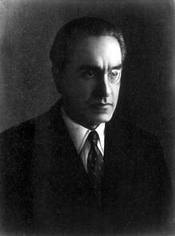
| the dearly departed Lemmy (top) and David Bowie (bottom) |
The departures of Lemmy and Bowie only underscore how dire things have gotten out there. There can be little doubt that mainstream music in 2015 was a truly putrid corpse emitting a rotten stench that threatens to obscure any signs of life beneath the surface. But then again, mainstream music has typically been awful with few acceptations (i.e. the late 80s/early 90s "alternative scene" and the First Psychedelic Era and Golden Age of Heavy Rock, two overlapping periods that unfolded from roughly 1966 till 1974). In the underground, as always, there are a few flickering signs of life.
This series as well as the bulk of this blog's musings on music were largely inspired by
Christopher Knowles' groundbreaking
The Secret History of Rock N' Roll and his numerous writings on the
Secret Sun blog. Knowles properly linked the rock n' roll spirit to the
Ancient Mysteries and the
Archetypes in a effort to explain the medium's power. Knowles, however, takes a much dimer view of the current music scene than I.
As noted above, it is hard to dispute that rock n' roll is in dire straits and that
the socio-economic order that fueled the heyday of rock n' roll is gone. But uncertainty and chaos have often produced choice works of art and our current era is certainly overflowing with either. For this reason it was of little surprise to your author that several
doom metal-centric bands generated especially inspired outings this year while the retro heavy rock movement, finding inspiration in the Golden Age of Rock 'N Roll, continues to go strong. It probably goes without saying, but the genre typically described as "
stoner rock" (which can include doom,
sludge and
post-metal, desert rock, fuzz rock, heavy psych, occult rock and so on) continues to be at the forefront of rock n' roll relevancy.
Indeed, stoner rock arguably had one of its best years in terms of media exposure due to the
tragedy in Paris. The
Eagles of Death Metal, with their extensive ties to the
Palm Desert scene, are very much in the stoner rock family and were the band performing in the
Bataclan during one of the most shocking moments of the Paris terror attacks. That stoner rock, steeped in the occult, conspiracy theories and general high weirdness, has gradually found its way into the mainstream consciousness despite the contempt "serious" music fans have long had for it is hardly surprising. Perhaps no other genre today understands the archetypal appeal of classic rock better while offering up a fresh take on the first principals of the medium. I've written extensively on these themes before
here.
But enough introductory remarks. Let us get on with the rankings:
13
Berlin --Kadavar
Kadavar are deeply steeped in retro heavy rock that could make the casual listener easily confuse their 2015 outing for something that was released forty years ago. This German outfit first caught your humble writer's ear back in 2012 with their haunting
self-titled debut. That album had a dark and mysterious quality to it that the band's preceding two albums have been unable to match. That being said, 2013's
Abra Kadavar (which made
my top 13 in 2013) and 2015's
Berlin kick out the heavy '70s jams as well as any act currently active. Songs like "
Old Man" and "
Last Living Dinosaur" are so catchy and infectious that they rightfully should be played in heavy rotation on classic rock radio stations with the likes of
Led Zeppelin II and
Machine Head. And while the band's psychedelic side has been greatly marginalized since the debut, tracks like "
Into the Night" and the cover of
Nico's "
Reich Der Traume" still manage to take the listener places.
12
Berkana --Golden Void
This Bay-area group also dropped their debut in 2012, and it was even more haunting that Kadavar's.
Golden Void (who derive their name form a
Hawkwind song) also have their fair share of retro influences (especially the great
Blue Oyster Cult as well as the previously mentioned space rockers) but also bring in ample doses of 90s grunge (think
Screaming Trees and more mellow
Soundgarden) and European heavy psych along the lines of
Colour Haze and
Sungrazer. Their music maintains a mellow atmosphere even when guitarist Isiah Mitchell (also of instrumental heavy psych stalwarts
Earthless) breaks out the fuzz.
The interplay between Mitchell's guitar and wife Camilia Saufley's keyboards is easily the most compelling aspect of this group. The duo weave a potent witch's brew of psychedelic bliss. The album derives its name from a rune and is unsurprisingly steeped in esoterica. Its center piece is easily the near-seven minute "
Astral Plane", a track every bit as exploratory as the name implies. "
Silent Season" and "
Storm and Feather" are equally knee deep in atmosphere while punchier tracks such as "
Dervishing" and "
Burbank's Dream" display the band's ability to merge more rocking efforts with an equally hazy aesthetic.
11
Cobras and Fire --Monster Magnet
Many an astute listener had left
Monster Magnet, the stoner rock pioneers, for dead around the time of 2007's
4-Way Diablo. The group took the heavy underground by storm in the 1990s with a series of groundbreaking albums that merged Lemmy-era Hawkwind with the more avant garde psychedelica of acid punk powerhouses such as the
Butthole Surfers and
Chrome. Beginning with 1995's
Dopes to Infinity and especially 1998's commercial breakthrough
Powertrip the group began to incorporate more classic heavy rock hooks and emerged at the forefront of the budding stoner rock movement by decade's end. But then things began to go south in the next decade. A series of lackluster albums and the ongoing substance abuse problems of frontman
Dave Wyndorf left the band in such dire straits that New Jersey outfit did not seem long for this world after
Diablo.
But then came a dramatic turnaround. 2013's
Last Patrol (which finished high in
that year's top 13) was easily the strongest album Monster Magnet had managed since their early 90s heyday and saw them returning to the frantic space rock and sleazy psychedelica that characterized their sound during their peak years. 2014 brought a "reimaging" of
Last Patrol, aptly dubbed
Milking the Stars. This album made
my top 13 in 2014, though this ranking my have been mired by my inner fanboy still being so pleased with the group's return to their earlier sound. 2015's
Cobras and Fires presents this reviewer with the same dilemma, but I feel its inclusion here will hold up better for the simple reason that
Cobras and Fire represents a much more dramatic overhaul of an album that 2014's reimaging.
The target in this case is 2010's
Mastermind, a somewhat overlooked album in MM's overture. While not nearly as strong as
Patrol it was at the time a refreshing return to form that saw the group unleashing its heaviest outing to date. Short on psychedelica, but long on fuzz,
Mastermind seems far better suited for a psychedelic reimaging than the already uber-trippy
Patrol. And indeed, the lysergic remakes of tracks like the soaring "
Gods and Punks" and the oh-so fuzzy "
Hallucination Bomb" (here redubbed "
Cobras and Fire") are truly reimagings. Elsewhere, "
The Titan" and "
Time Machine" are totally stripped of lyrics and turned into the kinds of synth driven instrumental tracks
Rick Wakeman once churned out for metal bands in the 1970s to enhance the atmosphere between the punchier tracks. The same purpose is accomplished here. Throw in a stomping cover of the Temptation's psychedelic soul social commentary known as "
Ball of Confusion" and you have one of the most enjoyable, if derivative, albums of 2015.
10
Scaffolds of the Sky --Mirror Queen
Mirror Queen is another retro 70s act that manages to pay homage to rock's Golden Age without sounding derivative. Combing elements of Blue Oyster Cult,
NWOBHM riffing and contemporary heavy psych, this New Jersey outfit knows how to set an atmosphere while still having enough heft to please the moshers.
Scaffolds of the Sky is the group's sophomore outing after 2010's
From Earth Below and shows ample growth. The albums two longest tracks, "Scaffolds of the Sky" and "Strangers in Our Time," are also the best and put the band's strengths on full display. Chugging guitars give way to hazy interludes and then back to the gallop, all on a dime and all feeling like totally natural changes.
Sky wraps up with a solid cover of BOC's "Wings Wetted Down," a track preceded by the moody instrumental "Dark Ships Arrived." It makes a for an apt closing on this second album from a band that sounds as if it has yet to hit its peak. Where the group goes from now will be most intriguing, but there are still quite good at present all the same.
9
Middle of Nowhere, Center of Everywhere --Acid King
Acid King derive their moniker from the nickname murderer
Ricky Kasso, who so terrified the
Christian right in the 1980s when he and two friends murdered a fourth boy while reportedly under the influence of
mescaline. Kasso was arrested in an
AC/DC shirt and was reportedly a fan of groups such as
Black Sabbath and
Judas Priest. This was one of the key incidents that dragged heavy metal subculture into the Satanic Hysteria of the 1980s.
Acid King the band hails from San Francisco, where they were founded in 1993 just as stoner rock was beginning to emerge as its own genre. Beyond being one of the pioneering stoner rock bands, Acid King is also fronted by guitarist and vocalist
Lori S., the first woman to gain prominence in a genre that has produced increasing amounts of staller female performers over the years. AK's sound is deeply steeped in Black Sabbath as filtered through fellow North California heavy weights
Sleep. Acid King slowed Sabbath's grooves down even further so as to explore the depths of Lori S' massive, sludgy riffs. Outside of Sleep, Acid King is
the stoner doom band.
While possessing a sound innately druggy, Acid King did not delve much into pure psychedelica prior to the release of
Middle of... this past year. The gargantuan riffs are still there threatening to blow your speakers out, but to them has been added additional sparseness as well as ample doses of psychedelica and space rock. The aptly named "
Coming Down From Outer Space" perfectly captures the void of space while the title track is acid doom at its finest. The backwards guitars of the "Intro" and "Outro" instrumentals give the impression that
Middle album is being beamed in from another dimension, a fitting origin for this collection of songs. Elsewhere "
Silent Pictures" and "
Red River" deliver the post-Sleep riffage long time fans crave. On the whole, this is a fine return to form from a band that has been away for to long.
8
Self-titled --Cigale
Cigale, despite unloading the best debut album of 2015, is a group stillborn. This is due to the sudden suicide of guitarist/backup vocalist Rutger Smeets, formerly of the great Sunglazer. Between his work with Sungrazer and Cigale Smeets had established himself as one of the most promising up-and-coming guitarist of the genre. His distinct tone and style bridged the gap between vintage 90s desert rock and the stylings of Colour Haze and other European heavy psych outfits that began to emerge during the past decade. Despite the heft underlining Smeets' guitars, they still maintained a bright, hazy tone that always threatens to throw the listener into a waking reverie.
After the sudden dissolution of Sungrazer in 2014 following their acclaimed
Mirador album, Smeets bounced back with Cigale. Cigale followed in Sungrazer's merger of European heavy psych and the more trippier aspects of desert rock, but to it added elements of
prog,
shoegazing and even jazz. Lead vocalist, guitarist and keyboardist Romy Endeman made for a perfect collaborator with Smeets. Her jazzy vocals brought elements of a torch song to practically every track. Highlights such as "
Steeplechase" , "
Grey Owl" and the folky "
Eyes Wide Shut" pointed to endless possibilities for this outfit. Sadly, we will never no to what heights Cigale could have reached nor where Rutger Smeets' already impressive career would have ventured too. RIP.
7
Second Psychedelic Coming: The Aquarius Tapes --Jess and the Ancient Ones
Jess and the Ancient Ones are another retro European occult act. Their
self-titled debut dropped in 2013 and on the whole was a respectable if rather undisguisable outing. Their sophomore outing finds the band coming into their own, however. Jess and the Ancient Ones dial down the NWOBHM riffing of their debut while upping the prog and psychedelica and adding a pinch of jazz and even surf guitars for spectacular results. And of course there's still Jess conjuring the spirit of
Grace Slick in her absolute prime.
Littered with samples from B-grade 60s and 70s films,
Second Psychedelic Coming envisions a
Summer of Love steeped in the occult and cults (which it kind of was). This creates a vibrant, almost (acid-laced) carnival-like atmosphere. Punchier numbers like "Wolves Inside My Head" and opener "Samhain" keep the hour plus album moving along at a brisk pace, but it is on the longer tracks that Jess and the Ancient Ones really shine. "Crossroad Lightening," with its stomping blues/gospel intro, descends into a mesmerizing Middle Eastern-vibe during its eight-plus minute run time. The 22:35 minute closer "Goodbye to Virgin Grounds Forever" is completely engrossing for the extent of its run time. It goes through various sections that encompass multiple style before concluding with almost gospel-like chants of "Death is not the end." Indeed.
6
Psychic Warfare --Clutch
Clutch has been a remarkably consistent band over the course of their twenty-plus year run. Only their debut,
Transnational Speedway League, and the outtakes collection
Jam Room have mired their otherwise pristine track record. But some Clutch records are better than others and 2013's
Earth Rocker seems likely to join the ranks of 1995's
self-titled sophomore outing, 1998's
Elephant Riders and 2004's
Blast Tyrant as the best of the best. Thus
Psychic Warfare, coming out just a little under two years after
Earth Rocker, was faced with a tough act to follow.
As can be expected,
Psychic Warfare follows in the more rocking style Clutch pursued on
Earth Rocker (though some of the blusier elements from
Strange Cousins From the West and
From Beale Street to Oblivion return). Indeed, the biggest knock on
Psychic Warfare is that the batch of songs it contains aren't quite as good or as fresh as those on
Rocker. Still, lesser bands would sell their souls many times over for tracks as catchy as "
X-Ray Visions", "Firebirds" and the
ZZ Top-ified "Quick Death in Texas." Moody and bluesy ballads "Our Lady Electric Light" and "
Son of Virginia" are also quite striking.
Even more curious is the fact that this album marks Clutch's
first full on concept album (allegedly) and that it revolves around a character trying to escape from mind control technology being wielded by shadowy government agencies (hence the title). As this is Clutch, all of this is handled very tongue-in-cheek and the concept seems to have been largely abandoned after the album's first half. Still, this is an interesting turn for a band that has dealt heavily with mythology, conspiracy theories and the occult before (as I've noted before
here and
here, among others). I may attempt a more in depth analysis of this album at a later date. For now the, the reader is advised to simply kick back and allow Clutch's unequaled boogie to take them places, some of which involving Firebirds and energy weapons.
5
Feral --Snail
Snail's journey has been a long and winding one. Founded back in 1992 in Seattle, the group released its self-titled debut in 1993 as a three piece consisting of guitarist/vocalist Mark Johnson, bassist Matt Lynch, and drummer Marty Dodson. An EP followed the next year and that would be the last anyone would hear of the group in the twentieth century. Then in 2009, a whopping sixteen years after the debut, Snail resurfaced with their sophomore outing
Blood. The album featured all three original members plus a second guitarist, Eric Clausen. It caught the heavy underground by surprise with its compelling blind of doom, stoner rock and grunge.
With their first ever true following (Snail had been one of countless Seattle bands vying for national attention in the early 90s and thus flew under virtually everyone's radar) established in the wake of that album, the four piece returned in 2012 with
Terminus. This album brought more 80s metalisms into the mix, but without the strong songwriting of
Blood.
When Snail returned in 2015 with
Feral, they were once again a three piece, Clausen having departed shortly before work on
Feral began. This listener went into
Feral with low expectations --while Snail's story is certainly inspiring and
Blood had shown promise, the group had yet to drop something truly memorable. But after twenty-two years and three albums, Snail has truly arrived with this latest offering.
While groups like
Alice in Chains and Screaming Trees may have originally been the template, Snail had already added doomier elements and on this album also incorporate more prog, and heavy psych. And despite the loss of guitarist Eric Clausen, the album sounds fuller and more complex than prior outings. This is in no small part due to the rhythm section picking up the slack. Both Dodson and Lynch contribute backing vocals while Lynch also adds keyboards and served as
Feral's recording engineer.
Opener "
Building a Haunted House," with its druggy build up, sets the mood."... House" is followed by the surprisingly catchy and up-tempo "
Smoke the Deathless" and its amusing references to
DMT. Longer tracks like "
Thou Art That" and "
Psilocybe" combine grunge, doom and heavy psych in moody dirges that are sure to take the listener places.
On the whole
Feral is one of the most surprising releases of the year in that it finds a veteran act both expanding their sound and releasing easily their best work to date, and on which a quantum leap in songwriting quality is evident. And that art work... Highly recommended.
4
Sun Future Moon --Death Hawks
Death Hawks are a Finnish outfit who released their third outing,
Sun Future Moon, in 2015. Despite the four piece's name, they offer some of the most blissful and relaxed music on this list. Combing elements of psychedelia, prog, space rock, folk, world, and desert rock, Death Hawks have a sound that is both retro and totally modern at the same time. Opener "Hey Ya Sun Ra" is the albums longest track and unfolds like a lazy summer afternoon with its rolling grooves and blissful chants. "Ripe Fruits" and "
Behind Thyme" continue in the same sunny vein.
Else where tracks like "Dream Machine" and the near spoken-word "Dream Life, Waking Life" go for more of a nighttime atmosphere. In a sense these tracks are "darker", but "darker" as in exploring the wonders of deep space, be it outer or inner. The space-folk of closer "Friend of Joy", with its chants of "Send our message across the universe" is an apt conclusion to this dreamy record with one foot in the past and one in the space age.
3
Lore --Elder
Elder's prior outing, 2011's
Dead Roots Stirring, caught the heavy underground by storm during that year and became one of the most celebrated releases of this decade. This listener took a while to warm up to the Boston three piece's moody sophomore outing and still does not quite agree with the endless praise heaped upon it.
Lore arrived in 2015 amongst sky high expectations and seemingly delivered: Countless websites have already declared it a modern classic. While this reviewer would not go quite that far, he can not deny what the band has accomplished here.
Consisting of five tracks that unfold over the course of an hour plus,
Lore clearly is not lacking in ambition. But Elder are more than up to the task of justifying song lengths that regularly go beyond ten minutes. The band originally began as a stoner doom outfit inspired by Sleep and
Electric Wizard. With
Dead Roots Stirring they began incorporating elements of heavy psych into their sound. Those elements are further refined here along with ample doses of prog and space rock for good measure.
While each track is practically a mini epic in its own right,
Lore is best taken as whole. The five songs maintain a consistent atmosphere throughout that is dark without being menacing. "Mysterious" is possibly the best word for describing these five compositions. They inspire mental pictures of moon lit nights, rain-soaked early mornings and the deepest reaches of space. The Old Ones lurk within these tracks, with Elder seemingly obsessed with bringing ancient mythology to a modern light. Whether
Lovecraftian or esoteric, when the album stops the listener can't help but feel they have returned from some type of curious dream, partly frightening and partly blissful in equal measures. This is truly an album to lose one's self in.
2
Pylon --Killing Joke
The legendary
post-punk outfit returned with their fifteenth study album in 2015. It was the third album since 2009's
Absolute Dissent to feature the group's original lineup, vocalist
Jaz Coleman, guitarist
Geordie Walker, bassist
Youth and drummer
Paul Ferguson. Previously this lineup had produced the band's original trio of albums, the
self-titled debut,
What's THIS For... and
Revelations. After this trilogy of post-punk classics, Youth departed and beginning with the fifth album, 1985's
Night Time,
Killing Joke pursued a more
New Wave-centric sound. While this initially brought the group more commercial success, Killing Joke had come dangerously close to being a parody of their former selves by the late 1980s.
Beginning with 1990's
Extremities, Dirt & Various Repressed Emotions, the group returned with a much heavier, more
industrial metal-oriented sound which reflected the legions of heavy rock bands the group had influenced in the 1980s. This sound was refined and perfected on 1994's
Pandemonium and 1996's grossly underrated
Democracy. The Jokers did not return again until 2003 with another
self-titled album, this one both an angry political bomb reflecting the
Bush years as well as a subtle bid to cash in on the group's vast influence (witness the
nu-metal riffs and the presence of
David Grohl on drums). 2006's
Hosannas from the Basement of Hell was a much better and more ambitious offering in addition to being arguably the group's heaviest ever outing.
When the original lineup returned with 2009's
Absolute Dissent, much of the heavier edge of the post-
Extremities albums was retained, but some elements of the group's classic post-punk and even New Wave sound was also incorporated, bringing things full circle. This led to a pair of albums (
Absolute Dissent and 2012's
MMXII) that were more musically diverse than anything the group had done since the 1990s as well as featuring some of the Jokerss best ever songwriting.
MMXII, which ran the gauntlet from raging rockers such as "
Fema Camp" to the moody ballad like "
In Cythera", was an especially strong outing that could easily revival some of the group's classic 80s and 90s albums.
Thus
Pylon had a very hard act to follow and it does stumble somewhat. Part of this is due to the production, which seems just a little to clean to this listener's ear. While the prior three albums had a delightfully raw edge to them,
Pylon is easily the group's sleekest offering since the 2003 comeback. Of course, "sleek" in relation to Killing Joke is very relative, but I can't help but feel some of these songs are missing a bit of nastiness to them. And it doesn't help that the group could write tracks like "
New Cold War" in their sleep by this point.
"
Autonomous Zone" immediately draws the listener in with its thunderous rhythm section and buzzing guitars and keyboards though some of the following tracks can't quite maintain the exuberant beginning. Moody offerings such as the very 80s "
Euphoria" and "
Big Buzz" feature some of the album's most potent moments but it is the surprisingly catchy "
New Jerusalem" that is the album's center piece. Riding a killer groove, Jaz Coleman outlines society's ills over the verse until a furious tribal assault from drummer Paul Ferguson propels the chorus into overdrive.
So while Pylon can't quite reach the heights of the prior two albums, it is still a strong offering from a veteran band nearly four decades into their run. But when all is said and done, the freshness of the original lineup playing together again is gone. While Absolute Dissent and MMXII found the band toying with the various sounds they had explored over the years to forge a new sonic identity that brought together everything that had come before, Pylon seems like a recap of the prior two albums. This could have been an issue had the songwriting not been so strong, but fortunately the band delivers in this department and that is enough to make this one of the best albums of 2015.
1
Ecate --Ufomammut
The phrase "cosmic doom" was invented specifically for acts like Italy's
Ufomammut. Combing elements of the psychedelic spaciness of early
Pink Floyd and Hawkwind with the massive, hypnotic riffs of stoner doom bands like Sleep and Electric Wizard, the three piece has carved out one of the most distinct sounds of any group in the twenty-first century. They first hit their stride with 2004's landmark
Snailking and took things to new heights with 2010's
Eve. Apparently inspired by Pink Floyd's 1971 classic
Meddle, Eve was essentially one long, forty-plus minute song broken into five movements.
At this point in time Ufomammut's potent brew of trippy synths and psychedelic effects galore with mysterious samples, mixed-back and unintelligible vocals and skull rattling riffs achieved a state of high art. As ambitious as ever, the group returned in 2012 with a pair of albums:
ORO: Opus Primum and
ORO: Opus Alter. As the
ORO bit implies, these two works were linked: Each album consisted of half of one massive song. While many long time fans were impressed by the scale of the group's compositions, this listener felt that both of the
ORO albums were ponderous (and even pompous at times).
Perhaps realizing that they had pushed the envelope as far as they could with extended song, Ufomammut returned in 2015 with
Ecate, their tightest collection of individual compositions since 2008's
Idiom. All Ufomammut works are steeped in the occult and
Ecate is no different. The title is short for
Hecate, the notorious Greek witch goddess, while the album's artwork is littered with mystical symbols (the individual portraits assigned to each song are especially illuminating). Unsurprisingly, themes of death, rebirth and transcendence abound.
There are six songs in total, with each half of the album divided into two long songs intersected by a shorter track. The first of these shorter tracks, "
Plouton" is possibly the most brutal song on the album while "
Revelations" is the most atmospheric. The longer tracks are easily the highlights of
Ecate, however. Opener "
Somnium" rides a crushing groove for several minutes before downshifting into a reflective midsection before exploding into the conclusion. "
Chaosecret" begins with a spacey atmosphere that incorporates distant vocals into the mix for nearly six minutes before unleashing a riff that could destroy planets. Closer "
Daemons" is relentless throughout while still maintaining Ufomammut's trademark trippiness.
On the whole Ecate marks a stellar return to first principals for the Italian trio even if it sacrifices some artistic growth in the process. Still, countless bands would kill for an album as distinct as this one. Highly recommended.