Showing posts with label secret socities. Show all posts

Wednesday, April 17, 2024

The Monolith Has Landed....


Now Available!!!

Physical copies

Digital copies


Stanley Kubrick is the most written about filmmaker in the English language. But few biographies have been produced by orthodox Kubrick scholars, and conspiracy theorists now contribute even more ink to his discourse than his historians. This subcategory, known as "Cryptokubrology,” fueled by endless viewings of Room 237 and Reddit boards, believes to have uncovered the secrets of the universe in the director's films, scarcely reading—let alone citing—a single book on the filmmaker. Neither Cryptokubrologists or historians have accounted for the true mysteries of Kubrick's life.

That is, until now.                                                                   

Whether it be the influence of surrealism and The Realist, his strange cousin, the exploitation of Sue Lyon by his former business partner, his presence in Ireland amidst the Troubles and Operation Clockwork Orange, the Profumo-inspired masked ball in Eyes Wide Shut, or the specter John F. Kennedy and his assassination cast over the director's life and career, this volume promises a number of unique insights into Kubrick’s life and work.

Forget all the classic Kubrickian misdirection. Forget the moon landing hoax. Forget the endless Reddit posts.  Forget Room 237. Forget everything you ever knew about Stanley Kubrick. In these pages, the true mysteries of one of the 20th century's greatest enigmas will finally be revealed.

Physical copies available on Amazon.

Digital copies available at The Farm's Official Store.

And remember to spread the good word!


Thursday, April 11, 2024

Coming Soon...


Stanley Kubrick is the most written about filmmaker in the English language. But few biographies have been produced by orthodox Kubrick scholars, and conspiracy theorists now contribute even more ink to his discourse than his historians. This subcategory, known as "Cryptokubrology,” fueled by endless viewings of Room 237 and Reddit boards, believes to have uncovered the secrets of the universe in the director's films, scarcely reading—let alone citing—a single book on the filmmaker. Neither Cryptokubrologists or historians have accounted for the true mysteries of Kubrick's life.

That is, until now.                                                                   

Whether it be the influence of surrealism and The Realist, his strange cousin, the exploitation of Sue Lyon by his former business partner, his presence in Ireland amidst the Troubles and Operation Clockwork Orange, the Profumo-inspired masked ball in Eyes Wide Shut, or the specter John F. Kennedy and his assassination cast over the director's life and career, this volume promises a number of unique insights into Kubrick’s life and work.

Forget all the classic Kubrickian misdirection. Forget the moon landing hoax. Forget the endless Reddit posts.  Forget Room 237. Forget everything you ever knew about Stanley Kubrick. In these pages, the true mysteries of one of the 20th century's greatest enigmas will finally be revealed.


4/17/2024

Monday, June 13, 2022

Dispatches from Occult Cincinnati (and Beyond) Part III


Note: This is part of a series of articles I've written chronicling my recent travels for The Farm's Patreon. Dispatches from Dandyland (Somerset, KY) and Weird Wisconsin can be found there along with the entire first Cincinnati dispatch. A preview is available on this blog here. Finally, my traveling companions and I recounted our experiences in Cincy for The Farm recently. That interview can be found here and here. Part two is available in its entirety here. 

The third and final day of my occult exploration of Cincinnati and the surrounding area unfolded over the course of May Day or Beltane, depending upon your mileage. It was a kind of holiday weekend for my traveling companions and myself. We started to descend upon Cincinnati that Thursday, but it wasn't until Friday that every member of the party was present, and the adventure really began. With May Day/Beltane falling on Sunday, this meant that Walpurgis Night would unfold after sunset on Saturday. For those of you unaware, Walpurgis Night, along with Halloween, are considered the two principal Witches' Sabbaths. They're also the major cross-quarter days. For more on the pagan significance of these dates, see the second installment in this series.

When the topic of activities for Walpurgis Night came, there was one obvious choice to my mind: the storied Spring Grove Cemetery. Describing this place as an architectural marvel is a gross understatement. It's reportedly the nation's third largest cemetery, weighing in at 733 acres. It was first established in 1844 by the Cincinnati Horticultural Society. From the beginning, the group had ambitious designs for the cemetery. At the time, the so-called "Garden" or "Rural" Cemetery movement had taken off in Europe and the US. As the name implies, the location of Spring Grove was abundant in both its name sakes and seen as ideal for a garden. 


The Occult Architect

The initial architect wasn't quite up to the task, however, and in 1855 a replacement was brought in. He was a Prussian who went by the name of Adolph Strauch. At the age of 16, Strauch ventured to Vienna and apprenticed for six years at the Hapsburg imperial gardens at Laxenburg and Schönbrunn Palace. it was there that he was "discovered" by a mysterious Cincinnati businessman named Robert B. Bowler. Bowler had married into the Pendleton family by way of the daughter of Nathaniel Greene Pendleton. 

The Pendletons are part of America's old guard aristocracy, which I addressed in part one of this series. Patriarch Nathaniel Pendleton Sr. was an aide-de-camp to General Nathaniel Greene during the Revolutionary War and later became an early US Senator. Inevitably, he was an original, hereditary member of the Society of Cincinnati, that mysterious body from which the city was named after. The Pendleton clan would remain prominent well into the 20th century, spawning such notables as Francis Key Pendleton and Nathalie Schenck Laimbeer (a great-granddaughter of Nathaniel G. Pendleton). 

Nathaniel Sr.

It was no doubt a major coup for Bowler to marry into the Pendleton clan during that particular time and place. They were arguably at the height of their prowess during the mid-19th century. His brother-in-law, George Hunt Pendleton, had married into the family of Francis Scott Key and was about to embark upon a successful, Ohio-based, political career. Unsurprisingly, Bowler became a highly successful businessman in the Cincinnati area. This positioned him to embark upon an especially illustrious family estate. 

In 1850, Bowler convinced Adolph Strauch to relocate to Cincinnati and work on his family estate. It became known as Mount Storm and was by all accounts a wonder to behold. Designed as an old English country estate, it featured marble columns, a conservatory, and a Corinthian-style pergola, which was fubbed the "Temple of Love." By 1912, the estate was owned by the city after both Bowler and his son, Robert Jr., died prematurely. Despite having hosted Edward, Prince of Wales, at one point, the city opted to raze the structure in 1917. The reason given is that it had become a "trysting" place for young lovers. Others argued that it stood in the way of "progress," even though the spot has never been anything other than a park ever since. Given the family connections and some of the curious architecture, its easy to wonder if something beyond mere trysts were unfolding at Mount Storm. 

As for Strauch, his work on the Bowler estate made him an immediate sensation in the Cincinnati area. After working on a few other private estates in the area, he landed the gig he will forever be remembered for: Spring Grove. After becoming the cemetery's superintendent in 1855, he transformed it into what has been described as "the prototype of the lawn cemetery." Indeed, Strauch would later lend his talents to other famed cemeteries, such as Chicago's Oak Woods Cemetery, Detroit's Woodmere Cemetery; and Buffalo's Forest Lawn Cemetery. 

Strauch

Spring Grove remained Strauch's masterpiece, and seemingly the work closest to his heart. It's where he opted to be buried, after all. And he's in good company: the founder of Kroger's is there, along with the namesakes behind Procter & Gamble; Salmon P. Chase, the Ohio political giant who eventually became the Chief Justice of the US Supreme Court; and numerous members of the Taft dynasty, including Skull and Bones co-founder Alphonso. 

Alphonso is not the only founder of a fraternity residing in Spring Grove either. Isaac M. Jordan, a successful businessman who served one term in the US House of Representatives, co-founded Sigma Chi, one of the largest fraternities in North America. Well into the 1970s, pledges were required to sneak into Spring Grove and record the inscription on Jordan's tomb.

At least two members of the Pendleton family, Nathaniel G. and H., reside in Spring Grove as well. Keep in mind the family's patronage of Strauch by way of Bowler as well as their hereditary place in the Society of Cincinnati. In the first installment in this series, I noted another original member of interest here: the famed architect Pierre Charles L'Enfant. As I'm sure many reading this are aware, L'Enfant is widely credited with the occult lay out of DC. While his role in Freemsonry has been widely remarked upon, the Frenchman was quite active in the Society of Cincinnati also, being a founding member and designing the group's first emblem. 

***

For the rest of this article, head on over to The Farm's Official Patreon.

And if that's not reason to sign up, remember All Access patrons have got The Farm's monthly Zoom Party is coming up on Friday, June 17, starting at 9:23 pm est and running till 11:23 pm est. 

For this outing, I'll be joined by Occult Fan, alias Nathan Lee Miller Foster!!! Nathan Lee is the host of the Six of Swords podcast and the blog Occult Fan He and I are taking a deep dive into a topic closely related to this post, namely Evil Clowns. Everything from the Piep Piper to Insane Clown Posse is on the table. Where does this archetype come from, what does it mean, and why has it gone viral in the twenty-first century? Sign up and find out. 

Tuesday, May 17, 2022

Dispatches From Occult Cincinnati Part I


Ohio is a state that really put the hook in me while I was working on my second book, A Special Relationship: Trump, Epstein, and the Secret History of the Anglo-American Establishment Book I. It had been on my radar previously, of course --you can't write about Native American mounds without addressing pre-Colonial Ohio sooner or later. What's more, as a son of West Virginia, the Adena and Hopewell cultures were the inspiration for my forays into Mound Builder research. While well-represented in Northern Appalachia (i.e. the WV and Kentucky), the Adena, and especially Hopewell, were most prolific in the Ohio Valley. Several remarkable earthworks remain in that region, one of which I have a longstanding obsession with. But more on that in a future installment.

For this outing, I want to start off by reflecting on something rarely addressed by political and historical commentators, both mainstream and underground alike. And that is the staggering political power the state of Ohio, as well as its flagship of Cincinatti, possess. As noted above, I first became aware of this while working on my Epstein book. And it was not the "rogue" financier's ties to the state the initially sparked my interest either. Rather, it was trying to grok the history of neo-conservativism. The more I looked at the geopolitical history of the US, the more obvious it seemed that Theodore Roosevelt's name should enter into this conversation far more than it does.

Good ole Teddy defined conservative internationalism, a proto form of neo-conservativism, that dominated Republican foreign policy circles prior to the First World War. Like the closely related liberal internationalism or "Wilsonianism" (which later transformed into modern neo-liberalism), it envisioned a more robust place for America in international affairs. But whereas liberal internationalism looked to global organizations and packs as a means for influencing world affairs (which led to the League of Nations and later the UN), the conservative internationalists sought Pax Americana, or a US-dominated union with the British Empire at a minimum. At the heart of this ideology was an unbridled reverence for US military power and its ability to shape the world in America's image. While eclipsed for much of the twentieth century by neo-liberalism, conservative internationalism made a vigorous return during the twenty-first century under the neo-con moniker. 

Teddy...

At this point, you may be wondering what this has to do with Ohio. Glad you asked! See, while Teddy Roosevelt dominates the narrative surrounding the Republican party during the late nineteenth/early twentieth century, he was really a frontman for the Buckeye state's powerful political machine that controlled the party for decades. From 1868 till 1912, the Republican party controlled the presidency for 32 of those 44 years. During it's years in power, the party fielded eight presidents, and all but two of them (Roosevelt and Chester A. Arthur) hailed from Ohio. 

While many will look to Ulysses S. Grant as the most significant of the native Ohioan presidents, none left a greater mark on this nation than William McKinley. While the United States had already become an empire within North American by this time, it was McKinley who expanded US influence far beyond those shores. During his presidency, the US both annexed the Republic of Hawaii as well as launching the Spanish-American War that resulted in the overseas territorial acquisitions of Puerto Rico, Guam, Cuba, and the Philippines. In many ways, the Spanish-American War, the first major American war fought outside of North America, can be seen as the beginning of the American Empire. 

And while Roosevelt no doubt did his part in bringing out this state of affairs, McKinley and fellow Ohioan and future president William Howard Taft. His son, US Senator and presidential candidate Robert A. Taft Sr., is often credited as a major force in American "isolationism" during the first half of the twentieth century. In reality, isolationism, or non-interventionism, largely staying out of European affairs (i.e. the developing struggle between the UK and Nazi Germany). 

Robert A. Taft, like his father, was far more interested in Asia. This has long been at the heart of the divide in the Republican Party between conservative internationalists and isolationists. In reality, both sides wanted the American Empire. The question was whether the US should pursue world order in conjunction with the European powers, or whether it should pursue Manifest Destiny in Asia, leaving Pax Americana in its wake. Teddy Roosevelt favored the former while the Tafts and their backers were in the latter camp. 

This early rift in the Republican Party was reflective of the two regional powers within the party, Ohio and New York state. High society in New York has always felt a close affinity for Europe and the culture of the motherlands. Ohio, by contrast, was at the cross roads of the industrial powerhouses in the North East and Midwest on the one hand, and the South by way of Appalachia, on the other. It was also on the cusp of the West, and at one point had been the West. Hence, it never had quite the Old World "refinement" of New York, possessing more of the pioneer spirit that looked Westward.


Cincinnati's Society Origins

All of this is reflected in Cincinatti. Sitting right at the border of Ohio and Kentucky, Cincy looks like northeastern industrial city (I was reminded of Cumberland, Maryland), feels like a Southern one and displays an occult sensibility that easily rivals DC. The last one is hardly surprising when considering the city's long time links to various orders. The city was founded by Revolutionary War general Arthur St. Clair, a figure shrouded in mystery. Little is known of his origins, but he is believed to have hailed from Scotland. Allegedly, he attended the University of Edinburg and apprenticed with famed physician William Hunter. The implies some amount of money on the part of his family, raising the distinct possibility he was a member of Clan Sinclair, the quasi mystical family responsible for Rosslyn Chapel. 

Regards of St. Clair's origins, he engrained himself with George Washington, who was a crucial supporter of St. Clair's throughout his controversial military career (at one point he was court martialed for the loss of Fort Ticonderoga). His relationship with Washington contributed to his time as President of the Continental Congress and later governor of the Northwest Territory. The latter included all or most of the modern states of Michigan, Ohio, Indiana, Wisconsin, Illinois and a good chunk of Minnesota. Curiously, much of my recent journey took me through St. Clair's old Northwest Territory. I spent extensive time in Wisconsin and Ohio, drove through a good chunk of Indiana, and sliver of Illinois. This region encompasses the modern day "Little Egypt" of the Midwest. It's also awash with Native American mounds, the pyramids of what is now the eastern part of the US. 

Little Egypt

But even more intriguing than his relationship with General Washington is his membership is the Society of Cincinnati. As should be obvious, the city St. Clair founded is named after this order. In addition to St. Clair, other members of the Society were among Cincy's earliest inhabitants. Probably the most notable was German Army officer David Ziegler, who became the settlement's first mayor. Curiously, both the Society and city have a strong German presence. 

For more on the Society of Cincinnati, the occult city that bears it's name, and the rest of this article, continue to The Farm's Patreon.


Monday, March 29, 2021

Secret Societies, Narcoterrorism, International Fascism, and the World Anti-Communist League Part V


Yes folks, it is now time to revisit this classic series. I initially wrapped it up all the way back in 2013, which seems like a lifetime ago. As the title implies, the series chronicles the history of the dread World Anti-Communist League (WACL). During the height of the Cold War, WACL was very much the visible personification of the Fascist International. It had it's origins in the Anti-Bolshevik Bloc of Nations (ABN) and the Asian People's Anti-Communist League (APACL). These outfits had their roots in Nazi Germany and the narco-state of Taiwan, respectively. This lineage was discussed in the first installment of this series.

Drug trafficking has always been a major component of WACL. Many of the early works on it, such as the Andersons' Inside the League, neglected this aspect. The great Peter Dale Scott touched on it in various works, but it had never been subjected to an extensive examination, as best I could tell. Hence, much of parts two and three are pre-occupied with outing WACL's links to the international drug trade. 

Part three also delves extensively into the mysterious Mexican secret society known as Los Tecos. In many ways, it was Mexico's answer to Propaganda Due (P2), effectively controlling the Mexican security services on behalf of the United States. As far as I'm aware, this is the longest English-language account of Los Tecos since the publication of Inside the League in 1986. Frankly, I wish I didn't have that distinction. Los Tecos is an important and highly neglected subject, one that really deserves a researcher who can read Spanish. 

Carlos Cuesta Gallardo, a WWII-era Nazi collaborator and longtime Tecos head

For what was the last installment, I delved into the hardest topic involving WACL: the genocide it helped perpetuate across Latin America and other parts of the developing world during the final decades of the Cold War. By the 1980s, virtually every nation blessed with a WACL chapter had developed it's own "freedom fighters," anti-Communist militias. The phrase "dirty war" was coined to described the methods embraced by these WACL-backed regimes. 

While the operations of WACL proper wound down decades ago, it's legacy is still with us. Consider WACL's chairman during its absolute 1980s pinnacle, Major General John Singlaub. Singlaub was a special forces legend who deployed with the Jedburg teams during WWII, and later helped manage the Phoenix Program during Vietnam. Singlaub's contributions to special operations forces are succh that the US Army Special Operations Command began handing an award named after Singlaub in 2013. Yeah, the same year I finished writing this series chronicling the genocidal legacy of WACL, one of the principal '80s architects got his own award named after him from the US Army. So it goes. 

Singlaub

Nor is the US Army the only outfit naming awards after Singlaub these days. Phyllis Schlafly's Eagle Forum followed suite in 2018 when it announced the inaugural Singlaub Award. The first recipient? Why, General Michael T. Flynn, the former head of the Defense Intelligence Agency (DIA) and Trump's inaugural National Security Adviser. He's also been a leading figure behind the QAnon LARP. Singlaub had to be pleased. He would latter beg Attorney General William Barr to address the "miscarriage of justice" against Flynn during early 2020. 

Flynn

In a way, it was inevitable. Singlaub is set to turn 100 this July, further confirming that the truly evil never die young. But sooner or later (and probably sooner), Singlaub must shed his mortal coil. When that happens, it will truly be the end of an era. Singlaub is the last of the OSS "China Cowboys," a curious clique that included other storied figures such Ray S. Cline, Lucien Conein, Mitchell WerBell III, and E. Howard Hunt (noted here). Many of the old China cowboys would play instrumental roles in WACL, as well as the international drug trade and various death squads the world over. They turn up in the Phoenix Program and later Iran-Contra. Their modus operandi largely revolved around using narco-financed anti-Communist militias to terrorize the peoples of developing nations. 

It was a bloody business to be sure, but one that was necessary to the objectives of the American Empire. Unfortunately for men like Singlaub, the generation of CIA officers that came of age after the Cold War just weren't up to snuff. Relics like Singlaub were necessary to continue filling the gap. That is, until the rise of the Joint Special Operations Command (JSOC). Men like Flynn, his longtime boss General Stanley McChrystal, and General William Boykin, had not only the will to revive the Phoenix Program, but to implement it on a truly international scale for the Global War on Terror. This topic was discussed at length in my debut work, Strange Tales of the Parapolitical: Postwar Nazis, Mercenaries, and Other Secret History. 


McChrystal (top) and Boykin (bottom)

Flynn and company seem well on their way to reviving the private networks so favored by Singlaub and earlier generations as well. But instead of using a litany of anti-Communist networks, these young guns prefer to work through a host of interlocking private military and intelligence companies. In this sense, the SCL Group and the host of companies surrounding it (including Cambridge Analytica) provide us with a vision of how a twenty-first century version of WACL operates. This sleek, corporate version, centered around the boardrooms of London and NYC, is a far cry from the aging Nazis and their charges deep in the jungles of South America. But it is no less lethal. 

***

Of course, I didn't opt for a new WACL post just to ruminate on the passing of the baton from Singlaub to Flynn. If you've been following my podcast, The Farm, then you probably have some inclination as to what this post is about. Beginning last summer, I embarked upon what was always going to be an ambitious project: a full-blown podcast miniseries chronicling the history of WACL. 

It seemed like a great idea for a variety of reasons: thanks to Kyle Burke's Revolutionaries for the Right and the Biden/Ukraine flap, interest in WACL is arguably as high as it's been since the early 1990s. And now, almost 30 years removed from the end of the Cold War, and with most of the leading figures having shed their mortal coils, lips are becoming looser and documents more plentiful. What it amounts to is that there is a far clearer picture of WACL available now in the historic records than in any previous era. And with rising tensions between the American Empire and China, and the corresponding attention the US will lavish on it's old WACL partners in Asia, this state of affairs may not last for long. Thus, it's crucial to document this important history while it's still possible. 

The miniseries was conceived of as running roughly 4-5 episodes, and clocking in around 10 hours. As with all projects I embark upon, this proved to be insanely optimistic. The final product will be eight full length episodes and two appendixes (thus far). And it probably goes without saying, but it consists of well over 20 hours of material, a good chunk of it wholly original research that has never been made available to the public before. 

This was due to the incredible group of researchers who took this journey with me: my research partner Keith Allen Dennis, We've Read the Documents' John Brisson, Unification Church defector "Don Diligent," and Ukrainian specialist Moss Robeson. Combined, these guys brought a wealth of material to the table, which enabled us to fill in some of the crucial historical gaps. But of course, I still did a lot of the heavy lifting for Los Tecos episode, though Keith did his part to set the table. 

One of the striking things about this endeavor, as opposed to the earlier WACL series I wrote for this blog, is how much better of a researcher I've become. This is largely due to Mr. Dennis. For the original WACL series, I was relying on the account of the Tecos presented in Inside the League, which in turn was largely based upon a report by Stefan Possony for the US chapter of WACL. This time around, I had a copy of Possony's actual report, along with everything he had on the Tecos from his papers at Hoover. But there'll be plenty of time for self-reflection in a moment. For now, the WACL series:


Part One

Here I'm joined by Moss Robeson to discuss the Organization of Ukrainian Nationalists (Bandera) (OUN-B), a WWII-era fascist organization. For decades, it was the driving force behind the Anti-Bolshevik Bloc of Nations (ABN). Several of the other Quisling outfits that comprised the ABN are also discussed, as well as it's links to Nazi Germany, the KGB and a host of other intrigues. 


Part Two

Here Moss returns, along with Keith Allen Dennis. Much of the discussion here is centered around the old (and new) China Lobby. We address the brutal history of the former narco-state of Taiwan; it's epic connection to the international drug trade; the Cooke-Pawley Expedition; the OSS "China Cowboys"; and the Fabulous MacArthur Boys. We also touch on the ABN again and the Captive Nations.


Part Three

You can't discuss the World Anti-Communist League without discussing the Unification Church. So, this is our epic Moonies episode. Naturally, our resident ex-Moonie Don Diligent was with us for this one, along with John Brisson, Keith and myself. This is one of the most complete accounts of the early history of the Unification Church one is likely to find. With this episode and the prior, we fleshed out the early history of the Asian People's Anti-Communist League (APACL). 


Part Four

Having fleshed out the two principal bodies behind WACL (the ABN and APACL) during the prior three episodes, we now turn our attention to WACL's founding. We begin with the infamous and semi-legendary 1958 Mexico City meeting, which marked the first attempt to launch WACL. It failed and the enterprise would not get off the ground until 1966. There were multiple attempts to sabotage WACL, with the Kennedy administration being a major thorn in the proverbial side. Keith takes center stage in this one as he lays out this pivotal moment in WACL's history. Myself, Moss, and Don are also present for this one. 


Part Five

This is my personal favorite, though I'm biased. It's just myself and Keith for this one. While nominally centered around Los Tecos, we delve deeply into the occulted history of Mexico. We consider the struggle between Freemasonry, the Vatican, and various populist movements for control of Mexico during the early twentieth century and its aftermath: the brutal dirty war that destabilized Mexico for nearly two decades. Los Tecos was born in the midst of the former struggle and was at the heart of the latter. 


Part Six

With this installment, Keith, Don, and myself close out the 1970s. This was a "colorful" decade for WACL, climaxing in Bolivia's "Cocaine Coup" of 1980. Here we really dig into the Nazi legacy in South America, Operation Condor, and the dirty wars in Chile and Argentina. 


Part Seven

Finally, we arrive at the 1980s, the absolute pinnacle of WACL. Parts seven and eight are effectively a two-parter with the entire cast on hand: Keith, Moss, Don, John, and myself are all present and accounted for. In this one, we consider the rise of the "New Right" and Reaganism in the 1980s as well William F. Buckley's not inconsiderate contributions to either. We also catch up on the Captive Nations, OUN-B, and, inevitably, Iran-Contra.


Part Eight

For the final installment we delve into the "Golden Lily" one final time, the Christic Institute, their "secret tram" allegations, and one of the most bizarre lawsuits of the latter stages of the Cold War. Brisson also dives into one of his favorite subjects, the Council for National Policy (CNP) and their links to WACL. Finally, I open up the floor for Moss, Don, John, and Keith to provide their reflections on WACL and this series. 


There are also (thus far) two Appendixes to the series, both them dealing with the OUN-B: 


Appendix I

This one is with Moss Robeson and myself. Here we discuss the continuation of the OUN-B as a kind of quasi-secret society in modern times. We also delve into how this factors into the Biden-Ukraine connections.


Appendix II

A follow up to the prior podcast, this time with John Brisson joining Moss and I. Here, we delve even deeper into the Biden-Ukraine connections. 


***


And now it's time for something I don't normally do: Reflect on this blog. But in this case, it seems so fitting as both the series and subject of it have meant so much to me. So, here are a few thoughts:

WACL is by far the hardest subject I've written about. This may surprise those of you who are long time readers. Over the course of my ten plus years blogging, I've covered a lot of dark subjects: Esoteric Nazism, child sex rings, and state-sanctioned human experimentation are re-occurring themes here. Outfits like the American Security Council (ASC) and Le Cercle have similar legacies of death squads, drugs/arms trafficking, and pedophilia. And of course, my second book traced the origins of Epstein's ring. So yeah, after doing this for over a decade, I am well familiar with the terrible things human beings are capable of and then some. 

But that doesn't make dealing with WACL any easier. It was all the things groups like the ASC and Le Cercle were, but on steroids. This was likely out of necessity. The core of the ASC and Le Cercle oversaw the strategy of tension in North America and Western Europe respectively, where a little black terror went a long way. 

Things were different in the developing world. There, legions of "former" Nazis and their Quislings, along with US and UK intelligence veterans, crafted their own private fiefdoms away from the prying eyes of human rights advocates. The gloves were firmly off and places like Colonia Dignidad embraced this freedom with "vigor." The Colony had a mass grave for it's victims, and it is not alone. WACL was the vehicle for a host unreconstructed Nazis and their sympathizers to live out their fantasies of making 120 Days of Sodom a reality in the developing world. And this was done largely with the tactical and financial support of the American Empire. 

To describe this as a national scandal is an understatement. It is completely and utterly sickening and morally reprehensible. It is a stain on the soul of this nation and a major factor that has led us to the administrations of Trump and Biden. 

And it is a stain upon my soul as well. Upon completing this series in October 2013, I was done with WACL. I never wanted to revisit it again. But WACL was not done with me. I would write about it again with my first book, and revisit it yet again with the current series up for discussion. 

In the intern, something truly bittersweet happened: WACL helped establish VISUP as a serious parapolitical blog in a big way. To date, the final installment in the original WACL series is my most widely viewed post, with 23.5k views over nearly eight years. It truly marked a turning point when I found my "voice" as a researcher. 

But beyond that, it had a totally unforeseen consequence: bringing many of the people who have subsequently become my closest friends into my life. Keith Allen Dennis first contacted me in 2016, informing me that a thesis paper he was working on was inspired by my WACL series. Much of the documentation we have for the podcast series came from Keith's time at Hoover researching that thesis. It was the first of what has subsequently become many communications. First, a few emails a year, now we're in almost daily contact with one another. 

Don came into my life some two years later, also partly because of the WACL series. We've also developed a friendship. I collected Brisson in 2019 and Moss in 2020, both due in part to the WACL series as well. And their have been others along the way, most notably "Scully" and "Annie Wilkes," who became two of my dearest friends. 

Suffice to say, this was the last thing I ever expected to come from this series when I started it all those years ago. And with that, I shall sign off, because frankly there are not words to describe what these people mean to me and how much better my life is because of them. Thank you all so much.

Monday, February 1, 2021

Checking in on The Farm


Sorry for the lack of updates over the past month here on VISUP. The election cycle was rather exhausting, plus I've embarked upon several new projects since the start of the new year. Among other things, I'm trying my hand at filmmaking. We'll see how that goes, but hopefully I'll be more formally engaged in blogging soon. 

Fortunately, The Farm will be seeing regular updates to fill the void. And February starts with two great new episodes. The first witnesses what will hopefully be the first of future collaborations with George from CAVDEF. George is an exciting young researcher whose been investigating the grizzly murder of JonBenet Ramsey. During this wide-ranging conversation, George and I tackle that case and many other things. Hint: as this is an installment in The Farm's ongoing Anti-Mystery Babylon series, it involves a secret society, and one many of you have almost surely never heard of before. 

But that's not all. As this is also the first of the month, it also means it's time for another of premium show for The Farm's Subscribers' Section. For for the cost of $5 per month you receive to additional, full length shows per month, typically on the 1st and 16th. And I try my best to ensure these shows have exclusive guests and content.

So, up today is the great Greg Bishop. For those of you unaware, Greg's strange journey began when co-founded the magazine The Excluded Middle during the early 1990s. It covered a host of topics ranging from UFOs, new science, the paranormal, conspiracy, and psychedelia.  During the early Naughts, he became the host of Radio Misterioso, which is still going strong today. He is also the author of several works, including Wake Up Down There!, Weird California, It Defies Language!, and of course the classic Project Beta.


For this chat, Greg and I cover the Bennewitz Affair, one of the most cautionary tales in all of conspiritainment. Other topics of note include, J. Allen Hynek, Jacques Vallee, targeted individuals, the Dulce mythos, the Association of Former Intelligence Officers, Greg's Co-Creation hypothesis, conspiracy theories, and the current state of Ufology. We also found the time to talk some rock 'n' roll and even a little Twin Peaks, which we both agree is the best depiction of the Other Side.

In addition to Greg, recent premium interviews have also featured Richard B. Spence and Christopher Knowles, while the coming weeks will see shows with the likes of Adam Gorightly and Walter Bosley, among others. 

Saturday, January 16, 2021

The Orangemen and the Legacy of Secret Societies in the Strategy of Tension


The Orange Order is one of the most mysterious and little remarked upon secret societies around. There's a reason for that: it's also one of the most historically important of the last two-hundred and fifty years. And not for reasons Alex Jones will ever acknowledge. 

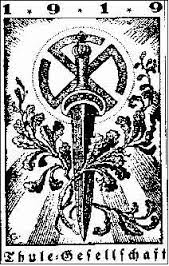
You see, modern history has produced a certain type of secret society. Think Germany's Thule Society, France's La Cagoule, Italy's Propaganda Due, or our very own Sovereign Order of Saint John. One thing all of these outfits have in common are their own secret armies. 

It is now grudgingly acknowledged, at least in Europe, that "stay-behind armies" were a common feature of the Cold War era. These clandestine militias were established across Western Europe in the aftermath of the Second World War by the intelligence services of the US and UK. In theory, these stay-behinds would be used, in conjunction with American and British special operations forces, to wage a guerrilla war against the Soviet Union in the event that Western Europe was invaded. 


That was the theory at least. In actuality, these stay-behinds often turned up in more nefarious and illicit activities. This is one aspect of the stay-behinds that has been covered up for decades. Another is the close relation these stay-behinds often had to secret societies, or that they were modeled on interwar arrangements used by groups like the Thulists or Cagoulards. 


But to find the origins of the modern use of militias by secret societies, one must turn to the Orangemen. Unlike most secret societies, this group always had militant intentions from it's very inception. For over two plus centuries years, it has been used as a cudgel to support British interests in Ireland and beyond.  

The strange and terrible history of the Orangemen and their legacy is the subject of The Farm's latest subscribers episode. Helping me unfold this history is the great Richard B. Spence. Richard is the author of such works as Secret Agent 666: Aleister Crowley, British Intelligence, and the Occult and Trust No One: The Secret World of Sidney Reilly. He is also the host of "The Real History of Secret Societies" of the History Channel's Great Courses series. 

This is an epic chat that covers both the modern history of Ireland and Freemasonry, the role of secret societies in the strategy of tension, and all kinds of high weirdness surrounding America's oh-so-mysterious Sovereign Order of Saint John, more commonly known as the "Shickshinny Knights of Malta." 

For those of you unaware, by joining The Farm's patron for $5 a month you receive two additional, full lengths episodes per month. That's between two and four hours of bonus material with exclusive guests and content. The likes of Christopher Knowles, J. Michael "Doc Future" Bennett, Neil Sanders, and David Metcalfe have already joined me for these exclusive shows and in the coming weeks Greg Bishop and Adam Gorightly will be dropping by. So please, consider it folks. 

Wednesday, July 1, 2020

Exploring the Mysteries of the Manchurian Candidate with John Bevilaqua


As longtime readers of this blog are no doubt well aware by now, Recluse is quite obsessed with the mysterious network of self-styled chivalric orders commonly referred to as the Sovereign Order of Saint John (SOSJ). Virtually all of these orders in turn trace back to one particular outfit, long based out of Shickshinny, Pennsylvania. This group claimed to be the legitimate Knights of Malta, via the Russian line of succession, with the "official" Sovereign Military Order of Malta group being the impostor.

Whatever the case, by the 1960s it emerged with a roster top heavy with former military and intelligence officers, and extensive ties to the far right paramilitary underground. Bizarrely enough, it also featured an abundance of cult connections as well. One of the most blood-stained were those with Christian Identity "theology," which were explored before here. However, they also possessed even stranger links to various metaphysical circles, ranging from UFO contactees, ceremonial magicians, and even one known, self-described "orgone specialist." These connections and more will soon be explored in a forth coming work by your's truly.

Today, however, I would like to shine a light on a book that got me started on this mysterious journey. It's called J.F.K. -The Final Solution by the great John Bevilaqua. John has been on the trial of the Kennedy assassins for sometime and he has come to believe that the SOSJ was instrumental.


Recently I was able to sit down for a chat with John on The Farm. In order to introduce everybody to the vast body of John's research, I thought a good starting point may be The Manchurian Candidate, both the Richard Condon novel and the 1962 film version. Have you ever wondered, for instance, why Condon selected Manchuria of all places for the title and such a crucial plot point? Well, here you'll find out about all the strange groups and characters active there in the aftermath of the First World War and beyond. One of them is the future Nazi and Ufologist William Dudley Pelley, whom you're going to be hearing a lot more about in the coming weeks here.

But this is only scratching the surface. Bevilaqua also covers such notorious and little known figures as Count Anastasy Vonsiatsky and Colonel Wickliffe Preston Draper; his own "twilight language"-esque approach to both Condon's work and a far right code system; and even a bizarre connection to the legendary Illuminatus! Trilogy. Be sure to check this one out guys, it's a good one.


It can be found here or on the sidebar.

John also provided some addition thoughts here that I'm reprinting now for context:

"The significance of Hunt and Rockwell attending Brown while Vonsiatsky still attended football games is that Annie and/or Draper probably recruited him and paid him to start the ANP. And Hunt named his son St. John after Vonsiatsky's Order of St. John."
"It is also important to note that the Rev Gerald L K Smith was not only part of The Winnipeg Airport Incident but he knew both William Dudley Pelley from their mutual Silver Shirts work during World War II and Father Charles Coughlin when they were both part of the Demagogues of the Depression in the 1930's and the early 1940's. And Anastase Vonsiatsky also attended the Winnipeg Airport Incident meeting as well and probably flew to Wichita, KS the home of Koch Family Empire where they were expecting to be paid off for the murder of JFK. Edwin Walker's grandfather gave the Koch family their financial start in America. His last name was deGanahl and Charles deGanahl Koch was given his name as his middle name as a symbol of thanks. Walker, Willoughby, Gale and Fellers were ALL working for Douglas MacArthur during the Korean War and even after that as private citizens. And Walker, Fellers and Willoughby through MacArthur were all implicated by Condon in Man Cand anagrams or key words. Fighting Francis Bollinger is an anagram for Bonner Fellers. Fellers was stationed in Cairo during World War II and was given Montgomery's tank movements as part of a scheme to undermine his efforts at evading the Desert Fox, Erwin Rommel who was not really a Fox at all. Fellers forwarded these proposed tank movements to James Angleton in Rome where he was stationed and he in turn sent these messages to Erwin Rommel.
"Mark Schulman Did not know that. S&C's early work with mergers between Boston Fruit and United Fruit bears that out. I thought they just did the legal work on that deal. Looks like they did both ends of the deal now. When did the Dulles Brothers join the firm? Other heads of the OSJ over time included Frank Capell, Revilo Oliver's pal, Charles Thurout Pichel, Hitler's American contact, John B. Trevor, Draper's Pioneer Fund crony and some M.D. from Florida. Vonsiatsky was also the international leader of the SMOSJ. Col. Philip J. Corso, OSJ a UFO nut working for Strom Thurmond was knighted into OSJ for running the Nazi Rat Lines from the Vatican for the eventual Pope Paul VI through Grace Steamship Lines of Peter Grace, OSJ. Angleton and Colby were also OSJ Knights. Spoiler Alert: Angleton was revered by the Israelis for saving Judaism from the evil Arabs AND for saving the R.C. Church from the Commies by siding with the Nazis at one point. Very versatile and accommodating guy. Angleton may also have helped the Israelis with their Dimona Nuclear Reactor secret program by removing any obstacles or blockers to that program. Hint, hint. Samuel Zemurray's agents from United Fruit funded Homer Echevarria's plots against JFK by his own admission IMHO."
As always guys, I hope everyone enjoys. Best to all in these troubled times and as always, stay tuned till next time.