
In part one of this series we examined the morals, or lack therefore of, of Colonial-era Americans. To recap: 'loose' sexuality, to say nothing of prostitution, homosexuality and interracial marriage, were not nearly as taboo as they would be in later eras while drinking was the definitive American past time. Staggering amounts of booze were consumed by seemingly every man and woman over the age of 15 on a daily basis. The Boston Tea Party itself was plotted in a tavern (/Masonic lodge). Surely the Revolutionary generation would be a bit perplexed by a modern American society in which the enactment of 40,000 new laws has become the new norm. What then brought us to this sorry state of affairs? Put simply, democracy.
"The men who created the United States were truly revolutionaries: they revolutionized the concept of freedom.
"The Founding Fathers were part of a transatlantic movement in the eighteenth and nineteenth centuries to replace external controls over subjects in absolutist regimes with the internal restraints of citizens in republics. This movement began what is now called the Modern Age. The modernist movement required not just the overthrow of monarchs but also the repression of what was called 'man's animal passions.' The problem with the discipline of the gallows, the lash, and the sword, according to these revolutionaries, was that it was far less effective than individual self-discipline in keeping social order. Even though peasants, slaves, and the colonial subjects we have seen in taverns and bawdy houses held no formal political power, they were, according to this view, actually too free because they had no reason to control themselves. So the Founding Fathers redefined freedom as self-control and built a political system around it called democracy.
"To solve the lack of order they saw all around them, the fathers seized on one of the great -and often missed -ironies in world history: the only thing that could make men forsake their own freedom and still believe they were free was self-rule. A government of the people, John Adams argued, would make the people disciplined, stern, hard working, and joyless -the qualities he most admired. It would 'produce Strength, Hardiness Activity, Courage, Fortitude, and Enterprise; the manly noble and Sublime Qualities in human Nature, in Abundance.' A monarchy, on the other hand, would let them have too much fun and, paradoxically, allow them too much liberty. It 'would produce so much Taste and Politeness, so much Elegance in Dress, Furniture, Equipage, so much Musick and Dancing, so much Fencing and Skaiting, so much Cards and Backgammon, so much Horse Racing and Cockkfighting, so many Balls and Assemblies, so many Plays and Concerts that the very imagination of them makes me feel vain, light, frivolous, and insignificant.' Adams understood that democracy forced the people to shed their pleasures and surrender their personal freedom, because they alone would shoulder the responsibility of managing society. 'under a well-regulated Commonwealth, the People must be wise virtuous and cannot be otherwise. Under a Monarchy they may be as vicious and foolish as they please, nay, they cannot but be vicious and foolish... [T]here is one Difficulty which I know not how to get over. Virtue and Simplicity of Manners are indispensably necessary in a Republic among all orders and Degrees of Men. But there is so much Rascallity, so much Venality and Corruption, so much Avarice and Ambition such a Rage for Profit and Commerce among all Ranks and Degrees of Men even in America, that I sometimes doubt wether there is public Virtue enough to Support a Republic.' The Founding Fathers understood what we now choose to ignore" democracy is the enemy of personal freedom...
"During what we call the American Revolution, a second American revolution too place: a counterrevolution against the pleasure culture of the cities. Personal freedom and sensual pleasure came under attack during the democratic revolution not because the revolutionaries were puritans but because democracy is puritanical.
"We normally think of democracy as a system of rights and freedoms: voting, speaking freely, equal treatment under the law, and so forth. But true democracy, the kind of democracy that the Founding Fathers wanted, is much more than that. John Locke, the man who, in the English world, helped invent the notion that he people should rule and who inspired all of the American democratic revolutionaries, made this brutally clear. 'It seems plain to me,' he wrote in Some Thoughts Concerning Education (1693), 'that the principle of all virtue and excellency lies in a power of denying ourselves the satisfaction of our own desire, where reason does not authorize them.' Locke knew that managing society is a big job requiring enormous discipline. If the people were to do it, then the people would have to renounce their personal freedom. Most importantly, they would have to be taught to feel shame for their selfish desires. 'Esteem and disgrace are, of all others, the most powerful incentives to them ind, when once it is brought to relish them,' Locke wrote. 'If you can once get into children a love of credit, and an apprehension of shame and disgrace, you have put into 'em the true principle, which will constantly work and incline them to the right.' The kind of punishment used by monarchs and slave owners to keep the people orderly and productive -whipping, flogging, executions, and the like -only 'patches up for the present, and skins it over, but reaches not to the bottom of the sore; ingenuous shame, and the apprehensions of displeasure, are the only true restraint. These alone ought to hold the reins, and keep the child in order.' "
(A Renegade History of the United States, Thaddeus Russell, pgs. 20-22)
 |
| John Adams, a great proponent of joylessness |
The Founding Fathers were quite obsessed with public morals. Many of the libertarian persuasion will assume that this was only amongst the Federalist movement whose base was largely centered around Puritan New England. However, the other dominate faction -the 'agarian republicans' centered around Virginia -were equally concerned with public morals. What's more, the morals that they sought to impose upon the American populace were not even at their root Christian morals, but pagan.
"Speaking broadly, even grossly, one may characterize American schools of republican thought as being in two categories: those which reduced their principles into systems of ideologies, and those which did not. Those which did -again speaking broadly, for there were shades and overlappings, and the substantive differences are clearly visible only at the extremes -may likewise be characterized in two categories. One, the more classical, may be described as puritan; the other, the more modern, may be described as agrarian.
"The two versions of ideological republicanism held a number of attitudes in common, the most crucial being preoccupation with the mortality of republics ('Half our learning, said Dawes, 'is their epitaph.') The vital -that is life-giving -principle of republics was public virtue. It is important to understand just what these two words signified. Like their Greek counterparts, polis and arete, they did not connote what is suggested by the idea of Christian virtue, with its emphasis upon meekness, passivity, and charity; quite the opposite, for the Christian concept of virtue was originally formulated as the central ethic in a counterculture that arose as a conscious protest against the classical cult of manliness. Nor did the public (or the polis) include everyone. Not coincidently, public, like virtue, derives from Latin roots signifying manhood: 'the public' included only independent adult males. Public virtue entailed firmness, courage, endurance, industry, frugal living, strength, and above all, unremitting devotion to the weal of the public's corporate self, the community of virtuous men. It was at once individualistic and communal: individualistic in that no member of the public could be dependent upon any other and still be reckoned a member of the public; communal in that every man gave himself totally to the good of the public as a whole. If public virtue declined, the republic declined, and if it declined to far, the republic died. Philosophical historians had worked out a regular life cycle, or more properly death cycle, of republics. Manhood gave way to effeminacy, republican liberty to licentiousness. Licentiousness, in turn, degenerated into anarchy, and anarchy inevitably led to tyranny.
"What distinguished puritanical republicanism from the agrarian variety was that the former sought a moral solution to the problem of the mortality of republics (make better people), whereas the latter believed in a socio-economic-political solution (make better arrangements). Almost nothing was outside the purview of a puritanical republican government, for every matter that might in any way contribute to strengthening or weakening the virtue of the public was a thing of concern to the public -a res publica -and was subject to regulation by the public. Republican liberty was totalitarian: one was free to do that, and only that, which was in the interest of the public, the liberty of the individual being subsumed in the freedom or independence of his political community."
(Novus Ordo Seclorum, Forrest McDonald, pgs. 70-71)
 |
| the Roman Senate of the Republic |
Put bluntly, pagan civilizations such as those that flourished in ancient Greece and Rome simply did not have the concept of individuality that we in the modern world now possess. What's more, this notion of individuality derived largely from Christianity and the Middle Ages of Europe. I know that this is a bold statement considering that fundamentalist Christians are amongst the most prominent vanguard for the suppression of individuality in the modern world, yet such an individuality could not have existed in the pagan societies of the Classical Age. What's more, the 'republican totalitarianism' that McDonald writes of above is a thoroughly pagan notion.
"Greek and Roman society was built on the conception of the subordination of the individual to the community, of the citizen to the state; it set the safety of the commonwealth, as the supreme aim of conduct, above the safety of the individual whether in this world or in a world to come. Trained from infancy in this unselfish ideal, the citizens devoted their lives to the public service and were ready to lay them down for the common good; or if they shrank from the supreme sacrifice, it never occurred to them that they acted otherwise than basely in preferring their personal existence to the interests of their country. All this was changed by the spread of Oriental religions which inculcated the communion of the soul with God and its eternal salvation as the only objects with living for, objects in comparison with which the prosperity and even the existence of the state sank into insignificance. The inevitable result of this selfish and immoral doctrine was to withdraw the devotee more and more from the public service, to concentrate his thoughts on his own spiritual emotions, and to breed in him a contempt for the present life which he regarded merely as a probation for a better and eternal. The saint and the recluse, disdainful of earth and rapt in ecstatic contemplation of heaven, became in popular opinion the highest ideal of humanity, displacing the old ideal of the patriot and hero who, forgetful of self, lives and is ready to die for the good of his country. The earthly city seemed poor and contemptible to en whose eyes beheld the City of God coming in the clouds of heaven. Thus the centre of gravity, so to say, was shifted from the present to a future life, and however much the other world may have gained, there can be little doubt that this one lost heavily by the change. A general disintegration of the body politic set in. The ties of the state and the family were loosened: the structure of society tended to resolve itself into its individual elements and thereby to relapse into barbarism; for civilization is only possible through the active co-operation of the citizens and their willingness to subordinate their private interests to he common good. Men refused to defend their country and even to continue their kind. In their anxiety to save their own souls and the souls of others, they were content to leave the material world, which they identified with the principle of evil, to perish around them. This obsession lasted for a thousand years. The revival of Roman law, of the Aristotelian philosophy, of ancient art and literature at the close of the Middle Ages, marked the return of Europe to native ideals of life and conduct, to saner, manlier views of the world. The long halt in the march of civilization was over. The tide of Oriental invasion had turned at last. It is ebbing still."
(The Golden Bough, James Frazer, pgs. 359-360)
 |
| 'Free' citizens of the Roman Republic were both required to serve in the legions (which often campaigned yearly) and pay for their own armor and weapons to do so |
The safety of the commonwealth over that of the individual? Reverence for the patriot and hero that sacrifices of all, including their very life, for the good of the country? Frazer may as well have been discussing neocon campaign slogans or a Marine recruiting video rather than classical civilization. Yet the ethos of the Classical and Modern eras are converging more and more every day as Frazer implies. And this was very much the intention of the Founding Fathers. We need only consider their views on ancient Sparta (which is once again en vogue thanks to the heavily propagandist 300).
"One thinks of the remark of the Athenian Alcibiades about Sparta, the ancient republic that American republicans professed to admire the most: 'No wonder the Spartans cheerfully encounter death; it is a welcome relief to them from such a life as they are obliged to lead.' "
(Novus Ordo Seclorum, Forrest McDonald, pg. 73)
 |
| Were the obligations of Spartan freedom more terrifying than death? |
And this, dear reader, was the 'freedom' that the Founders sought to impose upon us Americans. Of course this kind of unabashed militarism has never sat well with normal Americans. Thus, another -ism was needed to guide the populace towards proper republican virtues. Workaholism was determined to be an apt substitute for ultimately the greatest sin a free citizen of a virtuous republic could commit was unproductively. It was from Puritan New England that this philosophy derived.
"Even more persistent than the material structure of New England's economy was its ethic of work, which the founders of the Bay Colony introduced at an early date. This work ethic was a complex thing. It rested upon an idea that every Christian had two callings -a general calling and a special calling. The first was a Christian's duty to live a godly life in the world. The second was mainly his vocation. The Puritans did not think that success in one's calling was an instrument of salvation, but they believed that it was a way of serving God in the World."
(Albion's Seed, David Hackett Fischer, pgs. 155-156)

The so called Puritan work ethic emerged during the Renaissance and the Protestant Reformation and was conceptualized by such legendary theologians as Martin Luther and John Calvin. The Puritan work ethic was essentially a transformation of the Catholic notion of good works, transferring them into a obligation to work hard as a sign of grace. However, this concept has always existed uneasily within a Christian framework. Man was condemned to labor due to Original Sin but he was also granted a weekly release from his labors to observe the Sabbath. Wealth is generally frowned upon in the New Testament and to an extent in the Old. The purpose of one's labors was what was ultimately important rather than the success. This was in stark contrast to the emerging commercial society beginning to take root in New England.
"The wealth a commercial perspective delivers provided a dilemma for a puritan society to wrestle with since the intense neo-Christianity of Puritanism was yoked to an intense talent for commercial transaction. This contradiction was resolved by declaring wealth a reliable sign of God's favor as poverty was a sign of His condemnation. Both pagan and mercantile ethical codes operated behind a facade of Christianity during the Christian era, weakening the gospel religion, while at the same time profiting from it and paying lip service to it. Proponents of these different frames called themselves Christians but did not live like Christians, rejecting certain tenets... those which interfered with personal gain."The rise of Christianity saw a retreat from the material world in the Western psyche. But the Protestant Reformation unknowingly reversed the situation, giving rise to materialism. That it would ultimately deteriorate to senseless consumerism as we are now witnessing in the 21st century was inevitable. Binding an individual to their labor, and specifically to the amount that they labor, simply gave rise to a cult of work ethic that had no conception of morality other than earthly possessions. The rise of this cult was one of the greatest triumphs of propaganda in human history and it came at a terrible cost.
(The Underground History of American Education, John Taylor Gatto, pg. 291)
"...work has assumed an all-pervading role in modern life. Never have men worked so much as in our society. Contrary to what is often said, man works much more nowadays than, for example, in the eighteenth century. Only the working hours have decreased. But the omnipresence of the duties of his work, the obligations and constraints, the actual working conditions, the intensity of work that never ends, make it weigh much more heavily on men today than on men in the past. Every modern man works more than the slave of long ago; standards have been adjusted downward. But whereas the slave worked only because he was forced to, modern man, who believes in his freedom and dignity, needs reasons and justifications to make himself work. Even the children in a modern nation do an amount of wok at school which no child was ever asked to do before the beginning of the nineteenth century; there, too, justifications are needed. One cannot make people live forever in a state of assiduous, intense, never-ending labor without giving them good reasons and creating by example a virtue of Work..."
(Propaganda, Jacques Ellul, pgs. 140-141)
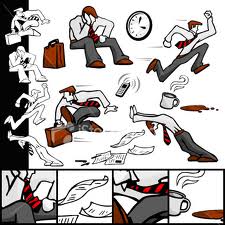
This is exactly what has happened in America since the Colonial era.
"From the time of the Puritan settlers... children's books, school primers, newspaper editorials, poems, pamphlets, sermons, and political speeches told Americans that to work was to be godly and to be idle was to be wretched. Cotton Mathers instructed parents to keep their children in 'continual Employment' so as to 'deliver them from the Temptations of Idleness,' and Thomas Shapard spoke for all Puritans when he told his son to 'abhor... one hour of idleness as you would be ashamed of one hour of drunkenness.' In the eighteenth century, Benjamin Franklin adapted the Puritan work ethic to the age of capitalism with his enormously popular aphorisms that counseled Americans to work all hours of the day in order to achieve dignity and respect. 'It is the working man who is the happy man,' he wrote in Poor Richard's Almanack. 'It is the idle man who is the miserable man.' With the beginning of mass industrial production in the nineteenth century, pride in work and shame in leisure became the defining characteristics of good citizens of the young nation."While the Puritans share a great deal of the blame for the cult of workaholism that now dominates these United States, the agrarian movement offers no viable alternative. Over the years, diverse factions ranging from the hippie communes of the late 1960s to the 'Freeman on the land' movement and the Ron Paul worshippers of the 2012 election cycle have held a certain reverence for the early American freeholder living off the fat of the land, which he worked with his own two hands. The mountain man of the 19th century American West has also spurred their fair share of romanticism. Both the freeholder and the mountain man were seen as the quintessential embodiment of American freedom -the individual that was totally self-sufficient, that provided for all of his needs by the sweat of his brow.
(A Renegade History of the United States, Thaddeus Russell, pg. 49)
The only problem with this image is that such individuals were even more tied to their labors than a Northern factory work or a Southern slave. As to the mountain man, the great survival expert Cody Lundin notes:
"The average 1800s American mountain man died when he was between thirty-four to thirty-seven years old. Mountain men were not living off the land without survival tools. They possessed several horses and mules, bags of flour and other dried staples, rifles, knives, traps, fire-starting methods, intimate knowledge of the landscape they were working within, potential friendships with native peoples, guts, determination, and a serious sense of adventure. Do you have any guesses as to why they died so young..?
"...In the case of the mountain men, doing everything alone flat wore them out, leaving them more susceptible to the dangers of their daily life. In other words, they died young from the sheer harshness of their solitary lifestyles."
(When All Hell Breaks Loose, pgs. 78-79)
 |
| Most mountain men didn't live long enough to show grey in their beards |
Things were not better for the average American small farmer on the frontier.
"The English writer Frances Trollope, who lived for several years on the Ohio frontier in the 1820s and 1830s, wrote with astonishment about the life of women... In addition to cooking and cleaning and minding the children, they spun and wove all the clothes for the family, manufactured all the soap and candles, and made butter to use and to sell for sundries in town. 'The life she leads,' Trollope wrote, 'is one of hardship, privation, and labour.' Whether a farm produced only enough for subsistence, produced a surplus for sale, or both, those who lived on it typically spent nearly every waking hour at work. Unlike slaves, these 'freeholders' were entirely responsible for their livelihood, and so, even when all the work was done, their thoughts remained occupied by it. Diaries of farmers in the eighteenth and nineteenth centuries are filled with detailed records of labor done and labor in need of doing, as well as motivational sayings on the virtues of diligence, frugality, and discipline."The myth that the simple life lies in returning to the earth, is just that: a myth. In many cases every day was a struggle for survival for both the mountain man and the freeholder. If nothing else, day to day life entailed ceaseless, back-breaking labour. Gone were the folk dances, singing festivals, communal feasts and games, and the scores of holidays that had been staples of English life for centuries before our ancestors crossed the Atlantic. All that remained was work. And to make matters even worse, work was increasingly being transformed into a kind of slavery. One of the chief instruments of this transformation was the implementation of wage-labor.
(A Renegade History of the United States, Thaddeus Russell, pg. 48)
"...Recent historical scholarship is curiously silent about the widespread opposition to wage labor in the eighteenth and nineteenth centuries, perhaps because it was influenced more directly by Lockean liberalism... than by the ideology of civic humanism. Yet the general uneasiness about the new economic order found its most striking expression in the nearly universal condemnation of wage labor.
"Langton Byllesby, a Philadelphia printer, argued in 1826 that wage labor, which destroyed the 'option whether to labour or not,' was the 'very essence of slavery.' The division of labor impoverished artisans, Byllesby said, 'for every improvement in the arts tending to reduce the value of labour necessary to produce them, must inevitably have the effect of increasing the value and power of wealth in the hands of those who may be fortuitously possessed of it.' In 1834, the General Traders' Union of New York declared, 'In proportion as the line of distinction between the employer and the employed is widened, the condition of the latter inevitably verges toward a system of vassalage.' Such statements recall Locke's argument that anyone forced by necessity to sell his labor lacked one of the essential attributes of freedom. As Mike Walsh put it, 'No man devoid of all other means of support but that which his labor affords him can be a freeman, under the present state of society. He must be a humble slave of capital...'
"Those who opposed the more and more militant demands made by artisans in the 1830s and 1840s did not quarrel with the claim that wage labor was a form of slavery. They merely denied that a permanent wage-earning class was taking shape in the United States... Americans took it as axiomatic, a cherished article of political faith, that freedom had to rest on the broad distribution of property ownership. In debates about universal suffrage, opponents of a restricted suffrage conceded the dangers of universal suffrage in societies marked by extremes of wealth and poverty...
"Both sides in early-nineteenth debates about suffrage and the labor question, in short, linked political freedom to the supremacy of the 'middling interests' or 'substantial yeomanry,' as the Jacksonian Robert Rantoul called them. Both sides took the position that freedom could not flourish in a nation of hirelings..."
(The True and Only Heaven, Christopher Lasch, pgs. 203-205)

Thus, even within the narrow confines of freedom that the Founding Fathers established, Americans have been totally enslaved. The very notion that wage labor is a kind of slavery is a totally foreign concept to the vast majority of Americans in the 21st century. Yet few among the Revolutionary generation, be they plebs or patriarchs, would have disputed the despotism a society such as ours would fall into with such a discrepancy between the wealthy and the poor. Universal ownership was always considered essential to republicanism even if it required an enormous amount of work to achieve. In the 21st century, the work load remains, but increasingly fewer and fewer Americans can expect to have a seat at the ownership table.
Neither far right or far left ideologies have offered any real alternatives either. Both fascism and communism feature the same reverence for work as capitalism. All three ideologies whole-heartily embrace the myth of 'liberation through work.' In many communist nations, the self described champions of the working class, workers could not even legally strike.


Regular readers may be wondering why I've chosen to write a article largely centered around the American obsession with work. This is a blog largely concerned with the occult, after all. But American workaholism is as much a product of occult societies as it is Christianity. Many of the Founding Fathers who sought to impose a system of ceaseless labor upon us were Freemasons. We've already examined how their notions of republican virtues were primarily pagan. While the 'Puritan work ethic' is often condemned (and not unjustly) for the plague of workaholism that has long infected this nation, it is often forgotten that Freemasonry was every bit as obsessed with work as any Puritan minister.
General Albert Pike, a 33rd degree Freemason in the Scottish Rite, dedicated an entire degree to work in his highly influential Masonic grimoire Morals and Dogmas. The degree, the twenty-second of thirty-three, was known as the Knight of the Royal Axe or Prince of Libanus. Libanus is an ancient name of Mount Lebanon. In the Bible Hiram of Tyre, who helped Solomon build his legendary temple, used cedar wood from Mount Lebanon in this work. A royal axe is likely the same as the double axe, the symbolism of which I've written on extensively here. As to the Masonic degree, Pike writes:
"Sympathy with the great laboring classes, respect for labor itself, and resolution to do some good work in our day and generation, these are the lessons of this Degree, and they are purely Masonic. Masonry has made a working-man and his associates the Heroes of her principal legend, and himself the companion of Kings. The idea is as simple and true as it is sublime. From first to last, Masonry is work. It venerates the Great Architect of the Universe. It commemorates the building of a Temple. Its principal emblems are the working tools of Masonry and Artisans. It preserves the name of the first worker in brass and iron as one of its pass-words. When the Brethren meet together, they are at labor. The Master is the overseer who sets the craft to work and gives them proper instruction. Masonry is the apotheosis of WORK...
"The life of all Gods figures itself to us as a Sublime Earnestness, -of Infinite battle against Infinite labor. Our highest religion is named the Worship of Sorrow. For the Son of Man there is no noble crown, well-worn, or even ill-worn, but is a crown of thorns. Man's highest destiny is not to be happy, to love pleasant things and find them. His only true unhappiness should be that he cannot work, and get his destiny as a man fulfilled. The day passes swiftly over, our life passes swiftly over, and the night cometh, wherein no man can work. That night once come, our happiness and unhappiness are vanished. It remains, or the want of it remains, for endless Times and Eternities...
(Morals and Dogmas, pg. 288)
 |
| Albert Pike |
One of the major Masonic symbols is the beehive. It is symbolic of the social order Freemasonry strives for and the work ethic that it requires. The thirty-third degree Freemason Manly P. Hall states, "The beehive is found in Masonry as a reminder that in diligence and labor for a common good true happiness and prosperity are found" (The Secret Teachings of All Ages, pg. 271). Work is one of the chief aspects of life that this philosophy has been most rigorously imposed upon.
"Hives are the bees' houses and, by metonymy, the bees themselves, collectively, as a tribe. Their symbolic quality is therefore clear. In so far as it is a house, the hive is maternal reassurance and protection: in so far as it is a hard-working collective -and how hard-working: its hum is like that of a workshop or factory -the hive symbolizes the type of organized and directed confederation, subject to strict regulation, which is regarded as soothing and pacifying the individual's basic anxieties. Thus, in some initiation societies and religious communities, patterns of organization call to mind symbolically those through which some heads of state or business chiefs nowadays ensure their personal power in the name of order, justice and security."
(Dictionary of Symbols, Jean Chevalier & Alain Gheerbrant, pgs. 508-509)

As noted above, Pike views the proper structure of work the same as the structure of a Masonic lodge with a master who "sets the craft to work," a fancy way of saying he manages his underlinings. This is similar to the institution of wage-slavery that was imposed upon Americans in the nineteenth century. In early America each man strove to be his own master and had a decent shot of succeeding. It was only later on that the common American accepted his status as the perpetual apprentice. And yet he still labors as hard as ever in true Masonic fashion, for leisure is only fit for swine.
"Labor is the truest emblem of God, the Architect and Eternal Maker; noble Labor, which is yet to be the King of this Earth, and sit on the highest Throne. Men without duties to do, are like trees planted on precipices; from the roots of which all the earth has crumbled. Nature owns no man who is not also a Martyr. She scorns the man who sits screened from all work, from want, danger, hardship, the victory over which is work; and has all his work and battling done by other men; and yet there are men who pride themselves that they and theirs have done no work time out of mind. So neither have the swine."And yet we saw early Americans were quite found of their leisure (of which drunkenness and casual sex was a major component of). It was only during the Revolution that the (Masonic) Founding Father began actively fostering 'republican virtues' that would lead to sober, joyless, productive worker bees that were necessary to maintain such an institution. So dear readers, do we currently toil under the Puritan work ethic? Or is it the Masonic work ethic? If it is the former, then why do so many professionals wear variations on Masonic dress when they head into the office?
(Morals and Dogmas, pg. 289)


