
Regular readers of this blog are no doubt aware of my interest in a curious organization known variously as Le Cercle, the Pinay Group, Pinay Circle/Cercle and a host of other titles. The organization was founded in 1952 by longtime German Chancellor Konrad Adenauer, onetime German Defense Minister Franz Josef-Strauss, French Prime Minister Antoine Pinay (for whom the organization was sometimes named after) and the mysterious Frenchman known as Jean Violet. It grew out of the United Europe movement and would become one of the two principal networks working towards this goal, along with the infamous Bilderberg group.
But while there was overlap between Bilderberg and Le Cercle in the early years, there were fundamental differences between these groups that led to a rift by the 1970s. Bilderberg was chiefly comprised of international bankers and other captains of industry and has long been dominated by the Anglo-American Establishment. Le Cercle, by contrast, was largely dominated by elites from Continental Europe until the 1980s, many of whom were drawn from the ranks of the Vatican and the old aristocracy. Catholicism was as much a part of Le Cercle's vision of a United Europe in the early days as was capitalism.
What's more, unlike Bilderberg, Le Cercle was not simply a policy coordination body, but also a full blown private intelligence network. As I've noted before here, here and here, Le Cercle appears to have played a crucial role in what is commonly referred to as Operation Gladio as well as various sex rings across Europe used to blackmail regional elites. As such, it has long enjoyed close ties with various Western intelligence services, especially those in the US and UK.

Recent research I've been conducting has indicated that this relationship may have stretched back to the origins of Gladio and that Le Cercle itself may have grown out of this network as a coordination body. This is the general thesis of this series.
Before moving along, a few words about Gladio: For one, Gladio is only the name of the Italian component of a network that stretched across Western Europe during the Cold War. Gladio and related components were meant to serve as stay-behind-armies in Western Europe in the event of a Soviet invasion, effectively waging an intense guerrilla war against the Reds. Or at least that was the official reasoning anyway. In actuality, these stay-behind or secret armies were more often than not used to terrorize Western nations to ensure their submission to NATO and the United States on the whole. The terrorism related to Italy's "Years of Lead" and Belgium's "Bloody Eighties" can largely be traced back to the stay-behind networks in these nations, as I noted before here and here.
And it would appear that Le Cercle loomed over all these networks, and may have from the very beginning. But before getting to the origins of Le Cercle let us first consider the history of these secret armies. Essentially, two World War II-era organizations appear to have served as the basis for these secret armies and were incorporated wholesale into Gladio at the onset of the Cold War. As such, a few words should be said about the WWII-era functions of these organizations.
Special Operations Executive
The first of these organizations up for consideration is the Special Operations Executive (SOE), a British intelligence network created at the onset of World War II. SOE had its origins in Section D of MI6 and several other operations being carried out by the Foreign and War Offices. When Churchill came to power in 1940, all of these operations were coordinated under the SOE, which came to be housed in the Ministry of Economic Warfare.
SOE is probably most well known in these United States for the role it played in creating the Office of Strategic Services (OSS), the predecessor to the CIA. The SOE worked closely with the British Security Coordination (BSC) in New York City prior to US entry into the Second World War. Along with the BSC and MI6, it maintained a branch office in Rockefeller Center beginning in 1940. Sir William Stephenson, head of the BSC and a close friend of OSS Director William "Wild Bill" Donovan, coordinated the operations of the SOE and MI6 in the States. He helped Donovan set up the OSS, which was largely modeled upon the SOE.
The SOE in turn maintained a massive training compound in Canada that was used initially to train OSS agents being deployed to Europe.
These fears would prove to be most well founded, as we shall see.
During the Second World War, the SOE built up a massive and highly effective network that the great Daniele Ganser referred to as "a carbon of operation Gladio born in the midst of the Second World War" (NATO's Secret Armies, pg. 41). Ganser went on to note:
Curiously, SOE veterans would serve as the backbone of Cercle members from the UK when the British began to take a keen interest in the organization during the 1970s. Lord Julian Amery, a future Cercle chairman and president, noted before here, cut his teeth with the SOE in Albania during WWII. By the 1980s he had been joined Le Cercle by his former SOE comrade-in-arms Neil "Billy" McLean.
Another future Cercle chairman, Sir Peter Tennant, was also an SOE veteran, having been recruited by Sir Charles Hambro, the eventual director of the SOE. Another Hambro associate who would sign up with Le Cercle was Harry Sporburg, a deputy chief of SOE under Hambro's predecessor, Colin Gubbins. Later, he would go on to work for the banking house long controlled by the Hambro family.
Sporborg's association with Le Cercle is especially ominous. Sporborg has been described as the individual who first conceived of Gladio, though I have been unable to confirm this. I have been able to confirm, however, that he helped establish an especially controversial British charity typically known as Sue Ryder. The Sue Ryder who served as the namesake of this charity was herself a veteran of the SOE during the Second World War. It would later be revealed that Jimmy Savile abused at least one dying child at a Sue Ryder children's hospice in Leeds. Its possible there were more victims at this institute, but no one is alive now to tell tales. But moving along.
Another British Cercle chairman and future president, Brian Crozier, never worked with the SOE, but received ample aid from such veterans over the years. His Institute for the Study of Conflict (ISC), a major Cercle propaganda outfit by the early 1970s, received its initial funding from SOE veteran Sir Peter Wilkinson. Another SOE veteran, Stephen Hastings, was deeply involved in Shield, a private intelligence network Crozier established in the UK in the 1970s to help elect Thatcher. Sporborg and Tennant were also involved with Shield, which was a domestic version of the global intelligence network Crozier established with the assistance of Le Cercle known as the 6I. Hastings was also a member of the Monday Club and a longtime political alley of Amery. He is known to have attended Cercle meetings during the late 1970s but it is unknown if he was a full blown member.

Clearly, SOE veterans were a key source of support for the Cercle complex by the 1970s and eventually they would dominate the organization by the 1980s. This curious relationship has been little remarked upon, but given the role the SOE had in establishing Gladio, it is hardly surprising. For all of this information I'm deeply indebted to David Teacher's groundbreaking and long suppressed Rogue Agents, which can be found here on the great Institute for the Study of Globalization and Covert Politics (ISGP). ISGP's own Cercle page is also a great resource.
SOE is probably most well known in these United States for the role it played in creating the Office of Strategic Services (OSS), the predecessor to the CIA. The SOE worked closely with the British Security Coordination (BSC) in New York City prior to US entry into the Second World War. Along with the BSC and MI6, it maintained a branch office in Rockefeller Center beginning in 1940. Sir William Stephenson, head of the BSC and a close friend of OSS Director William "Wild Bill" Donovan, coordinated the operations of the SOE and MI6 in the States. He helped Donovan set up the OSS, which was largely modeled upon the SOE.
 |
| the famed Rockefeller Center |
"... Camp X. Located on the north shore of Lake Ontario, between the Canadian towns of Oshawa and Whitby, the camp was the first paramilitary training school in North America. Established in December 1941, just one day before the Japanese attacked Pearl Harbor, the 270-acre site was operated by Britain's ultra-secret Special Operations Executive. SOE had been formed as a branch of MI-6 in July 1940, after Winston Churchill instructed his military advisers to counter Nazi blitzkrieg victories and 'set Europe ablaze.' SOE's first order of business was to recruit and train hundreds of secret agents, who would be responsible for advancing sabotage, subversion, and organized resistance against Axis occupied areas. Camp X, also called Project J and STS-103, offered its carefully selected students a full curriculum in the techniques of guerrilla warfare, covert action, and assassination...
"Training at Camp X was extremely rigorous. Recruits were routinely roused well before dawn to perform several hours of strenuous physical exercise before they were allowed a Spartan morning meal consisting of little more than a glass of milk and a hard roll. Then it was on to a full day of classes with instructions in subjects like 'Close Combat,' 'Small and Concealed Weapons,' and 'Silent Killing.' The camp featured a number of extremely difficult 'infiltration courses,' one of which featured a large swamp dubbed 'Lake Oshawa' by SOE instructors; for more substantial water exercises, the frigid waters of Lake Ontario were only twenty minutes away. Camp X's training ethos were simple; it revolved around the mantra, 'Kill or be killed.' Several times a week, trainees would participate in group jiu jitsu training, led by their chief instructor, British Major William Ewart Fairbairn, during which words were chanted, in cadence with martial movements, for hours on end. Said one former student years later, 'It turned our values upside down and we wondered about making a world fit for terrorists.' "
(A Terrible Mistake, H.P. Albarelli, pgs. 393-394)
 |
| Camp X |
During the Second World War, the SOE built up a massive and highly effective network that the great Daniele Ganser referred to as "a carbon of operation Gladio born in the midst of the Second World War" (NATO's Secret Armies, pg. 41). Ganser went on to note:
"Special Operations Executive employed many of the staff of Section D and eventually became a major organisation in its own right with over 13,000 men and women in its ranks, operating on a global scale and in close cooperation with the MI6. Although SOE also carried out missions in Far East Asia, mounted from India and Australia, Western Europe was its main theatre of operation where it focused on establishing of national secret armies. SOE promoted sabotage and subversion in enemy-occupied territory and established nucleus of trained men who could assist resistance groups in the re-conquest of the countries concerned. 'SOE was for five years the main instrument of British action in the internal politics of Europe,' the British Cabinet Office report noted, 'it was an extremely powerful instrument' for it could serve a multitude of tasks and thus 'While SOE was at work no European politician could be under the illusion that the British were uninterested or dead.' "
(NATO's Secret Armies, Daniele Ganser, pg. 41)
 |
| the emblem of the SOE |
Another future Cercle chairman, Sir Peter Tennant, was also an SOE veteran, having been recruited by Sir Charles Hambro, the eventual director of the SOE. Another Hambro associate who would sign up with Le Cercle was Harry Sporburg, a deputy chief of SOE under Hambro's predecessor, Colin Gubbins. Later, he would go on to work for the banking house long controlled by the Hambro family.
Sporborg's association with Le Cercle is especially ominous. Sporborg has been described as the individual who first conceived of Gladio, though I have been unable to confirm this. I have been able to confirm, however, that he helped establish an especially controversial British charity typically known as Sue Ryder. The Sue Ryder who served as the namesake of this charity was herself a veteran of the SOE during the Second World War. It would later be revealed that Jimmy Savile abused at least one dying child at a Sue Ryder children's hospice in Leeds. Its possible there were more victims at this institute, but no one is alive now to tell tales. But moving along.
Another British Cercle chairman and future president, Brian Crozier, never worked with the SOE, but received ample aid from such veterans over the years. His Institute for the Study of Conflict (ISC), a major Cercle propaganda outfit by the early 1970s, received its initial funding from SOE veteran Sir Peter Wilkinson. Another SOE veteran, Stephen Hastings, was deeply involved in Shield, a private intelligence network Crozier established in the UK in the 1970s to help elect Thatcher. Sporborg and Tennant were also involved with Shield, which was a domestic version of the global intelligence network Crozier established with the assistance of Le Cercle known as the 6I. Hastings was also a member of the Monday Club and a longtime political alley of Amery. He is known to have attended Cercle meetings during the late 1970s but it is unknown if he was a full blown member.
Clearly, SOE veterans were a key source of support for the Cercle complex by the 1970s and eventually they would dominate the organization by the 1980s. This curious relationship has been little remarked upon, but given the role the SOE had in establishing Gladio, it is hardly surprising. For all of this information I'm deeply indebted to David Teacher's groundbreaking and long suppressed Rogue Agents, which can be found here on the great Institute for the Study of Globalization and Covert Politics (ISGP). ISGP's own Cercle page is also a great resource.
Reich Main Security Office
But while the SOE connection to Gladio has received some attention over the years, the influence of another WWII-era intelligence agency has been even less remarked upon. This is not entirely surprising as the Reich Main Security Office (RSHA) was the chief intelligence and security service for the SS. Of course the role Reinhard Gehlen, who at one point was the German General Staff's chief intelligence officer for the Fremde Heere Ost (FHO, Foreign Armies East) and the founder of the BND, played in German and Eastern European stay-behind networks is fairly well known at this point. But Gehlen was an agent of the Wehrmacht, the German military. Gehlen was not an SS man and while known for rather brutal interrogation methods, was not a fanatical Nazi. In point of fact, Gehlen comes off as rather restrained in comparison to the legions of the psychopaths in the RSHA, many of whom would serve as the backbone of Gehlen's secret armies.
But before getting to that, a bit more should be said about the RSHA. Created in 1939, it quickly grew into one of the most Byzantine institutions in Nazi Germany (no small accomplishment, that). The man often credited with its creation was General Reinhard Heydrich, one of the chief architects of the Holocaust. Heydrich headed the organization from its creation in 1939 until 1942, when he was assassinated --by the SOE.
During his time overseeing the RSHA, Heydrich incorporated many of the most brutal components of the Nazi Party into the organization. The RSHA was divided into seven Amters or sections. Amt IV and Amt V included the dreaded Gestapo and the Kriminalpolizei (which was somewhat akin to Nazi Germany's FBI). Amt IV also oversaw many aspects of the Holocaust.
Amt III was comprised of the domestic wing of the SD, the SS's own private intelligence service and the chief rival of the Abwehr during the Second World War. For our purposes here, however, we are most concerned with Amt VI and Amt VII. Amt VI featured the foreign component of the SD, which became one of the most powerful intelligence services of WWII era by war's end.

Of especial interest was Amt VI-S. Created in 1943, Amt VI-S would emerge as the special operations forces of Nazi Germany. At the time this unit was conceived of as a counter to the British SOE and Special Air Services (SAS) and the American OSS. Tapped to head the unit was the infamous Otto "Scarface" Skorzeny, allegedly Hitler's favorite commando. Virtually everyone who met Skorzeny agreed that he was very inch of soldier. Standing at 6'4 and weighing around 220 pounds of mostly muscle, the Austrian was as fine an example of Hitler's notion of Aryan superiority as any.
Skorzeny, prior to the war, had trained as an engineer and generally comes off as more intelligent than he is often given credit for. Certainly the intense training he subjected his charges too would test both their physical and mental limits.
When the war turned against the Nazis in the East, the UPA was founded by the OUN-B to assist the German withdraw. Skorzeny trained many of these units, which would prove to be highly effective.

Skorzeny also had some involvement in the legendary Werwolf project, though not to the extent that is generally claimed. SS General Hans-Adolf Prutzmann was the actual head of the project, with Skorzeny's "Hunting Group" provided some training and support to the Werwolf units.
For those of you unaware, the Werwolf project was begun in 1944 as the war was winding down. Originally the Werwolf participants were conceived as additional commando units that could be used to conduct sabotage and assassinations behind enemy lines. Towards the end of the war, Nazi propaganda chief Joseph Goebbels made brazen claims that the Werwolf units would be used as a stay-behind force to wage a guerrilla war against the Occupation, a claim that Allies initially took very seriously.
However, it is now widely agreed that these claims were pure propaganda. There does not appear to have been a serious plan to wage a guerrilla war against the Allies and in fact the Werwolf units were largely poorly trained and equipped. Their chief value to the Nazi regime was principally for psychological warfare purposes.
Skorzeny was involved in other, much more highly effective stay-behind operations, however. One of the most notorious was the so-called "Peter Group" of Denmark, which was created to counter the SOE-backed resistance in that particular Nordic country. The group as commanded by Otto Schwerdt, one Skorzeny's top men in the SD.
Another, even more curious group Skorzeny was involved in was known as the "Organisation Technique" (OT). This group was also established in 1944, shortly after France was liberated by the Allies. The OT was intended as a stay-behind network that would conduct sabotage and assassination operations against the Allies in France.

OT creator Joseph Darnand, like seemingly every other major member of the group, had also been a member of the dreaded Cagoule in the years leading up to the war. La Cagoule, which was addressed before here and here, was a secret society and paramilitary organization active in France during 1936 and 1937. During those years the group stockpiled an enormous amount of arms and engaged in several assassinations and bombings, with an eye towards plunging France into a civil war. From there the Cagoule, along with their extensive supporters in the military, would establish a fascist dictatorship in France along the lines of those in Italy and Spain.
Needless to say, things didn't quite work out that way. The organization was largely neutralized by French police in 1937, with most key members in prison by the end of that year. But with the outbreak of the war in 1939, many Cagoulards were released to defend the homeland. After the French defeat most Cagoulards signed up with the Vichy regime, were they gained some degree of influence. Others went to De Gaulle's Resistance movement. Towards the end of the war, they became a crucial back channel between the US and the Nazi regime.
The above-mentioned Jean Violet, a founder of Le Cercle, had been a member of the Cagoule prior to the war. Violet is generally regarded as the chief force behind the creation of Le Cercle and the dominant personality behind the group until his departure in the late 1970s.
 |
| Gehlen |
During his time overseeing the RSHA, Heydrich incorporated many of the most brutal components of the Nazi Party into the organization. The RSHA was divided into seven Amters or sections. Amt IV and Amt V included the dreaded Gestapo and the Kriminalpolizei (which was somewhat akin to Nazi Germany's FBI). Amt IV also oversaw many aspects of the Holocaust.
Amt III was comprised of the domestic wing of the SD, the SS's own private intelligence service and the chief rival of the Abwehr during the Second World War. For our purposes here, however, we are most concerned with Amt VI and Amt VII. Amt VI featured the foreign component of the SD, which became one of the most powerful intelligence services of WWII era by war's end.
"... Amt VI ('Department Six') of the SS RSHA, Nazi Germany's main security headquarters. This SS section had been a combined foreign intelligence, sabotage, and propaganda agency and was, in effect, the CIA of Nazi Germany. By war's end SS RSHA Amt VI had consolidated not only the foreign sections of the Nazi's police intelligence apparatus but military intelligence (Abwehr), Gehlen's own FHO, and much of the Nazi Party's internal foreign espionage network as well. Amt VI was an extraordinary rich collection of trained agents, intelligence files, saboteurs, and propagandist. Both Gehlen and the United States drew many of their most valuable recruits from this department after the war. Its hoard of files on the USSR and Eastern Europe, in particular, was without equal anywhere."
(Blowback, Christopher Simpson, pg. 46)
Of especial interest was Amt VI-S. Created in 1943, Amt VI-S would emerge as the special operations forces of Nazi Germany. At the time this unit was conceived of as a counter to the British SOE and Special Air Services (SAS) and the American OSS. Tapped to head the unit was the infamous Otto "Scarface" Skorzeny, allegedly Hitler's favorite commando. Virtually everyone who met Skorzeny agreed that he was very inch of soldier. Standing at 6'4 and weighing around 220 pounds of mostly muscle, the Austrian was as fine an example of Hitler's notion of Aryan superiority as any.
The Hunting Group
Skorzeny, prior to the war, had trained as an engineer and generally comes off as more intelligent than he is often given credit for. Certainly the intense training he subjected his charges too would test both their physical and mental limits.
"... Skorzeny's unit would eventually be known as SS-Jagdverband or 'Hunting Group.' Skorzeny recruited personnel throughout the Reich'ss various military units. He wanted to acquire only those of the highest caliber and as such received special permission to recruit from all the services, not just the Waffen SS. Eventually, his commando group included army, navy, and air force personnel, which resulted in Skorzeny becoming the preeminent special forces commander of the Third Reich.
"Besides having a foreign language requirement, the recruits had to demonstrate basic skills and knowledge of firearms, grenades, artillery, and the ability to operate automobiles, motorcycles, watercraft, and locomotives. They also had to be expert swimmers and able to parachute from aircraft. Many were capable of speaking foreign languages such as English, French, Italian, Russian, and Persian. An intense commando training regimen was instituted. Some individuals were selected for special agent training. All of Skorzeny's training was tough and included covert operation skills required for stay-behind missions in enemy territory."
(The Skorzeny Papers, Ralph P. Ganis, pg. 38)As the war began to turn against Nazi Germany in the wake of the disastrous Battle of Stalingrad, Skorzeny became increasingly involved in training stay-behind units. Some of the earliest and most infamous were Eastern units, largely comprised of Ukrainians, that were used to harass the Red Army as the Germans retreated from the Ukraine. These units were drawn from the ranks of the infamous Ukrainian Insurgent Army (UPA), which in turn grew out of the equally infamous Organization of Ukrainian Nationalists-Bandera (OUN-B). There had been an early OUN, but with approval of the Nazis, the more radical OUN-B emerged out of this group. While its relationship with the Nazi regime would be ambiguous at best throughout the war, the OUN-B was still the chief Ukrainian Quisling group and a vigorous participant in the Holocaust.
 |
| the emblem of the OUN-B |
"... accelerated German recruitment of Ukrainians from police groups into the Waffen SS, and by increased cooperation with the underground OUN/UPA leadership and a secret program that the SS-designated Operation Sonnenblume (Sunflower). According to U.S. interrogations of SS RSHA Amt VI clandestine operations chief Otto Skorzeny and his adjutant Karl Radl, Amt VI organized Sonnenblume in 1944 to coordinate German and OUN efforts during the Nazis' retreat from Russia.
"Thousands of tons of arms, ammunition, and other war materiel abandoned by the Nazis were consigned to underground OUN-led troops, Skorzeny told the Americans. The deal proved to be an astute investment for the Germans. The OUN/UPA succeeded in tying down some 200,000 Red Army troops and killing more than 7,000 Soviet officers during the Wehrmacht's disordered flight across Europe during 1944 and 1945."
(Blowback, Christopher Simpson, pgs. 162-163)Curiously, many of the OUN-B members would go on to play a crucial rule in establishing the Anti-Bolshevik Bloc of Nations (ABN). The ABN in turn would play a key role in creating the World Anti-Communist League (WACL, noted before here), one of the key components of the post-war Fascist International. Both the ABN and especially the WACL would establish a close working relationship with Le Cercle. But back to the matter at hand.
Skorzeny also had some involvement in the legendary Werwolf project, though not to the extent that is generally claimed. SS General Hans-Adolf Prutzmann was the actual head of the project, with Skorzeny's "Hunting Group" provided some training and support to the Werwolf units.
For those of you unaware, the Werwolf project was begun in 1944 as the war was winding down. Originally the Werwolf participants were conceived as additional commando units that could be used to conduct sabotage and assassinations behind enemy lines. Towards the end of the war, Nazi propaganda chief Joseph Goebbels made brazen claims that the Werwolf units would be used as a stay-behind force to wage a guerrilla war against the Occupation, a claim that Allies initially took very seriously.
However, it is now widely agreed that these claims were pure propaganda. There does not appear to have been a serious plan to wage a guerrilla war against the Allies and in fact the Werwolf units were largely poorly trained and equipped. Their chief value to the Nazi regime was principally for psychological warfare purposes.
Skorzeny was involved in other, much more highly effective stay-behind operations, however. One of the most notorious was the so-called "Peter Group" of Denmark, which was created to counter the SOE-backed resistance in that particular Nordic country. The group as commanded by Otto Schwerdt, one Skorzeny's top men in the SD.
Another, even more curious group Skorzeny was involved in was known as the "Organisation Technique" (OT). This group was also established in 1944, shortly after France was liberated by the Allies. The OT was intended as a stay-behind network that would conduct sabotage and assassination operations against the Allies in France.
"... the OT was created by Joseph Darnand, the former head of the Vichy Milice (French fascist paramilitary), consisting of 150-200 volunteers to be trained as agents and sent back in France to fight the Allied forces.
"Command of the OT was given to Jean Degans, a former member of the Cagoule and former director of the Vichy police. OT liaison with the Germans came from Skorzenys Jagdverband, and Jean Fillliol, a former Cagoule who exercised 'day-to-day' control of the group. Several OT sabotage and secret service camps were established in Germany with training and operational planning coming directly from Skorzeny's special forces."
(The Skorzeny Papers, Ralph P. Ganis, pg. 60)

OT creator Joseph Darnand, like seemingly every other major member of the group, had also been a member of the dreaded Cagoule in the years leading up to the war. La Cagoule, which was addressed before here and here, was a secret society and paramilitary organization active in France during 1936 and 1937. During those years the group stockpiled an enormous amount of arms and engaged in several assassinations and bombings, with an eye towards plunging France into a civil war. From there the Cagoule, along with their extensive supporters in the military, would establish a fascist dictatorship in France along the lines of those in Italy and Spain.
Needless to say, things didn't quite work out that way. The organization was largely neutralized by French police in 1937, with most key members in prison by the end of that year. But with the outbreak of the war in 1939, many Cagoulards were released to defend the homeland. After the French defeat most Cagoulards signed up with the Vichy regime, were they gained some degree of influence. Others went to De Gaulle's Resistance movement. Towards the end of the war, they became a crucial back channel between the US and the Nazi regime.
The above-mentioned Jean Violet, a founder of Le Cercle, had been a member of the Cagoule prior to the war. Violet is generally regarded as the chief force behind the creation of Le Cercle and the dominant personality behind the group until his departure in the late 1970s.
Amt VII
And finally we come to Amt VII, easily the most mysterious section of the RHSA. When most (scholarly) researchers consider occultism in the SS, they look to the Ahnenerbe, that curious "think tank" that dabbled in so much esoteric research both prior to and during the Second World War. And while the Ahnenerbe was without a doubt the chief agency within the SS for researching occultic topics, Amt VII would quietly delve into the same waters with equal vigor. Officially Amt VII was the "Written Records" section of the RSHA, essentially its library. But this was a library that specialized in especially arcane research.
Back to one of those members, the above-mentioned Werner Goettsch. Goettsch was a close friend of fellow SD agent Otto von Bolschwing, who enjoyed a longstanding working relationship with the CIA in the post-war years. Goettsch was also close to Ernst Kaltenbrunner, who became head of the RHSA in the wake of Heydrich's assassination. Kaltenbrunner was an old fencing partner of Otto Skorzeny from their academy days. It was Kaltenbrunner who recommended Skorzeny to lead the SS's commando units.
During his time with Amt VI, Goettsch played a key role in establishing SD intelligence networks in the Balkans. Then, in 1943, he was transfer to Amt VII for curious reasons. A report by the Counterintelligence Corps (CIC) noted:
The infamous Italian philosopher and occultist Julius Evola had enjoyed a longstanding association with the SD that likely went back to at least 1939 despite Evola's ideology being denounced by Volkish elements in the SS. Evola was close to members of the Romanian Iron Guard, which Werner Goettsch's friend Otto von Bolschwing had also worked with while detailed to the SD. Evola's early work with the SD may have derived from his connection to the Guard as well. Former members of the Iron Guard would later help establish the Anti-Bolshevik Bloc of Nations, as was noted before here.
Evola was officially involved with the RSHA by the end of the war, but what exactly he was doing is shrouded in mystery.
But is it possible Evola was doing both --working on a book on occultism while helping set up a stay-behind army? And were these to projects totally unrelated? The great Kevin Coogan proposes that Evola was involved in setting up a kind of secret society that could sustain the SS in the wake of the Third Reich's defeat.
As outlandish as it may sound, there can be little doubt that Evola played some as yet unknown role in the Gladio-inspired Years of Lead in Italy, as was noted before here. And there can be even less doubt that Evola had an enormous influence on Italian neo-fascist terrorists in thep ost-war years.
During his time with the RSHA at war's end, Evola was detailed to Vienna. Otto Skorzeny, a man also deeply involved in SS stay-behind networks, was also active in Vienna at times during this period as well. Did their work overlap and were their postwar efforts part of the Black Order Evola conceived of in the final days of the Third Reich?
As well shall see, there were certainly a few post war connections to either man. And with that I shall sign off for now. Until next time dear reader, stay tuned.

"... AMT VII of the RSHA, the 'Ideological Research' Division that handled occultism, Freemasonry, and cults. From 1941-1945, this division have been under the leadership of Dr. Franz Alfred Six, a scholarly SS-Brigadefuhrer who earlier became prominent as a leader of the Vorkmmando Moskau: a death squad that roamed occupied Russia, murdering hundreds of civilians, dissidents, and Jews in 1941. Six joined the SD in April of 1935 when he was only twenty-six years old; in 1939 he became head of AMT II of the RSHA. A year later, Heydrich named him his future representative in Great Britain after the hypothetically successful Nazi invasion of the British Isles. In other words, Dr. Six would have been largely responsible for program of 'ethnic cleansing' in England had the Nazis managed to invade and occupy the country.
".... It is said that Himmler created the bizarre occult research division of the RSHA –AMT VII – specifically for Six, so pleased as he was by Six's enthusiasm for hunting down the enemies of the Reich in Russia during the summer of 1941 at Smolensk."
(Unholy Alliance, Peter Levenda, pg. 237)Six had actually left Amt VII in 1943 and was replaced by Paul Dittel, another SD man. Throughout its brief existence, appears to have maintained a close relationship with the SD, especially Amt VI. Six had been a member of Amt VI, as had Werner Goettsch, another Amt VII man that shall be addressed in a moment. This has led to some confusion among researchers, with some claiming that Amt VII was a part of the SD. Technically they were separate departments, with the SD consisting of Amt III and Amt VI in the RSHA. Still, there was clearly close collaboration and various members of VI would later work with Amt VII.
Back to one of those members, the above-mentioned Werner Goettsch. Goettsch was a close friend of fellow SD agent Otto von Bolschwing, who enjoyed a longstanding working relationship with the CIA in the post-war years. Goettsch was also close to Ernst Kaltenbrunner, who became head of the RHSA in the wake of Heydrich's assassination. Kaltenbrunner was an old fencing partner of Otto Skorzeny from their academy days. It was Kaltenbrunner who recommended Skorzeny to lead the SS's commando units.
 |
| Kaltenbrunner |
"while deep in this reading which changed his feelings towards Nazi ideology, GOETTSCH was appointed liaison officer between Amt VI and the Propaganda Ministry. Because of continued illness and a changed ideological point of view, GOETTSCH asked KALTENBRUNNER to transfer him to Amt VII. Later he sought the acquaintance of Dr DOPPLER, a Freemason in VIENNA, who later advised him concerning the evacuation of Amt VII'S library."
(Dreamer of the Day, Kevin Coogan, pg. 322)The reading that changed Goettsch's point of view involved works on political theory, history and mysticism. Nor was Goettsch the only SD man who would use Amt VII to research the occult at the end of the war.
The infamous Italian philosopher and occultist Julius Evola had enjoyed a longstanding association with the SD that likely went back to at least 1939 despite Evola's ideology being denounced by Volkish elements in the SS. Evola was close to members of the Romanian Iron Guard, which Werner Goettsch's friend Otto von Bolschwing had also worked with while detailed to the SD. Evola's early work with the SD may have derived from his connection to the Guard as well. Former members of the Iron Guard would later help establish the Anti-Bolshevik Bloc of Nations, as was noted before here.
Evola was officially involved with the RSHA by the end of the war, but what exactly he was doing is shrouded in mystery.
"... Historian Richard Drake says that while he was in Vienna, 'Evola performed vital liaison services for the SS as Nazi Germany sought to recruit a European army for the defense of the Continent against the Soviet Union and the United States.' According to his own account, Evola spent his time living incognito while doing 'intellectual' research. But what kind of research?
"While Evola was in Vienna, the SD supplied him with a series of arcane texts plundered from private libraries and rare book collections. The SD bureau the provided him with these documents was Amt VII, an obscure branch that served as an RSHA research library. With this precious archive, Evola closely studied masonic rituals and translated certain 'esoteric texts' for a book called Historie Secrete des Societes Secretes. It never appeared because Evola claimed that all his documents were lost during the Russian bombardment."
(Dreamer of the Day, Kevin Coogan, pgs. 319-320)
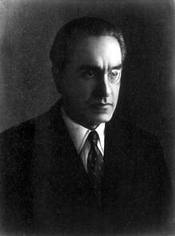 |
| Julius Evola |
As outlandish as it may sound, there can be little doubt that Evola played some as yet unknown role in the Gladio-inspired Years of Lead in Italy, as was noted before here. And there can be even less doubt that Evola had an enormous influence on Italian neo-fascist terrorists in thep ost-war years.
"The use of violence in Italian neo-fascism escalated with numerous bomb attacks and massacres, beginning with the Piazza Fontana explosion in Milan in April 1969. Adriano Romauldi, a leading young neo-fascist, identified Evola in 1971 as the intellectual hero of militant right-wing youth in Italy 'because the teaching of Evola is also a philosophy of total war.' By 1975, the far-right underground adopted a leftist strategy in mounting attacks against the state itself (murders of officials, robberies in ministries). The trend towards violence continued, so that by the late 1970s a cult of action replaced ideology itself, elevating the idea of combat to an existential duty. Neo-fascist terrorist such as Franco Freda and Mario Tuti frequently reprinted and cited Evola's two most militant tracts, Metafisica della guerra (1935) and Dottrina ariana (1940), in praise of 'heroic,' 'exemplary' action without an instrumental purpose.... Groups such as Movimento Revoluzionario Popolare, Terza, and Nuclei Armati Rivoluzionari subsequently unleashed a surge of black terrorism in Italy until the majority of militants had been captured or killed and a handful fled abroad."
(Black Sun, Nicholas Goodrick-Clarke, pgs. 67-68)Could this also help explain why so many Amt VI men like Six and Goettsch would end with Amt VII as the war was going into a critical stage studying the occult. Wouldn't their services have been put to better use in other fields? Or was there was some truth to Coogan's notion of a Black Order?
During his time with the RSHA at war's end, Evola was detailed to Vienna. Otto Skorzeny, a man also deeply involved in SS stay-behind networks, was also active in Vienna at times during this period as well. Did their work overlap and were their postwar efforts part of the Black Order Evola conceived of in the final days of the Third Reich?
As well shall see, there were certainly a few post war connections to either man. And with that I shall sign off for now. Until next time dear reader, stay tuned.


