Saturday, August 17, 2013

Paddy Chayefsky and the Wonders of the Invisible World Part VI


Welcome to the sixth and what will hopefully be the final installment in my series revolving around the final two films of famed screenwriter Paddy Chayefsky. The first two installments in this series (which can be found here and here) chiefly focused upon the Oscar-winning Network, one of the major critic's darlings from the 1970s. While this film is chiefly remembered for its scathing satire of the television industry it is also littered with high strangeness, from the Symbionese Liberation Army-inspired guerrilla group drafted by the UBS network into a quasi-reality show to Howard Beale's legendary monologues he claims are inspired by a daimonic-like "shrill, shrieking voice" that visited him one night.

Beale (Peter Finch)
But while Network may have flittered with high strangeness Chayefsky's final film, 1980's Altered States, is positively loaded with it. In the third installment I examined Chayefsky's feud with the film's director, cult favorite Ken Russell, as well as the twilight language-ridden names of the lead characters. In the most recent installments (which can be found here and here) I began to focus in on the film's plot with a special emphasis on the connections the events it depicts have to the real life adventures of a group of scientists, psychiatrists, artist and other intellectual-types affiliated with the mysterious neuroscientist and parapsychologist Andrija Puharich.

Puharich
John C. Lilly, whose experiments with LSD in conjunction with an isolation tank partly inspired Altered States, was a member of this network as were virtually every other major psychonaut of the day --Timothy Leary, Robert Anton Wilson, Terence McKenna, etc. As such, it shouldn't be entirely surprising then that everything from Harvard University (which did extensive research in entheogens well beyond Leary's exploits), R. Gordon Wasson's adventures in Mexico in search of magic mushrooms (some accounts claim he was sent on his way by Puharich, who would himself turn up there a year after Wasson's celebrated trip possibly in search of God's Flesh himself), and even Terence McKenna's "Stoned Ape" theory (which didn't receive widespread exposure until the 1990s) are seemingly alluded to by the film.


Lilly (top), Wasson (middle), and McKenna (bottom)
When last I left off I had just finished recounting two of the most in depth hallucinations depicted in the film --Jessup's (William Hurt) initial trip on the Hinchi brew (a concoction featuring amanita muscaria, belladonna, and the sinicuichi plant) with the tribe itself in Mexico and the Purgatory-style trip he has back in Boston sans an isolation tank. I'll be working with an assumption that whoever is reading this is familiar with both the film and prior installments in the series --It is strongly advised that you familiarize yourself with both to fully appreciate this article.

Anyway, onto the film. Jessup has realized that he has reached a wall in terms of how far into the void the Hinchi brew can propel him --He passes out at a certain point, but is aware that the hallucinations are still ongoing. He can't up the dose as he is at near toxic levels so he opts to add sensory deprivation to the experience via an isolation tank.

John C. Lilly standing next to an isolation tank similar to the one used in Altered States' second half
To help him in this endeavor are his fellow scientists, Arthur Rosenberg (Bob Balaban) and, Mason Parish (Charles Haid). Arthur is ever the loyal friend, reluctantly following Jessup on his path, undoubtedly partly out of a sense of loyalty, but also out of curiosity. Mason, by contrast, is a literal craftsman despite the implications of his name. He routinely mocks Jessup and his theories and yet still finds himself drown into the experiment. They make an unlikely trinity for Jessup's voyage into inner space but three is certainly an appropriate number in this case. In some traditions three is closely associated with masculinity, most famously in Christianity. The Holy Trinity --Father, Son and Holy Ghost (or Spirit) is generally depicted as a manly threesome. The linkage between three and maleness occurs in far more arcane traditions as well.
"The Dogon and Bambara regard three as the number symbolizing the male principal and depict it in a hieroglyphic showing the penis and two testicles. As well as being the symbol of maleness it is also that of motion, in opposition to four, the symbol of femaleness and the elements... the Bambara... believing that the original universe was three, but it was not actually made manifest, that is, did not impinge upon the awareness, until it was four. As a result... the Bambara regard maleness (three) 'as what sets things in motion, ensuring fecundity, while the latter only comes to fruition and full knowledge through femaleness.'"
(Dictionary of Symbols, Jean Chevalier & Alain Gheerbrant, pg. 995) 

This is especially appropriate for this junction of the film. This trip sets in motion latter events in the film but is ultimately a failure at enlightenment --Jessup, in his search for the First Self, only reaches the material beginning on humanity --Primal Man. He describes this curious creatures as it frolics through the savannas and grasslands to Arthur and Mason through the tank's speaker. Later, he takes on the consciousness of Primal Man and experiences it eating a goat. The goat is of course a creature with much symbolism.
"The goat is both a phallic symbol and also an emblem of courage or aspiration because of its surefootedness and ability to scale the loftiest peaks. To the alchemist's the goat's head was the symbol of sulphur. The practice among the ancient Jews of choosing a scapegoat upon which to heap the sins of mankind is merely an allegorical depiction of the Sun Man who is the scapegoat of the world and upon whom are cast the sins of the twelve houses (tribes) of the celestial universe."
(The Secret Teachings of All Ages, Manly P. Hall, pg. 286) 

In this case it is almost surely the baser symbolism of the goat that is being invoked. By eating the goat Jessup is confronting the material --as opposed to spirit --aspect of humanity. Shortly thereafter Jessup makes a sound resembling that of an ape, much to the horror of Mason and Arthur.When they bring Jessup out of the tank his face is covered in blood and he is unable to speak. Via the aid of a notepad he expresses to the two scientist that he believes that he regressed while in the tank on a genetic level --That he in fact began to take on the physical characteristic of Primal Man.

Jessup coming out of the tank
Mason, ever the materialist, is of course horrified. He attempts to rationalize the incident but finally gives in and concedes to X-rays to see if Jessup's throat mutated. He also slips away to burn the handkerchief he used to wipe the blood off of Jessup's face when he came out of the tank, not doubt out of some subconscious realization that he couldn't deal with the implications of it being goat's blood. Amusingly, Arthur seems to poke at Mason for this act of cowardice while they await the results of Jessup's X-rays.

the gang inspecting the X-rays
When something curious appears in the X-rays around Jessup's throat, Mason is beside himself. After denouncing Jessup's "kabbalistic, quantum, friggin' dumb limbo mumbo jumbo" he heads off to see a radiologist. When the radiologist weighs in by describing the subject being presented as "a fucking guerrilla" Mason is forced to re-evaluate things --Probably beginning with potential grant figures in mind.

Jessup, meanwhile, experiences side effects from the experiment: That night, after bedding his research assistant, Jessup begins to hallucinate and/or experience physical transformations occurring across his body --his hand, stomach and even feet become those of a primitive human at various points. He gets up from bed to take a shower and witnesses these different parts of his body change at various points. When he heads back to the bedroom the mushroom-cap shaped entrance to the Hinchi caved flashes before his eyes and the bedroom turns into an abyss ending in hell. Jessup is terrified and only drawn out of the hallucination when his sleeping partner wakes up. He demises himself to grade some papers, his mind a buzzing.

the transformation of Jessup's feet while he's in the shower
Mason hopelessly bogs the project down in pointless research in an attempt to rationalize things. Eventually he even calls in the big guns and writes Emily (Blair Brown) a letter expressing concern over her husband's mental state a week before she's set to rejoin Jessup in Boston.

When she confronts Jessup upon her return he gives her good reason for concern. He raves about altered states of consciousness being as real as everyday life and implies that entheogens are capable of sending man back into his vast genetic memory --time travel, in other words. As outlandish as this may sound there were in fact people during the height of the counterculture who toyed with such notions. John C. Lilly and possibly Terence McKenna were such people.
"The action of psychedelics, in the model, opens the quantum information system within the DNA to inspection by the higher neural centers. When Dr. John Lilly says he traveled in time with LSD, and then adds that this is 'only' a metaphor, he is perhaps to modest. If the McKennas are right in their basic theory, every psychedelic trip is literally a voyage through the quantum information system at faster-than-light velocity, i.e., outside 'time' in the local (Einsteinian) universe."
(The Cosmic Trigger Volume One, Robert Anton Wilson, pgs. 216-217) 

A bit more information on the McKenna brothers and this theory can be found in part five of this series. But back to the film --the time travel depicted in Altered States is a very personal one. Instead of modern man traveling back to the ancient world modern man regresses, both mentally and physically, to ancient man in the modern world.

This notion is played out in Altered States' most celebrated sequence, namely Jessup's full-bodied regression. It happens the night of his chat with Emily. Jessup returns to the lab by himself, takes some Hinchi brew and slips into the tank. The numeral significance is interesting here as well. As a party of one Jessup takes on the personification of the monad. While generally considered hermaphroditic it may lean a bit further to its masculine side.
"The Pythagoreans considered the odd number --of which the monad was the prototype --to be definite and masculine, They were not all agreed, however, as to the nature of the unity, or 1. Some declared it to be positive, because it added to an even (negative) number, it produces an odd (positive) number. Others demonstrated that if unity added to an odd number, the latter becomes even, thereby making the masculine to be feminine. Unity, or 1, therefore, was considered an androgynous number, partaking of both masculine and feminine attributes; consequently both odd and even."
 (The Secret Teachings of All Ages, Manly P. Hall, pg. 211)

Hall goes on to note, however, that the monad was also considered to be the "father" (ibid, pg. 216) of the numbers. In the context of the film, I think that this is definitely meant to represent a masculine working for it once again produces matter --Jessup completely transforms into Primal Man and runs amok.

Jessup as Primal Man
Upon Jessup's emergence from the isolation tank in the form of Primal Man he immediately finds himself being hunted through the maze-like basement of the research building. This sequence --involving guards and a janitor hunting Primal Man --strongly invokes the labyrinth and other sacred journeys through artificial mazes. This is symbolic of the process of initiation.
"This artificial network exists in a natural state in the passageways leading to a number of prehistoric cave-sites; Virgil assures us that it was drawn upon the door to the Sibyl's cavern at Cumae; it was carved upon the stone floors of cathedrals; it was danced upon in many lands from Greece to China, and it was known to the Ancient Egyptians. The fact is --and its association with caverns bears this out --that mazes should both allow access to their centres by a sort of initiatory journey and bar it to those who are not qualified to enter. In this sense the maze is akin to the mandala, which in any case sometimes bears a labyrinthine appearance. Thus we are concerned with the representation of initiatory tests by choosing, as preliminaries to a journey to the hidden centre."
(Dictionary of Symbols, Jean Chevalier & Alain Gheerbrant, pg. 642) 

Jessup finds his way to the center of this particular maze, smites his pursuers and escapes the compound. Almost immediately upon hitting the streets (which feature graffiti sprayed on the city walls that resemble cave paintings) Jessup is confronted by a pack of dogs which peruse him through Boston for a time. Here one is reminded of the legendary hell hounds on the heels of the damned.


Eventually Jessup makes his way to a zoo where he jumps a fence and escapes the dogs. After stumbling upon a rhino and an elephant Jessup finally happens upon a flock of sheep. He peruses them, taking one down and feasting upon it. The sheep shares similar symbolism to the lamb (during one of Jessup's early hallucinations in an isolation tank he envisioned himself with the head of a seven-eyed lamb, an image taken directly from the Book of Revelation).
 "Through every stage of development, from nomadic pastoralsim to settled agriculture, Mediterranean civilization regarding the first lamb to be born to the flock, spotless, white and shining, as a manifestation of the power of Spring. It embodied the triumph of renewal, of the victory, always to be won afresh, of life over death. It was this archetypal office which made the lamb the ideal victim of propitiatory sacrifice, the victim to be slain in order to ensure its own salvation. In this, as in so many other rites and customs, the adepts of the Dionysiac Mysteries are antetypes of the supreme revelation to come."
(ibid, pg. 585)
In this context, I see Jessup's consumption of the sheep as a triumph --He has survived the night (a kind of initiation) and thrived. When he emerges from his journey into the Underworld in human form the next day he is ready for the next stage of his initiation --A confrontation with spirit. After all, he has just survived matter at its basest form and Primal Man's greatest fear: The terrible night and the great beasts the lurk therein.

Others, however, are having problems accepting this transformation. Emily, upon being told by Jessup of his adventure, is utterly horrified. It surely doesn't help that he describes killing and eating the sheep as the most supremely satisfying experience of his life. She would have been completely convinced of Jessup's madness had Mason not shown up at their house in the midst of Jessup's narrative with his own tale of an ape loose on campus.

Jessup after the transformation --remember, hallways are symbolic of initiation, as discussed in part four
Confronted with overwhelming evidence Mason and Emily are left with only one choice: Allow Jessup to attempt to recreate the experiment with witnesses present. In the days leading up to the experiment Emily finally accepts that Jessup's narrative is true and is terrified. She calls him over for a chat in which he also expresses terror. But he is unwilling to reconsider and is even dropping some bombshells such as: "And I'm trying to tell you this is an all-bets-are-off sort of thing. We may well be opening a black box that may scrap our whole picture of space-time. We might even have a link to another dimension."


As outlandish as this may sound countless ancient traditions the world over feature variations on the concept of entheogens as a gateway to another world. Such was the case of several early tribes in what is now the United States, especially the Adena and the Hopewell, for instance.
"The association of the hallucinogenic mushroom with the sacred sites indicates a reverence for the psychedelic experience and a context of sacred space and sacred time surrounding its use... it is an indication of the beliefs of the prehistoric peoples of America in the creation and use of the mound structures as a gateway to other worlds, a gateway that could be used in both directions. The conjunction of lunar, solar and stellar earthworks in early America with the use of psychotropics and ritual lead us to the conclusion that early Americans... had a technology for otherworldy 'travel' (such as remote viewing)... which would have led to the social organization and control of these early people such as the Adena and the Hopewell in line with extraterrestrial forces..."
(Sinister Forces Book III, Peter Levenda, pg. 423)

Reportedly Andrija Puharich, who was convinced that he had made contact with an extraterrestrial intelligence in the early 1950s which referred to itself as The Nine, believed that magic mushrooms were such a gateway. Here Chayefsky opts for ambiguity and simply leaves the place beyond the void as another dimension or even the Godhead itself. But the principal --that entheogens open a door to another reality --is the same.

When the scientists reconvene for the final experiment they are now four --Jessup, Mason, Arthur and Emily. As noted above, the number four is associated with the feminine principal in some traditions and in this case it is certainly present in the figure of Emily. Unsurprisingly Jessup is able to finally break through the void --Indeed, Mason, Arthur and Emily all witness this process through the video camera in the tank.


First an image of the mushroom cap-shaped entrance to the Hinchi ritual cave appears followed by the tiny dot the tribal shaman called the void. Jessup goes into the void and surpasses matter, morphing into a spiritual state of energy. As I've noted in this installment and the prior one, this notion of matter and spirit is taken directly from Gnosticism.
"While there were many different versions of Gnostic belief, they agreed on some basic issues. First and foremost was the idea that matter was inherently evil, and had been created by the 'demiurge,' a being that opposes God and who fashioned the world from chaos, the abyss, one of whose terms is the Latin matrix. According to some Gnostic texts, the God in the Garden of Eden who created Adam and Eve and warned them against eating of the Tree of Knowledge was the Demiurge and not the benevolent Deity; God's presence in the Garden was actually that of the Serpent, who pointed the way of freedom to Eve...
"In Gnosticism, there are two main schools of thought concerning the true nature of evil. The 'Eastern' view --which has its origins in Zoroastrianism and Manichaeanism, and thus demonstrates a possible link to Aryan Hinduism --states that good and evil are two supreme powers struggling for control of the world, and will continue to struggle forever. The 'Western' view --which has its origins in Egypt and the Middle East --defines evil as a result, rather than something of an autonomous existence. This theory describes the creation of matter as a series of emanations of light, of spirit, leading from the divine Source and becoming grosser with each rung of descent until spirit is buried as a dim spark within matter..." 
(Sinister Forces Book III, Peter Levenda, pg. 373) 

The Gnostic perception of the episode in the Garden of Eden between the Serpent and Adam and Eve is certainly consistent with Altered States world view but as a whole the film seems to be even more horrified with spirit than it is by matter. But more on that in a moment.

Arthur is seemingly hypnotized by Jessup's transformation. He will emerge from the experience as not only a complete convert, but even a zealot. As noted in part three of this series, both the names Arthur and Jessup (which is a variation on Joseph) synch with the Grail (which some researchers have speculated may have been a magic mushroom) mythos, and indeed they end in the midst of a truly mythical quest.

Arthur during Jessup's final trip
Arthur even begins discussing recreating Jessup's experiments amongst graduate students in an effort to confirm this breakthrough in human perception of space-time. He speaks of mass grant dollars to Mason, who is now horrified --The experience seemingly made him realize that there was more to heaven and earth than man has any business knowing, regardless of how generous the grants may be.

In the midst of Jessup's transformation Emily rushes into save him, only to be pulled away by Mason. He takes her outside the lab where she passes out. When Emily comes to she finds Mason and Arthur unconscious by the door, Mason having seemingly gone back in to save Arthur. If nothing else, Mason emerges from this experience with a soul, something he clearly lacked as a reputable scientist.

Emily eventually pulls Jessup's nearly formless mass out of the void, where he regains material form. The isolation tank he was in is totally destroyed in massive burst of energy. Mason heavily drugs Jessup and takes him back to Emily's place. He and Arthur debate the implications of what they experienced, awakening Jessup. Mason does a checkup before they depart for the night. Emily then apparently strips naked and goes to bed. Jessup, also naked, awakens during the night and goes to sleep next to her.

Emily pulling Jessup from the tank
The next morning Emily awakes to find a morose Jessup before her. He expresses his love for her and their kids before unveiling the horror of what he experienced: "You saved me. You redeemed me from the pit. I was in it, Emily. I was in that ultimate moment of terror that is the beginning of life. It is nothing. Simple, hideous nothing. The final truth of all things is that there is no final Truth. Truth is what's transitory. It's human life that is real. I don't want to frighten you, Emily, but what I'm trying to tell you is that moment of terror is a real and living horror, living and growing within me now, and the only thing that keeps it from devouring me is you."

Emily then asks, "Why don't you come back to us?" Jessup explains that he "can't live with it. The pain is to great." Jessup then turns away and begins to regress back to spirit form before Emily. Emily again tries to pull Jessup out of it but instead begins to regress into spirit as well. As they devolve into mass-less lumps Jessup finds the will to confront this terror and re-materializes. He then pulls Emily out of her like state. They embrace and the credits role.


I find the terror Jessup feels when confronted with spirit, especially the nothingness he describes, to be strikingly Keel-ian. Of it the legendary Mothman hunter once wrote:
"Actually, true reincarnation is impossible. Memory is stored by an electrical system in the brain, and when the brain dies, all memories are also canceled out. Our personalities, egos, emotional structures, and memories are all part of the brain's complex circuitry. The brain dies very quickly --as soon as the oxygen supply is cut off. All of this circuitry dies with it, like a radio being turned off. If the soul is merely a mass of high frequency energy, then it would not retain memory or personality. When the body or host dies, this mass of energy would be liberated either to rejoin the main intelligence of which it was always a part of or to find and possess a new host. It would not carry along any memory of its previous body or life."
(Our Haunted Planet, John Keel, pg. 126) 
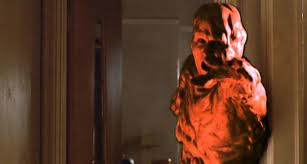
Early in the film Jessup expressed a certainty in the existence of the soul because human consciousness is energy, which can not be created or destroyed. While that may be true, Jessup seemingly discovers that the self is destroyed. Hence, there is nothing except the original/first source that all souls are descended from.

But then again, terror is a part of birth. Indeed, countless occult orders have attempted to recreate the terror of birth and death with their rituals.
"The Investigator is betraying no secret when we say that, in serious occult orders, such performances are not mere rituals but real ordeals. Insofar as possible within the law, the candidate is often brought to a state of terror similar to the emergency condition of the nervous system in near-death crises. What occurs then, and is experienced as rebirth, is a quantum jump in neurological awareness."
(The Cosmic Trigger Volume I, Robert Anton Wilson, pg. 139) 
Ultimately Jessup is able to overcome this terror. Upon doing so Jessup is then able to gain control over spirit and matter alike. Jessup wills himself to return to matter for love, a very Crowley-ian concept indeed. While everyone knows the Great Beast's proclamation about "Do what thou wilt shall be the whole of the Law" it is often forgotten that Crowley also said "Love is the law, love under will." Jessup is indeed love under will by the time the credits roll.

Crowley
And it is here that I shall finally wrap things up. As I hope this series has demonstrated, the final two films of Paddy Chayefsky, and especially Altered States, demonstrate a profound take on various occult and metaphysical traditions concerning the Otherworld. Network deals with the intelligences from these worlds entering the minds of humans while Altered States deals with the human mind venturing into the Otherworld.

What's more, both films, but especially the latter, offer a curious glimpse into one of the most remarkable if little addressed or understood intellectuals currents of the counterculture: the Puharich network. While this was a very loose association of like thinkers rather than some type of secret society it still managed a profound influence on our popular culture. The works of sci-fi legends such as Steven Spielberg and Gene Roddenberry , various works adapted from or inspired by the writings of Philip K. Dick, and numerous other works that emerged during the counterculture, are littered with allusions to this intellectual legacy. I believe it is time to add Chayefsky's latter works to this list as well.


Saturday, August 10, 2013

Paddy Chayefsky and the Wonders of the Invisible World Part V

 
Welcome to the fifth installment in my examination of the final two films of famed screenwriter Paddy Chayefsky, Network and Altered States. In the first two installments of this series (which can be found here and here) I primarily focused on the former film, with a special emphasis on its rampant, if little addressed, high weirdness. In the third installment I began to start in on Altered States, first examining the feud between Chayefsky and the film's director, cult favorite Ken Russell, as well as offering a synchronicitic interpretation of the names of the major characters.


Chayefsky (top) and Russell (bottom)

In the most recent installment I considered one of the chief inspirations for Altered States, legendary physician, neuroscientist, and psychonaut John C. Lilly, as well as his involvement with a loose association of scientists, psychologists, psychiatrists, and artists centered around one of the most mysterious figures of the 20th century, Andrija Puharich. Puharich was a neurologist and parapsychologist who became a U.S. Army officer in the 1950s and introduced numerous esoteric concepts to scientists of the Edgewood Arsenal. It has been long believed that he developed a relationship with the US intelligence community during this time period as well.


Lilly (top) and Puharich (bottom)

During the 1970s he brought together a rogue's gallery of freethinkers that included figures such as Lilly, Timothy Leary, trailblazing physicist Jack Sarfatti, the famed stage magician Uri Geller, computer scientist and ufologist Jacques Vallee, authors Philip K. Dick and Robert Anton Wilson, among others. While little acknowledged this group would have a profound effect on popular culture, especially within the field of science fiction where big budget productions such as Steven Spielberg's Close Encounters of the Third Kind (Vallee was a technical advisor on the film while the character Claude Lacombe is based upon him) and various Star Trek spinoffs (both the television and film franchises heavily incorporated mythos surrounding The Nine, who were a long time obsession of Puharich's) would incorporate the theories of various individuals affiliated with this network.


As noted in the last installment, which left off with me breaking down the opening moments of the film with a special emphasis on the first meeting between Jessup (William Hurt) and Emily (Blair Brown), there are strong indications that the Puharich circle also influenced Chayefsky's final two films. This is especially true of Altered States whereas Network was more timid in its approach, masking the supernatural elements of its plot line in ambiguity. Indeed, the sequence where I will be picking up --Jessup's venture into rural Mexico in search of the "First Self" via a potent mixture of entheogens --seems partly inspired by similar explorations made by Puharich and other early entheogen researchers.

Jessup and Emily, who soon become married

I'll be working with the assumption that those of you reading this article are already familiar with the plot line of Altered States. For those of you who are not, I strongly advise that you read the rather mediocre plot synopsis on Wikipedia so as not to be totally lost. Anyway, on to the mystical journey into rural Mexico.

To this very day people the world over flock to rural Mexico in search of psychedelic experiences under the watchful eye of a shaman. Sharing peyote with the Huichols (the possible inspiration for Altered States' Hinchi tribe) is apparently a tourist industry unto itself. But the first high profile pilgrimage in search of psychedelics was performed by a New York banker known as R. Gordon Wasson in the mid-1950s.
"On June 29, 1955, a banker by the name of R. Gordon Wasson had stunned the world with his report on the psychedelic experience to be had by ingesting a certain mushroom, a report that appeared in Life magazine later that year. While Mexico taking the mushroom for the first time -- under the traditional setting and with a native shaman --Wasson was supposed to have been participating in a long-distance ESP experiment with Puharich, but as it turned out Wasson was too stoned to be of any use that day. The story generated an enormous amount of interest, coming on the heels of the Huxley's books, The Doors of Perception and Heaven and Hell, which were principally about mescaline. Wasson's experience was with psilocybin, the famous magic mushroom which has been the topic of both learned anthropological studies as well as pop culture accolades. The Life magazine story prompted a young Timothy Leary to go to Mexico in search of the elusive substance itself, and the CIA began an official search for more of it. It was the era of 'God's Flesh.'"
(Sinister Forces Book I, Peter Levenda, pg. 251)
Wasson

Levenda goofed up on the date of the Life article in the above quote --it did not materialized until 1957. According to Lynn Picknett and Clive Prince (who are not always the most reliable sources) Puharich did indeed contact Wasson but whether he sent him on his quest I have been unable to determine. Puharich and Wasson did, however, attempt to conduct some type of experiment involving ESP and magic mushrooms.
"Puharich had settled on the psychoactive drugs used by shamans as the main focus of his research, and in 1953 had contacted R. Gordon Wasson, the first researcher to study the shamanic mushroom cult of Mexico. The two set up an experiment to see if the Mexican shamans, or curanderos, could, under the influence of the mushroom, visit the Round Table Foundation's laboratory in Maine. The long-distance experiment never happened, but it is interesting that Puharich was already thinking in terms of remote viewing..."
(The Stargate Conspiracy, Lynn Picknett & Clive Prince, pgs. 186-187)
Stranger still is the fact that Puharich was wondering around rural Mexico himself in 1956 with famed Dutch psychic Peter Hurkos and possibly Arthur Young, the inventor of Bell Helicopter's first helicopter and a major (if little acknowledged) figure in the early New Age movement. Officially the trip was to locate "certain artifacts" (ibid, pg. 168) at the ancient site of Acambaro.
"In the summer of 1956, Puharich went to Mexico with Peter Hurkos, the famous psychic detective. In Uri, Puharich mentions Hurkos but does not mention Arthur Young on the trip; however other sources say that Young was present, which is entirely likely, but it then raises alarm bells that Puharich left Young's name out of his account... It is possible that Young himself wanted to keep this mission secret, since it took place at a time when the CIA was actively scrounging around the Mexican hinterlands looking for hallucinogenic drugs.
"The archaeological reason given as the cover for their trip was probably bogus, since Acambaro was already known as the site where thousands of pre-Colombian statues had been discovered in the 1930s and 1940s, so there would have been little reason to enlist a psychic detective like Hurkos to search for more of them in the same spot; but... it is entirely possible --no, probable --that Puharich was in Mexico for the same reason: to locate and identify hallucinogens for the Agency. Hurkos what have been along for cover, painting the trip as purely some whacked-out psychic archaeological dig..."
 (Sinister Forces Book I, Peter Levenda, pgs. 250-251)

Hurkos (top) and Young (bottom)

Thus, Puharich was potentially wondering around rural Mexico in search of psychedelics (possibly on the behest of the US intelligence community)  a full year after Wasson made his faithful journey. As far as Altered States is concerned, it would seem that the Wasson expedition is a far more likely inspiration than Puharich's mysterious excursion into Acambaro.

Wasson made his trek with one companion, a Allan Richardson, and experienced a traditional mushroom rite conducted by a female shaman whom they had originally met in the mountains. Jessup makes his trip with a Dr. Echeverria (Thaao Penghlis), who leads him to the Hinchi tribe. They reside atop a mountain featuring rock formations that look suspiciously like mushrooms. During the hike into the mountains Echeverria describes the components of a potent psychedelic brew the Hinchi drink for their vision quests. They include: amanita muscaria (arguably the most well known type of magic mushroom), belladonna (which Echeverria believes yields the alkaloid atropine and/or scopolamine in the Hinchi brew) and the sinicuichi plant.

the shaman and the mushroom-like rock formations

All three substances have been associated with ritualistic uses for centuries. By the time Chayefsky was working on the novel version of Altered States famed poet, novelist and mythologist Robert Graves had already linked amanita muscaria use to the cults surrounding Dionysus in ancient Greece and even suggested that the legendary Eleusinian Mysteries employed amanita muscaria or some other type of psychedelic mushroom in it's sacred rituals.
"... a secret Dionysiac mushroom cult was borrowed from the native Pelasgians by the Achaeans of Argos. Dionysus's Centaurs, Satyrs and Maenads, it seems, ritually ate a spotted toadstool called 'flycap' (amanita muscaria), which gave them enormous muscular strength, erotic power, delirious visions, and the gift of prophecy. Partakers in the Eleusinian, Orphic and other mysteries may also have known the panaeolus papilionaceus, a small dung-mushroom still used by Portuguese witches, and similar in effect to mescaline."
(The White Goddess, Robert Graves, pg. 45)
amanita muscaria, also known as fly agaric

Belladonna, specifically alkaloids that can be produced from it such as atropine and scopolamine, has been known to cause hallucinations for centuries. It is widely believed that belladonna and other like plants were used by the Medieval witch cults of Europe in their rituals.
"Scopolamine, a chemical variant of atropine, is a multi-purpose alkaloid derived from solanaceae plants such as henbane, deadly nightshade, datura, belladonna, and mandrake. The drug had long been one that found its way into myths and folklore: in Norse legends it was used to summon powerful gods; Shakespeare's witches stirred steaming pots of nightshade; Machiavelli penned a comedy about Mandrake; American comic book characters donned noms de plume derived from the plants; and Carlos Castaneda's Don Juan made ample use of the drug."
(A Terrible Mistake, H.P. Albarelli Jr., pg. 214)
belladonna plants

The sinicuichi plant, sometimes known as the Elixir of the Sun, has been used by native tribes all throughout the Americas for centuries though it has generally been neglected by the drug culture of the United States. While it has been known to cause mild hallucinations apparently the most striking characteristic of the sinicuichi plant is its perceived ability to help the user recall past events, even events that happened before the user's birth. This concept plays heavily into Altered States' plot line, its final acts revolving around Jessup's quest to psychologically (as well as physically) regress to the Dawn of Man.

the sinicuichi plant

After Echeverria gets the "okay" from the shaman he and Jessup follow the holy man into a cave at dusk for the ritual. Naturally the opening of the cave resembles the cap of a mushroom, as does a rock formation within the enclosure. This rock formation features cave drawings of what are either skulls or the faces of ghosts. These images are also scrawled upon the walls of the cave throughout and look eerily like the head of a grey aliens. This is most striking, as in 1980 (when Altered States was released)  the meme of the fearsome grey extraterrestrials had just begun to grip the popular consciousness --extraterrestrials in the post-World War II era had generally been depicted in humanoid form (frequently as Aryan supermen) prior to the 1980s.

When the ritual starts Jessup and Echeverria gather around a pot hanging over a campfire where the shaman and several other members of the tribe have congregated. The Hinchi brew is seemingly finished when Jessup is asked to hold a root in his hand. As he is doing so the shaman picks up a ritual knife and slashes an area on his hand between his ring and middle fingers. The shaman then holds the slashed hand (which is also holding the root) over the pot and allows Jessup's blood and the root to fall into the mixture. Some shamans of the Americas (such as those found in certain regions of Peru) use blood as an offering to the spirits they invoked during their rituals. This wound will later play a significant role in Jessup's hallucination.


After its infliction Jessup recoils, retreating with Echeverria to a corner of the cave where his guide bandages the wound. When Jessup looks at the tribe again he finds that they have moved away from the pot and have gathered around an even larger fire with other members of the tribe deeper in the cave. After exchanging a glance with the shaman, Jessup returns to the pot and drinks the strange brew.


The drugs take effect immediately as he is standing up. Primitive special-effects that appear to be fireworks explode throughout the cave, undoubtedly meant to invoke the sensation of jumping to "lightspeed" magic mushrooms generate at the onset of a trip. As soon as this sensation sets in Jessup notices another cave drawing, only this one depicts a naked man and woman standing before a giant mushroom. A lizard  hangs from the stem of the mushroom and is offering a smaller mushroom to the couple. This image will become highly important to Jessup's hallucination.


From their Jessup begins to see visions of the Hinchi, some of them wearing masks, doing a ritualistic dance before the rock formation that resembles a mushroom. They appear to be worshiping it. As Jessup is watching this unfold he begins to catch glimpses of himself and Emily sitting at a table featuring a sun umbrella in a pristine field filled with flowers. They are both dressed in elegant clothing, all of which is entirely white. This gives them the impression of an aristocratic couple sporting their Sunday best.

In between this image of himself and Emily and the visions of the Hinchi doing their ritual dance, Jessup begins to see a serpent extending its head forward. When Jessup returns to the scene of himself and Emily in the field a cup of what appears to be sherbet is sitting before her. She takes a spoonful of it and happily begins to eat. A moment later she extends a spoonful of sherbet to Jessup and he too reluctantly begins to eat.

Sparks begin to fly from the mushroom shaped rock formation, the Hinchi still dancing frantically before it. Undoubtedly this is meant to represent the illumination Jessup and Emily are undergoing. Back in the field Jessup sees visions of Emily kissing him passionately intercut with images of the snake wrapping its coils around him. The dancing and Emily's kisses become more frantic as the snake crushes the life out of Jessup. Then an explosion seemingly occurs around the mushroom/rock formation as beams of illumination fly everywhere. A vision of a man and woman worshipping a giant mushroom against the back drop of the cosmos appears before Jessup.


Clearly the above described sequence is meant to represent the Fall of Man in the Garden of Eden, only here a mushroom (in the form of a cup of sherbet) takes the place of the forbidden fruit. In recent years this is a notion that has become increasingly popular amongst researchers of entheogens.
"As soon as the woman was made we find her in front of the forbidden tree, the tree of knowledge, where she encounters a serpent. It has been mentioned that Soma was likened to a serpent sloughing its skin, and we have seen that the fly agaric sometimes 'sloughs' its outer skin when it pushes up out of the ground; sometimes, when the mushroom doesn't completely broach the enclosing leaves or pine needles that cover it, and opens its cap beneath them, the cap can resemble the flattened head of a pit viper... The stock of the mushroom is also snakelike in its shape, and especially so when it rises out of a hole in pine needles or other leaves. If such a specimen is carefully harvested it leaves a perfectly round opening that looks like a snake hole. Snakes are said to live among the roots of trees, just as the fly agaric does. The fly agaric is the serpent at the foot of the tree of knowledge.
"If the fly agaric is the serpent, then what is the fruit? Where did Eve first spy the fruit when she stood beneath the tree? Up in the branches, out of reach? Or on the ground, where one always finds the ripest fruit, down among the serpents. As much as the fly agaric might look like a serpent on occasion, it more often appears to be a ripe, round  fruit that has fallen from the tree above it. It is an actual fruit, the fruiting body of the mushroom mycelium, and it resembles fruits that humans eat.
"When Eve approached the tree she first saw a serpent, and then the serpent started talking about the eating of fruit. In other words, the presence of the 'snake,' upon examination, suggest the eating of fruit. When one finds the right tree, there will be serpents that offer fruits and fruits that look like serpents, and both will be the fly agaric mushrooms. The presence of the snake in the story also informs us that there is a certain danger involved if the serpent-fruit is eaten: it is possible to feel as poison from eating it as from being bitten by a viper, especially if it is eaten in its fresh state.
"The reputation of the fruit was that it was deadly poison, but the man and woman ate it anyway, and it opened their eyes. Having one's eyes opened is positive, not negative, and in common speech implies gaining helpful and formerly hidden knowledge. In spiritual parlance it means enlightenment, passing from darkness into light. The knowledge of good and evil and the ability to discriminate between them is the gift as well as the burden of such enlightenment, signaling the end of innocence and the beginning of real maturity. It is the knowledge one needs to survive and prosper in a dangerous world. Eating the fruit of enlightenment is the active lifted Adam and Eve above the level of the other animals. It made them godlike, as the story says. Now capable of subtle reflection, they realized their lives would one day come to an end. The idea of death had not even occurred to them before this, but now they saw things clearly. And in the clarity of this new knowledge they may have sensed that life in some form never ends."
(Magic Mushrooms in Religion and Alchemy, Clark Heinrich, pgs. 68-69)

When the vision of the man and woman bowing before the cosmic mushroom fades Jessup finds himself and Emily back in the field. They are now dressed in red as they rise from the table and walk into the field, which has now become a desert. Jessup briefly breaks from this image and pulls at the bandage around his hand, exposing the wound. He sees particles of light coming out of the wound and then returns to the vision of the field. Now he and Emily, still dressed in red, are standing before a mushroom cloud presumably brought about by a nuclear bomb.


The implications of this sequence are seemingly in line with Terence McKenna's theory of the "Stoned Ape" evolutionary model. In his 1992 book Food of the Gods McKenna proposed that human evolution, especially the nearly tripling of human brain size over the last three million years, was a direct result of the human species discovering entheogens.
"My contention is that mutation-causing, psychoactive chemical compounds in the early human diet directly influenced the rapid reorganization of the brain's information-processing capabilities. Alkaloids in plants, specifically the hallucinogenic compounds such as psilocybin, dimethyltryptamine (DMT), and harmaline, could be the chemical factors in the protohuman diet that catalyzed the emergence of human self-reflection. The action of hallucinogens present in many common plants enhanced our information-processing activity, our environmental sensitivity, and thus contributed to the sudden expansion of the human brain size. At a later stage in this process, hallucinogens acted as catalysts in the development of imagination, fueling the creation of internal stratagems and hopes that may well have synergized the emergence of language and religion."
(Food of the Gods, Terence McKenna, pg. 24)

McKenna apparently first got an inkling of this notion due to experiments Roland Fischer conducted in the late 1960s that seemed to reveal that graduate students performed better at detecting the moment when previously parallel lines become skewed after small doses of psilocybin. McKenna began to wonder if this indicated that hallucinogens improved mental capabilities.

McKenna and his work did not began to receive wide exposure until the 1980s, but Robert Anton Wilson mentions him and his brother Donald in the first volume of his Cosmic Trigger (which was released in 1977) series. Whether or not the McKenna brothers were a part of the Puharich network is difficult to say but their research would certainly have been of interest to such individuals. The descriptions Wilson gives of the work the McKenna brothers were doing in the 1970s would seem to indicate that Chayefsky was aware of their research and may even have incorporated some of it into Altered States.
"Briefly, the McKennas regard our universe is a hologram, created by the interaction of two hyper-universes, just as an ordinary hologram is created by the interaction of two lasers. One consequence of this model is that, if our universe is a hologram, every part contains the information of the whole, as in normal holography...
"But the McKenna theory goes far beyond this. There are 64 time-scales in the hologram of our universe, they say, and each one is related to one of the 64 (8 x 8) hexagrams of the I Ching. What we call 'mind' or 'consciousness' is a standing wave form in these 64 time-systems. As the two hyper-universes making up the hologram of our known universe interact in time, 'mind' manifests further in our continuum. This means, in concrete physical terms, that the quantum bonds of the DNA are evolving faster and faster. We are ridinging not one but 64 evolutionary waves all mounting towards a cosmic Awakening...
"The action of psychedelics, in the model, opens the quantum information systems within the DNA to inspection by the higher neural centers. When Dr. John Lilly says he has traveled in time with LSD, and then adds that this is 'only' a metaphor, he is perhaps too modest. If the McKennas are right in their basic theory, every psychedelic trip is literally a voyage through the quantum information system at faster-than-light velocity, i.e., outside time in the local (Einsteinian) universe."
(Cosmic Trigger Volume I, Robert Anton Wilson, pgs. 216-217)
Terence McKenna

The notion of traveling through time via psychedelics, both psychologically and physically, is of course a crucial part of Altered States' third act. Thus, we find allusions to the McKenna "Stoned Ape" theory over a decade before such notions gained widespread exposure in popular works. This further reinforces my belief that Chayefsky was incorporating concepts the Puharich network were discussing into Altered States, though whether this was through direct interaction with the network or from picking up such concepts secondhand, I know not.

But back to the film. When Jessup looks back to his hand, a lizard now resides over the wound where previously beams of light had been flowing from. The lizard disappears from his hand just as suddenly as it appeared but when Jessup looks around again he finds an even larger lizard sitting before him. A moment later this lizard transforms into a naked Emily, who adopts an almost reptilian pose before her husband. The wind begins to kick up and both Emily and Jessup are covered in sand.  As the winds continue to blow eventually their forms themselves begin to dissolve, becoming simply more dust lost in the winds.


The lizard shares much of the same symbolism with the serpent and is frequently interchangeable. In this sequence I interpret the lizard to represent the Kundalini, which Kenneth Grant described as "the Magical Power in the human organism" (The Magical Revival, pg. 220). In some occult traditions, especially those associated with Crowley, this divine serpentine energy combined with physical matter to create the crafty ape known as man. Crowleyian tradition holds that "strange drugs" are highly effective at awakening this force.
"It is the serpent called Kundali, or Kundalini, in the Indian mystery; it is said to be coiled at the base of the spine, and remains dormant in the spiritually unawakened person. In The Book of Law it is unequivocally identified with Hadit, or Set. Practices designed to awaken this power are known to be dangerous; the foolhardy alone undertaken without due magical preparation. Kundalini, awakened, vitalizes the marmas and imbues them with nectar (or, maybe, the venom) of its serpent-kiss. The mingling of the nectar with the fluid surrounding the sacred lotus at each marma generates a kala of great potency. The nature and position of the lotus will determine the type of vision experienced. If the sakti plays in the psycho-sexual centres exclusively, depravity and destruction inevitably result, but if the serpent is raised erect and surpasses all the lotuses during its upward flash, and if it then unites with the nectar dripping from the thousand petalled lotus in the cerebral region, illumination ensues and the highest initiations result. The technique of the process is contained in The Book of Law, and the strange drugs mentioned ... probably referred to the inhibition of the kalas themselves."
(The Magical Revival, Kenneth Grant, pgs. 125-126)

Thus, when Jessup is confronted with the lizard he is facing the divine/spiritual nature of humanity. When the lizard turns into Emily he is then confronted with the material aspect. This is further reinforced by their duel disintegration via the sands of time ("ashes to ashes, dust to dust"). This is of course an idea that is at the heart of Gnosticism and a notion that the film further explores in its third act. For the time being I shall refrain from addressing the Gnostic obsession with spirit and matter but keep in mind that it is crucial to understanding the plot line of this film.


The next morning Jessup awakens to find himself in the desert with a dead lizard that he killed during his hallucinations. Killing a symbolic personification of the divine is surely an ill omen, but he does not heed it. Instead, Jessup acquires a sample of the Hinchi brew and returns to Harvard where he and Arthur (Bob Balaban) can experiment with it under more "clinical" conditions. This is a nice touch by Chayefsky as Boston's Harvard University was at the forefront of research into psychedelic plants for decades.
"Throughout the next thirty-five years the Harvard group meticulously investigated and published all instances of psychoactive plant usage that came to their attention. This body of now continuously expanding work --an integrated body of taxonomic, ethnographic, pharmacological, and medical information -- constitutes the core of the data base currently in global use.
"The birth of ethnopsychopharmacology took place at Harvard... much of it during the turbulent years when Timothy Leary was also at Harvard and attracting a very different sort of reputation through his own effort to place the psychedelic experience on the social agenda."
(Food of the Gods, Terence McKenna, pgs. 241-242)

Leary is of course, as noted above, another figure long associated with the Puharich group, making Harvard a most appropriate location for Altered States' final acts. Things get underway with Jessup taking more of the Hinchi brew in a laboratory under the close supervision of Arthur. Initially his trips are horrific, littered with imagery taken from Dante's Inferno and the Book of Revelation. The audience is shown scenes of this almost immediately after Jessup returns from Mexico. Images of eternal torment in hell, thousands of crucifixions (several schools of Gnostic thought have interrupted the crucifixion as spirit crucified in matter), and so forth fill the screen. I take this sequence as a warning to Jessup about what awaits if he continues to breach the boundaries of human consciousness. One of the most striking images of Jessup's Purgatory trip is the appearance of a Black Sun, a concept with ample symbolic meaning.
"The Black Sun is the sun in its nightly transit, when it leaves this world to shed its light upon another. The Aztecs depicted the Black Sun carried on the back of the god of the Underworld. It is the antithesis of the midday Sun, as maleficent and destroying absolute death...
"Alchemists saw the Black Sun as unworked, primal matter, still to be set on the path of development. To the psychoanalyst, the Black Sun stands for the unconscious, again in its most elemental form.
"Traditionally be Black Sun presages the unleashing of destructive forces upon the universe, society or the individual. It heralds disaster, suffering and death, the inverted image of the noonday Sun, hence the universal sense of ill omen attaching to eclipses."
(Dictionary of Symbols, Jean Chevalier & Alain Gheerbrant, pgs. 951-952)

Both the alchemical and traditional interpretations of the Black Sun are most apt for Jessup at this point in the film. He has just begun his initiation, and thus his consciousness is just beginning to break out of a state of primal matter in search of the divine. And indeed, he is about to unleash incredibly destructive forces upon all those around him. This makes the final image the audience sees from this hallucination most appropriate: a lizard while Jessup babbles "Abaddon" in the background. Abaddon is of course a place/figure with much Biblical significance. The Catholic Encyclopedia notes:
"Hebrew word signifying:
  • ruin, destruction (Job 31:12);
  • place of destruction; the Abyss, realm of the dead (Job 26:6; Proverbs 15:11);
  • it occurs personified (Apocalypse 9:11) as Abaddon and is rendered in Greek by Apollyon, denoting the angel-prince of hell, the minister of death and author of havoc on earth. The Vulgate renders the Greek Apollyon by the Latin Exterminans (that is, "Destroyer"). The identity of Abaddon with Asmodeus, the demon of impurity, has been asserted, but not proved.
In Job 26:6, and Proverbs 15:11, the word occurs in conjunction with Sheol."

In this context I take Abaddon to be a location/state of mind the Kundalini force is about to take Jessup to test his mettle. In the next installment of this series we shall finally break down the striking sequence of events that unfold at Harvard University that will reveal the secrets of mind and matter to Jessup and nearly lead to his destruction. Stay tuned.