Showing posts with label MIB. Show all posts

Wednesday, August 15, 2018

Men in Black: Discussing the Knights of Malta on Conspirinormal


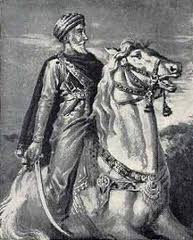
Since you kids can't seem to get enough of the Maltese knights, I was enlisted for another discussion on them, this time with the good folks at Conspirinormal. For those of you unaware, the Sovereign Military Order of Malta (SMOM) has a nearly thousand year history stretching back to the Crusades. SMOM claims to be the legitimate descendants of the Knights Hospitaller, later known as the Knights of Cyprus and Rhodes and a host of other names.

Over the centuries, the Maltese knights have found themselves at the center of a host of intrigues, including the capture of Jerusalem and the suppression of the Knights Templar. In more recent years they've turned up frequently in deep events and the occult underground of the twenty and twenty-first centuries.

But in these United States, they've also faced a challenge since the 1950s from various Sovereign Orders of Saint John (SOSJ) that claim to be the legitimate successor to the Knights Hospitaller from the Russian line of descent. In this podcast we address the infamous Charles Pichel version of the SOSJ (sometimes referred to as the Shickshinny Knights of Malta) and a more recent manifestation of the group that features the infamous General William "Jerry" Boykin as a Grand Chancellor. Needless to say, these groups appear to have been at the heart of much domestic terrorism in the US for several decades now.

General William Boykin (left) in his SOSJ getup
The podcast can be found on YoutTube here.

Additional background on the topics discussed can be found here:
Men in Black: The Hidden History of the Knights of Malta Part I
Propaganda Due: A Strange and Terrible Journey Into the Heart of the Deep State Part XI
Le Cercle: Puppetmasters
A Vast Right Wing Conspiracy: The Secret Origins of the Patriot Movement Part IV
Trump, the JSOC, and the Legacy of ARTICHOKE

I hope everyone finds this discussion and the links provided informative. Before wrapping up, a brief note on programming: I know new posts have been a bit scarce of late, but be assured I'm hard at work. Presently, several of the topics I'm looking into are extremely research heavy. As such, it might be a few weeks until one of them is ready to start working on. When I've had this problem in the past, I've usually focused on current events. But as it stands, making sense of current events nowadays is a bit daunting, to say the least. Still, I'll keep my eyes peeled for recent developments that I feel I can add insight too.

In other words, please be patient. There are some exciting projects in the works around here and the wait will be worth it. And with that I shall sign off for now. Say tuned dear readers.


Friday, June 8, 2018

Men in Black: Discussing the Maltese Knights on Occulture


Several months ago I recorded a podcast with Ryan of the great Occulture in which we discussed the secret history of the infamous Sovereign Military Order of Malta, also known as the Knights Hospitaller, the Knights of Saint John, Knights of Malta and so many other guises. This mysterious order has existed for nearly a thousand years, tracing its origins back to the Crusades. In modern history the Knights have frequently appeared in both deep politics and the occult underground.

Backround material for this discussion can be found in the following posts:

Men in Black: The Hidden History of the Knights of Malta Part I
The JFK Assassination: A Strange Terrible Saga Part V
Propaganda Due: A Strange Terrible Journey Into the Heart of the Deep State Part XI
Le Cercle: Puppetmasters

As for the podcast, it can be found here. I hope everyone enjoys it. 

Before wrapping up, I'd also like to give all of you a heads up that there may not be much new material being published on this blog over the next month or so. I'm actually getting married in a little less than two weeks and for reason that are probably obvious, my time is very limited right now and will remain so until after the wedding is over with and our guests have returned home. I do have a long post in the works, another installment of the "Goodfellas" series, that I will hopefully finish prior to the wedding but it is quite lengthy.

At any rate, I hope this podcast will tide all of you over for time being. Until next time dear reader, stay tuned.


Sunday, October 15, 2017

Men in Black: The Hidden History of the Knights of Malta Part I


In all the annuals of conspiracy literature there is probably no other organization more misunderstood and misrepresented than the Sovereign Military Order of Malta (SMOM), more commonly known as the Knights of Malta. The Maltese knights trace their origins back to the Order of the Knights of the Hospital of Saint John of Jerusalem, more commonly known simply as the Knights Hospitaller. For a time they were also known as the Knights of Cyprus and Rhodes and a host of other such variations. The Order has an almost totally unbroken lineage that stretches back to the eleventh century, hundreds of years before many of the more common bugaboos of conspiracy literature can be reliably dated.

As regular readers of this blog are no doubt well aware that I've touched on SMOM quite extensively in the past and as such, there will be some overlap with the data presented in previous series. For the sake of brevity I will probably not delve too much into the modern intrigues of SMOM or those of the countless splinter groups and mimic orders the Maltese knights have spawned over the years. Some of the more notorious, such as the Sovereign Order of Saint John (SOSJ), have already been chronicled elsewhere (see "Unspeakable Cults, Churches and Secret Societies" sidebar).

Still, this leaves me with a rather extensive amount of history to cover and as such, I shall mainly focus on the aspects of the Order that no doubt most interest my readers: namely, its ties to espionage and the occult. It is for this reason the series is entitled "Men in Black" (MIB).

The Men in Black are of course staples of UFO literature, but reports of them predate the modern era. Gray Baker, one of the earliest MIB chroniclers, noted:
"Dennis Stanley, in a chapter that appeared in The Truth About the Men in Black... believes that 'visits by unknown agents are seeded throughout UFO literature and newspaper accounts of flying saucer sightings. For many years, they were overlooked or not recognized for what they were. Today, just about every UFO investigator has encountered these Men in Black. The history of demonology, witchcraft, and the occult filled with similar incidents, leading one to speculate that the UFO phenomena are at least partly "psychic" in nature.
"UFO magazine editor Allen H. Greenfield has pointed out that there is usually a consistent reference associating the term 'Black Man' with the Devil, along with a mention of an Indian-like appearance supposedly attributed to the Devil by witches. Greenfield has noted that there was a concentration of such cases beginning at the time of the Elizabethan, post-Reformation era in the 1600s. Several occult volumes classify these beings into a group of their own and refer to them as Men in Black, Demons, Devils, Apparitions, or Black Men – the latter being the most commonly used. 
"The writings of arch which-hunter Cotton Mather mention a 'Black Man' associated with the Indians. And there was mention of a man dressed in black during the witch trials in Salem, Massachusetts." 
(Men in Black: The Secret Terror, Gray Baker, pg.41)

Historically these Men in Black were viewed as tricksters and tempters, and often appeared in relation to witchcraft and ritual magic. But in modern times, with the advent of UFO lore, they have become suppressors par excellence. Numerous reports exist of them harassing UFO researchers, stealing evidence and so on in an effort to hide the truth from the public. This perception has seeped into pop culture with a vengeance, eventually inspiring a film series. The influence of the MIBs is felt beyond even UFO-related material, with The Matrix memorably using MIBs (dubbed "Agents") as suppressors of the Demiurgic nature of reality.

Curiously, the black grabbed Maltese knights may have been serving a similar function for centuries in regards to the occultic and arcane. With that in mind, let us leap head long into the Order's mysterious origins.


Murky Beginnings in the Holy Land

It is generally agreed that the Knights Hospitaller grew out of a hospital established in Jerusalem to treat Christian pilgrims via papal edict in the seventh century. Some four hundred years later, in the early eleventh century, it was destroyed by Caliph Al-Hakim bi-Amr Allah. During the 1020s, efforts were made to rebuild it with the project falling under the sway of the Benedictine order.

The stage was set for the appearance of the Knights Hospitaller when an alleged lay brother of the Benedictine order known only as Gerard was appointed to head the Hospital of Saint John at some time around 1080. "Blessed" Gerard is the mysterious first Grand Master of the Knights Hospitaller. Virtually nothing is known about his life prior to his arrival in the Holy Land, though it has long been claimed that his birthplace was Amalfi.

Blessed Gerard
What is known is that he first rose to prominence during the Siege of Jerusalem in 1099. Reportedly, his assistance proved to be invaluable to the Christian Crusaders and for reasons that went beyond medical care. 
"One of the ejected Christians was Blessed Gerard, master of the Amalfi hostel in the city, who immediately approached the Christian leaders to assist them with first hand knowledge of the layout and the defenses of Jerusalem. Needless to say, his intelligence was indeed most welcome. The crusading leaders ensured that their plans for the city's fall would encompass and indeed utilize Gerard's inside information."
(The Sword and the Green Cross, Max J. Ellul, pgs. 76-77)

Thus, the Order's proto history can be linked directly to espionage. This is a well the Order would return to time and again, as we shall see. But moving along.

Needless to say, the Crusader leaders did not forget Blessed Gerard's good work and his Hospital soon found itself the recipient of lavish donations. However it was not till Garard's successor, Raymond du Puy, that  the true Hospitaller order began to emerge. It was du Puy that transformed the Order's mission from simply administering medical care to pilgrims (apparently with some intelligence gathering) to actively guarding them. To this end, the famed Hospitaller knights arrived.

Not only did these endeavors receive Papal blessings in 1113, but recognition from one of the premier European powers of the era fairly early in the game. In 1185, 67 years after du Puy succeeded Blessed Gerard as Grand Master and militarized the Order, it received protection and a charter of privileges from Frederick Barbarossa, arguably the greatest Holy Roman Emperor of the Middle Ages. This would mark the beginning of a longstanding relationship between the Order and the Holy Roman Empire that continues in a fashion to this day. The Order would grow especially close to the Habsburg dynasty that ruled the Holy Roman Empire for well over four hundred years.

the imperial banner of the Holy Roman Empire
One such Holy Roman Emperor, Charles V, granted the Knights Hospitaller Malta in 1530 after they lost their holdings in Rhodes. In 1607, the Grand Master was awarded the status of Reichsfurst, Prince of the Holy Roman Empire. The connection between the Order and the Habsburg dynasty continued well into the later half of the twentieth century, as was noted in my examination of the mysterious organization known as Le Cercle, which featured ample backing from both the Maltese knights and the Habsburgs (noted here and here). But I'm getting ahead of myself.

In the Holy Lands the Order frequently rubbed shoulders with two darlings of conspiracy literature: the Knights Templar and the Nizari, more commonly referred to as the Assassins or Hashshashins. As to the latter, it would appear that the Hospitaller ad the Nizari established a relationship so close by the late thirteenth century that it reportedly bordered on heresy.
"... By 1228, the Syrian Nizaris had in fact become tributaries to the Hospitallers under the terms of a cooperative pact, while they continue to pay tribute to the Templars. It was also around this time that the Nizaris began to lend occasional support to the military orders in their campaigns against some of the Christian rulers of the Latin states; and at least the Hospitallers reciprocated by defending the Nazaris against the encroaching forces of Antioch and Tripoli. The Nizari involvement in the Hospitaller campaign of 1230 launched by Krak des Chevaliers against Bohemond IV of Antioch represented one such instance of cooperation.
"It was against this background that Bohemond V (1233-57), the next prince of Antioch and Raymond's brother, wrote Pope Gregory IX complaining that the Grand Master of the Hospitallers was then in league with the 'Assassins.' In response to this complaint, on 26 August 1236, Pope Gregory wrote to the Archbishop of Tyre and the bishops of Sidon and Beirut insisting that the Hospitalers should terminate any compromising connections with
the Assassins, the enemies of God and of the Christian name, who formerly dared to slay treacherously Raymond [son of Bohemond IV]... and many other magnates and Catholic princes, and are striving to overcome our faith by force... and what is far graver still the aforesaid Assassins, on account of the promise made by the after mentioned Master and brethren [of the Hospital] to support and protect them Christian attacks, and undertaken to pay them a certain sum of money every year. Therefore we have sent them orders writing to desist from defending these same Assassins... And so we now charge you that if the said Master and brethren should fail to observe this our command, you shall compel them to abandon this understanding by the censures of the Church, without right of appeal, after giving them due warning."
(The Assassin Legends, Farhad Daftary, pgs. 75-76)
the Nizari showing why they are forever remembered as "Assassins"
Over the years there has been much speculation over the Nizari, who became infamous throughout Christian and Islamic lands during the Middle Ages for their curious ability to assassinate heads of state (hence the reason why the word "assassin" derives from "Hashshashins"). Frequently these assassinations occurred in broad daylight and in crowded place where the assassin had no chance to escape after the deed was done. As such, it was common for a Nizari to die immediately after taking out their target.

The killers were reportedly so stoic in performing their deeds, despite their own certain death, that the methods employed to produce such dedicated killers has spurred much interest over the years. The CIA itself even referenced the legendary founder of the Assassins branch of the Nizari, Hassan-i-Sabbah, in an early assassination manual.
"... A 1952 draft version of the manual describes a man named Hasan-Dan-Sabah who used the drug hashish to 'induce motivation in his followers, who were assigned to carry out political and other murders, usually at the cost of their lives.' Hasan-Dan-Sabah's credo with his closest initiates and most skilled assassins was: 'Nothing is true, everything is permitted.' States the CIA's manual, 'Assassination is a term thought to be derived from "Hashish," a drug similar to marijuana.' It is certainly intriguing, for a number of reasons, that the Agency included this reference in its assassination manual. First and foremost is the nexus among Hasan-Dan-Sabah (also known as the Old Man of the Mountain), Hassan-I-Sabbah, an Iranian born in 1056 near modern day Tehran, and the Knights Templar, a legendary group that nearly all of the CIA's founders and earliest employees openly admired and sought to emulate."
(A Terrible Mistake, H.P. Albarelli, Jr., pgs. 263-264)
Hassan-i-Sabbah
Contrary to popular belief, there is no real compelling evidence that Hassan-i-Sabbah used hashish to induce his followers into committing assassinations, or that the Nizari that followed him indulged in it. Most of these allegations likely derive from the reign of Hassan's great-grandson, Hassan II (the fourth lord of Alamut), in which standards had become much more lax since Hassan's day.

In point of fact, Hassan-i-Sabbah was known for sobriety and rigid discipline was imposed upon his sect. It was likely this that served as the cornerstone of the sect's brainwashing, namely relentless religious indoctrination combined with physical deprivation induced by long days and lack of proper nutrition. Such methods are still used to good effect by modern day cults such as the Unification Church of Sun Myung Moon.

Still, it is curious that the CIA would look to the Nizari in the early 1950s for inspiration in conducting assassinations at the same time their numerous behavioral modification experiments were in fools swing. Even more curious is the fact that many key early members of the CIA such as Allen Dulles and James Jesus Angleton had had close dealings with the Knights of Malta, the direct descendants of the Medieval Knights Hospitaller, who were warned by the papacy for their close ties to the Nizari, the "enemies of God and the Christian name." As is often the case, many have continued to focus on the interest the early CIA had in the Knights Templar while ignoring the actual membership many key CIA officials had in the Maltese knights.

But back to the Holy Land. The Nizari were but one of several strange sects, along with the likes of the closely related Druze, the Yazidis, and the Mandaens, engaged in highly esoteric practices that the Hospitallers and other Crusaders encountered in the Holy Lands. The Sufi movement was also in its infancy at this time and its possible that remnants of the Harran Sabians could still be found in Syria at the same time the Knights Hospitaller were rubbing shoulders with the Nizari.

ruins of the legendary city of Harran
The Harran Sabians were a curious bunch. The Sabians were mentioned several times in the Quran as "peoples of the Book" and are now believed by many scholars to be derived from the Mandaens, Johnites whose belief system is closely related to Gnosticism. The Harran Sabians, by contrast, appear to have adopted the name Sabian to spare their pagan beliefs after the Islamic conquest. At the core of their belief system was a reverence for Hermes Trismegistus.
"Notable in this process of translation and research was the Sabian intellectual community of Baghdad, which thrived under an enlightened caliphate between the ninth and mid-tenth centuries AD. The Sabians had, in order to qualify for respect as 'people of the Book' as directed by the Koran, taken the philosophical writings of Hermes Trismegistus as their prophetic work, their holy book.
"The philosophy of Hermes was congenial to Baghdad's Muslim authorities because it represented the unity of God and the cosmos. Hermes was congenial to the so-called Sabians because they had originally come from Harran in northern Syria, where the lights of the cosmos were venerated; Harran had seven temples, each dedicated to a planet."
(The Invisible History of the Rosicrucians, Tobias Churton, pgs. 103-104)

I've digressed to discuss the Harran Sabians here because the Maltese knights appear to have developed quite an interest in alchemy several centuries later and it is generally felt that Western alchemy arose from Hermeticism. And the Harran Sabains were one of the key conduits to transfer Hermeticism from the ancient world to the Middle Ages. They were also reported to be early alchemists as well.

As such, there would have been no shortage of esoteric creeds ranging from Hermeticism, Gnosticism and Isma'ilism, among others, for the Crusading knights to absorb. As one of the wealthiest and most influential orders of the Crusader era, the Knights Hospitaller would have been especially well placed to study such creeds. But their potential involvement with these sects has been largely overshadowed by their far more famous rivals, the Knights Templar.


The Hospital and the Temple

The relationship between the Knights Templar and the Knights Hospitaller has long been shrouded in controversy. The Hospitallers predated the Templars and there appears to have been an early influence. But the Templars took up arms before the Hospitallers, which no doubt led to the transformation of the latter into a full blown military order. Many accounts insist, however, on an ever growing rivalry between the two orders that appeared headed towards open conflict in the years leading up to the suppression of the Templars.
"As part of the planning of a new Crusade, the pope had indicated that he wanted to discuss the proposal that the Templars and the Hospitallers be merged into one order, an idea that had been coming up more more frequently in recent years. Just two years earlier a Dominican friar, Raymond Lull, had written a merger plan that had aroused much interest. He proposed that the Knights of the Hospital of St. John of Jerusalem and the Knights of the Temple of Solomon be combined into a single order to be called the Knights of Jerusalem, and that all of the rulers of Europe combine their Crusading forces under a single commander to be known as the Rex Bellator, the 'War King.' A few years earlier a French priest, Pierre de Bois, had submitted a written plan for the recuperation of the Holy Places called De Recuperatione Sanctae, in which he cited the efficiencies to be achieved by combining the military orders. 
"The pope had responded favorably to the merger concept. The Hospitalers had brought new hope for a crusade and new respect to themselves by the recent invasion of the island of Rhodes, and the pope leaned towards the appointment of Foulques de Villaret, Grand Master of the Hospitallers, as Grand Master of the proposed combination."
(Born in Blood, John J. Robinson, pg. 128) 
Pope Clement V, who oversaw the persecution of the Knights Templar
This proposed merger was effectively carried out with the suppression of the Knights Templar in 1312, of which the Knights Hospitaller were one of the chief benefactors of.
"That order has managed to escape any criticism in the matter of the Templar suppression, but apparently only because it had kept a low profile throughout, probably for the very good reason that its role and its rewards at been worked out in advance. It is well known that the papacy was in favor of the union of the Templars and Hospitallers and had already determined that Foulques de Villaret, master of the Hospitallers, would be the Grand Master of the combined orders. The Templars, at their headquarters in Cyprus, had heard of the serious intent to combine the orders and had taken the time to prepare a written rebuttal. The Hospitallers, at their own headquarters on the same island, must have received the same information, yet they prepared no rebuttal, written or verbal. In fact, de Villaret managed to stay away from the meeting in France altogether, with no recorded papal criticism for his absence. That was undoubtedly because his presence wasn't needed and because there was no point in chancing a confrontation between the two orders, especially since the pope was already dedicated to looking after the interests of the Hospitallers. Not only did the Hospitallers offer no objection to the concept of the merger, but they made no attempt whatever to speak up for their brother warrior-monks as they were arrested and tortured. They simply stayed out of it and bided their time, until Clement V, much to the anger of King Philip, declared that all of the confiscated Templar property would go to the Knights Hospitallers and that all released Templars could be taken into the Hospitaller order, thereby achieving de facto the union he had been planning all along, with full Hospitaller approval and cooperation. If one looks for motive, the Hospitaller order was the major beneficiary of the suppression of the Templars, as it probably been plan from the beginning. The pope and the Hospitallers together thwarted the aims of Philip of France, and there should be no doubt that the Hospitallers rank as one of the three assassins of the Order of the Temple." 
(Born in Blood, John J. Robinson, pgs. 272-273)
There's a lot to taken in here. A good starting point may be the little-remarked upon role the above-mentioned Ramon Llull played in the suppression of the Templars. A Spanish Franciscan monk, was one of the earliest and most vigorous supporters of merging the Templars and the Hospitallers. Llull had ventured to the island of Cyprus in 1299 to convert the infidel and appears to have been poisoned in 1302. He was ultimately saved by Jacques de Molay, the last Grand Master of the Knights Templar who famously burned at the stake.

Jacques de Molay
Afterwards Llull reportedly pitched de Molay his merger plan, which the Grand Master was not favorably disposed towards. Despite de Molay having saved his life, Llull continued to promote his merger plan and went on to argue for the confiscation of Templar property by the Knights Hospitaller in the wake of the suppression of the former order. 

In addition to being a Franciscan with some sway in the Catholic hierarchy, Llull was also a mystic and early alchemist. One would expect him to be very interested in the ideas the Templars and the Hospitallers were being exposed to in the Holy Lands and to be sympathetic in general to the plight of the Templars. Not only had his life been saved by de Molay, but he was a fellow heretic operating within the frame work of the Catholic Church. And yet he backed the Hospitallers.

Ramon Llull
Was there something about the Knights of the Hospital that intrigued Llull beyond their ability to continue the Crusades? Unfortunately, this is a question little explored. But moving along.

The above reference Robinson makes to the "three assassins of the Order of Temple" is a reference to Masonic myths surrounding the Biblical figure of Hiram Abiff, whom the Masons claim as their founder. In Masonic lore Hiram is murdered by three unworthy craftsmen (some times referred to as "Ruffians") while working on the Temple of Solomon. Robinson speculated that these "Ruffians" (referred to as Jubela, Jubelo and Jubelum) were stand-ins for the suppression of the Templar order, with the three unworthy craftsmen representing King Philip of France, Pope Clement V and the Knights Hospitaller.

This is in stark contrast to much conspiracy literature, which tends to depict the Knights of Malta as lackeys of the Freemasons. There is little evidence of this, however. The Scottish Rite degree named after the Knights of Malta appears to reflect Robinson's take on the Maltese knights as assassins (while still showing a certain admiration for the Order). And famed nineteenth century Freemason Albert Mackey, in his encyclopedia of Masonry, proclaimed the Maltese knights to be longstanding foes of the Masons:
"As regards Freemasonry it may be said in general that the Knights were antipathetic to it, or to any such teachings or truths as Masons held at any period. In particular, the Order was twice used in attempts to destroy Freemasonry, and it therefore has at one time or another belong to that long chapter of the history of the Fraternity which is called Anti Masonry.
"It has been an open and confessed military arm of the Vatican before the Pope issued their first Bull against Freemasonry in 1738, and it was ordered to oppose Freemasonry wherever it could. In about 1800 it was instrumental in driving Freemasonry out of Russia. When Metternich after 1815 and the Congress of Vienna became the dictator of Europe he made the complete climination of the Fraternity one of his open and principal aims; and to a large extent he succeeded for some years, and may be described as the most powerful Anti-Mason of the nineteenth century.
"The Knights of Malta were one of the agencies employed by him..."
(Encyclopedia of Freemasonry, Vol. 3, Albert Mackey, pg. 56)
In recent years the linkage between the Knights of Malta and Freemasonry has been revived by no less than Pope Francis himself, who has demanded that the Maltese knights purge Freemasons from their ranks.

Pope Francis
The presence of Freemasons among the Maltese knights is deceptive, however. In modern times this connection was laid bare in the scandal surrounding Propaganda Due (P2), the infamous Italian Masonic lodge linked to Operation Gladio and a host of terror attacks in Italy and beyond. As was noted before here, the upper echelon of P2 was almost totally dominated by the Maltese knights and the closely related Opus Dei. In other words, reactionary Catholic orders were using Masonic lodges (as there were other Propaganda lodges across Europe) as cover for a host of illegal and immoral activities. Some have suggested that this use of "unclean hands" was to further distance the Maltese knights from the deeds they were engaged in.

This is compelling, but I suspect there was another motive: to give yet another black eye to a longstanding foe of the Order. P2 has provided much fodder to conspiracy researchers obsessed with Masons (virtually all of them, in other words) who in turn almost totally ignore the dominating influence the Maltese knights had over P2. In many ways, it would be difficult for a reactionary Catholic order to come up with a more perfect cover.

***

And with that I shall wrap things up for now with the following thoughts: the Knights of Malta emerged during the Crusades and spent nearly two centuries roaming the Holy Lands. There they likely encountered a host of esoteric ideologies from the likes of the Nizari, Mandeans, Yazidis, Druze and possibly even the Sabians and Sufis. It has been long suspected that their fellow Crusading military order the Knights Templar adopted some type of esoteric doctrine derived from some combination of these groups.

The Templar are then suppressed and persecuted in Europe, with the Knights Hospitaller ending up with their properties, members and possibly whatever occultic doctrines the Templars subscribed too. Certainly this more than echoes modern encounters of Men in Black who perform a similar function in regards to UFO revelations.

For the Knights of Malta, this was only the beginning. In the years to come they would encounter even more strange doctrines that they potentially embraced internally while suppressing among the general public. On the whole this is in rather stark contrast to speculative theories of the Knights Templar. If the Templars did in fact inspire Freemasonry, they ultimately made a host of esoteric doctrines accessible to the public at large through their lodges. The Knights of Malta, by contrast, preferred to keep this knowledge hidden.

Friday, January 17, 2014

The Stoner Rock Mysteries: The Veil of Isis


One of my New Year resolutions was to get back into attending concerts. I did not take in any during 2013 save for a local hardcore band called Harsh a few days before my birthday and the invigorating night on the town immediately reminded me of all the great things rock 'n roll is capable of in a live setting. Thus, it seemed especially appropriate to start off the New Year by finally catching Clutch live.

Regular readers of this blog have no doubt begun to pickup on the fact that I am a huge fan of the Maryland-based four piece. For those of you just tuning in, check out my reviews of 2004's Blast Tyrant (which can be found here) and 2013's Earth Rocker (a two parter that is located here and here) for a more in depth account of my thoughts on the band.  In brief, I've noted that the band's unique blend of 70s hard rock and 90s alternative/stoner metal with lyrics steeped in mythology, conspiracy theories, political history, and general high weirdness are a synchro-mystical goldmine. Clutch vocalist (and occasional guitarist) Neil Fallon could easily rival the great Robyn Hitchcock when it comes to surreal word play. But more on Clutch in a moment.

Clutch
 The bill consisted of three bands: Crobot, The Sword, and Clutch. All three groups fall under the somewhat catch-all banner of "stoner rock", a genre that includes everything from desert rock, sludge metal, traditional doom, occult rock, retro heavy rock, heavy psych, space rock, drone, fuzz rock and so forth. In general, I've found this genre to be highly synchro-mystical and twilight language laden, as noted before here and here. What's more, this curious aspect of the genre has only become more pronounced in recent years as more and more groups have adopted occult and mythological trappings. In extreme cases groups such as In the Labyrinth and Sabbath Assembly have attempted to recreate the hymns of the ancient Mystery religions and the Process Church of the Final Judgment, respectively. 

Given that both The Sword and Clutch make heavy use of mythology and the occult in their lyrics and images I was expecting the concert to be quite synchro-mystical and I was not disappointed. I took in the show at Jacksonville's Freebird Live venue. Started in 1999, Freebird Live was originally a restaurant that featured live music nightly and was adorned with Lynard Skynard memorably (the legendary Southern rock outfit was founded in Jacksonville), hence the name. A few years later it dropped the restaurant aspect and focused solely on pointing on shows.

Freebird Live
 The venue had a groovy setup --It's a two-story deal with a good chunk of the second floor missing so that stage can be easily viewed. It features two fully stocked bars on either floor and a balcony that wraps around the exterior of the venue for the smokers. With a 700 person capacity, Freebird Live manages a relatively intimate feel. Frankly, its about as big a place to take in a rock concert as one wants to risk without losing some of the magic. On the whole, it comes off as a smaller and far less garish version of the House of Blues chain.  

By the time I arrived at the venue a little after eight the opening act, Crobot, was already about halfway through their set. I soon came to regret my tartness after taking in a few of the songs performed by the quartet hailing from central Pennsylvania. I had been expecting this group to be a thrash act because I inexplicably confused them with Prong (who frequently tour with Clutch) and was pleasantly surprised by their sound. Led Zeppelin is clearly the group's chief influence, with some traces of Thin Lizzy and 1970s Pentagram (singer Brandon Yeagley even vaguely resembles a young Bobby Liebling) thrown in for good measure. The group has a modern edge to their sound, however, that recalls Soundgarden as well as Clutch themselves.

Crobot
As with many retro-centric groups, Crobot has a metaphysical bent to their lyrics. "Good Times in the Bandlands", for instance, name checks the legendary Native American shaman Passaconaway and the Thunderbird (a great breakdown of the high weirdness surrounding the myths of the Thunderbird can be found here) when not warning of the necromancer. Naturally, this was the song the group lurched into shortly after I entered the venue. Other tracks are not quite so synchro-mystically laden, but frequently allude to mythology and conspiracy theories as well as reveling in sci-fi trappings --their debut is called The Legend of the Spaceborne Killer, after all. There have been some rumblings that Yeagley and guitarist Chris Bishop (who did the album's artwork) wish to do a graphic novel based upon the album's songs at some future date. Needless to say, its packed full of material idea for such things.

The Legend of the Spaceborne Killer album cover
The Sword took the stage shortly after Crobot broke down their gear, but not before Recluse procured a copy of Spaceborne Killer's from the latter's merch stand. In the process Recluse stumbled upon Yeagley, who came swaggering up to inform me that my Sleep shirt was "fuckin' awesome, brother." Thus, my streak of encountering performing musicians at shows continues unabated. Remember kids, wearing the right shirt to a metal concert is very important --members of performing bands almost always end up telling me how cool mine are as do random strangers in the crowd. Encountering both are always interesting experiences. But I digress -- On to The Sword.

The Sword is one of those groups Recluse has always felt that he should dig a lot more than he does. When the Austin, Texas quartet first started out in the mid-00s there sound was heavily influenced by Dio-era Black Sabbath and Sleep as well as the thrasher tendencies of High on Fire and Black Cobra. Their first two albums --Age of Winters and Gods of the Earth --were enjoyable enough releases featuring the type of fantasy-laden imagery and lyrical topics this author is usually a sucker for. But something about the band just didn't click.

The Sword
I began to warm up more to the group after the release of their third album, 2010's Warp Riders. With its wonderful sci-fi imagery and plot line as well as more ambitious song structures and instrumentation, the album at times echoes BOC circa Secret Treaties (which long time readers of this blog will recognize as high praise from me if they have read my examination of the album, which can be found here and here). Still, 2012's Apocryphon flew under my radar that year. I only picked it up recently in preparation for the show, a state of affairs I now regret. The album's cover should have clued me in on the fact that The Sword just keep getting more interesting with each release.

The cover, designed by acclaimed comic book artist J.H. Williams III, is in fact meant to depict Isis standing over an apocalyptic world. The Eye of Horus appears upon Isis' hooded forehead while she makes the "silence gesture" generally associated with the god Harpocrates, who in some accounts is her son and/or grandson. To say that this image is symbolically loaded would be an understatement. As I'm sure many of my readers are well aware, the goddess Isis is hugely important in the Mystery schools of the ancient Mediterranean.
"The most illustrious of all Ancient Egyptian goddesses, Isis is depicted searching for her murdered brother and husband, Osiris, whom she restored to life with her breath...; Suckling her son, Horus; or in funeral procession protecting the dead in the shadow of her wings and bringing them back to life. From her faithfulness and devotion, she would appear originally to have been a hearth-goddess, but, according to legend, she 'obtained the secret name of the all-powerful god,' Ra, and became his equal in power, spreading her influence across the universe. Every living being was a drop of Isis' blood. In fact, Isis was worshiped as the all-powerful universal goddess all around the Mediterranean Basin, as devoutly in Greece and Rome as in the Near East. 'I am the mother of the whole of Nature, mistress of the elements, the origin and principle of the ages, the supreme divinity, queen of the shades, the first of the dwellers in the sky, the unrivaled model of all the gods and goddesses. The pinnacles of the sky, the beneficial sea-breezes, the desolate silences of hell, I rule them all according to my will...' All esoteric groups regarded her as the mystagogue who held the secrets of life and death and resurrection. The ankh was the symbol of her boundless power. In all mystery religions of the early centuries of the Christian era, she was the embodiment of the female principle and sole magic source of fertility and transmutation."
(Dictionary of Symbols, Jean Chevalier & Alain Gheerbrant, pg. 544)
Isis
Harpocrates, who is often depicted with his index finger across his lips in an indication of silence, is often described as the God of Silence. He is thought to represent the veil of secrecy surrounding the Mysteries by the conspiratorial right. In the case of Apocryphon secrecy is likely what is being invoked as well as the word can be translated as "secret writing." Singer, guitarist and head songwriter J.D. Cronise made it clear upon the album's release that this imagery was inspired by occult traditions. Of the album's title, he stated:
"The word Apocryphon came up while I was researching Gnosticism, early Christianity, theosophy, and other esoteric subjects... They're books that were either banned or removed from the biblical canon. The early church fathers felt that these teachings were either too advanced or dangerous for the masses to be exposed to because they encouraged thought that was antithetical to the church’s system of control, so they were considered heretical and dubbed apocrypha. You've got to look beyond what you're told to the totality of knowledge available to approach any sort of true understanding."
Cronise
This of course was not the first time The Sword's work has taken a metaphysical slant --such things were already evident with earlier tracks such as "Maiden, Mother & Crone". But Apocryphon certainly took this aspect of the group to another level and its influence was prominently displayed in Freebird Live when I made the scene: a massive banner of Apocryphon's album cover hung across the back wall of the stage even during Crobot's set. Naturally a banner featuring Isis is most appropriate for any type of rock concert, but most certainly one of this nature.


Unfortunately The Sword's set was mired by a poor sound mix: Cronise's vocals were all but inaudible for much of the set. It's a really pity, because the combination of a surprisingly elaborate light show and the prominently displayed Mystery symbols created quite the atmosphere. The band was otherwise professional and their increasing use of synthesizers gives the group an even more pronounced Blue Oyster Cult feel at their most sinister. The song "Apocryphon", which closed both The Sword's set as well as the album of the same name, was quite striking thanks to the triggered use of synths throughout. They set the scene perfectly for a song steeped in Gnosticism, as the opening verse makes clear:

Set adrift in the multiverse
By the whims of fate
In thrall to the demiurge
We all await escape

"The Veil of Isis", Apocryphon's opener, also made a rousing appearance. The song, which slyly hints at the legends surrounding the death and resurrection of Osiris, revolves around the ever changing cycles of life. Of it, Cronise told Rolling Stone: "In essence, the song is about change... [It's about] moving from one phase of the natural cycle to the next and the recognition of the knowledge revealed when such transitions occur. The lyrics make reference to Isis, the goddess of nature and magic, and her brother/husband Osiris, the god of the dead and the afterlife, as agents of those changes and keepers of sacred knowledge. The 'veil' is that which hides from us the true nature of the universe that, during our earthly existence, is largely hidden from us."

Osiris
The Sword even opened with "Tres Brujas", a Warp Riders song revolving around three witches and certain herbs that had been Recluse's favorite song by the group. In general, the set drew heavily from Riders and Apocryphon, which put The Sword's growing maturity on display when paired with earlier numbers. Despite sound problems, the set was suitably metal and mystical in equal measures. 

After an extended wait following the conclusion of The Sword's set, Clutch finally took the stage. During the down time the banner of Isis was taken down and replaced by one featuring the album cover for Clutch's latest album, Earth Rocker. It was a fitting shift. The more technical and sophisticated work of The Sword is befitting of the structured Mystery schools. Clutch, by contrast, is a far looser group. While all members of the group are individually fine musicians their music is built more around hypnotic grooves and blues-based hard rock riffs that have driven heavy rock since its earliest days. The cover of Earth Rocker immediately invokes Native American shamanism, and the live presence of Clutch does a fine job of capturing that primal place in the human consciousness.


Clutch's live shows have become semi-legendary and for good reason: They have a genuinely unique atmosphere. A large and continuous mosh pit was present practically throughout Clutch's entire set, but not of the "Let's knock someone out" variety. Rather, kids jumped around and swayed into one another throughout the set. When contact was made one was reminded of padded go-karts bumping into one another and rebounding in a variety of directions. These sights fit right in with the clouds of odorless pot smoke courtesy of portable vaporizers brandished by various members of the audience.

Even more striking was the crowd's reaction to Neil Fallon's lyrics: practically the whole audience sang along to every song throughout the set. Recluse has never been around a crowd as in to a band's lyrics as the one he encountered at the Freebird show. Despite the fact that the set was heavy with tracks from Earth Rocker, everyone seemed to know all the lyrics to whatever Clutch performed by heart. Given that Fallon's lyrics frequently reference cryptids, underground bunkers, aliens, Men in Black and political assassinations as well as mythological beings and the occult, this made for quite a surreal scene.

Fallon does his part to emphasis his lyrics to the crowd as well. Throughout the show he frequently used exaggerated hand gestures to play up his words, at times recalling the motions of orators from Ancient Greece or Rome, an art know as chironomia. The crowd was not to be out done and frequently mimicked Fallon's hand gestures --People were even hoisted up on other's shoulders to do this.

Fallon
The band performed every song off of Earth Rocker, but not in the order as they appear on the album. There were also several numbers from prior albums, many of which happened to be both among Recluse's favorite Clutch song as well as their most synchro-mystical. Both "Escape From the Prison Planet" and "Animal Farm" off of 1995's self-titled album were performed. Both of these songs do an incredible job of capturing the zeitgeist of UFO and conspiracy culture in the 1990s, simultaneously echoing The X-Files and William Cooper in equal measures. The later song invokes underground bunkers and little grey men that "taste just like chicken they say" before channeling Hour of the Times at peak frenzy:

Carter is a clone
Dozen brother 'round the globe
MJ-12 damned us to hell
Scroll and Key, Skull and Bones
It's only just begun
Area 51
The spawn of Babylon


"Escape From the Prison Planet" has inevitably been co-opted by Alex Jones, but we shouldn't hold that against the song. It name checks Bob Lazar in addition to Men in Black, alien technology and an opening verse that at times feels like my day-to-day life. Clutch also performed "I Have the Body of John Wilkes Booth" from the self-titled as well, a song that alludes to the various conspiracy theories surrounding the possible escape of Lincoln's assassin as well as the creeping reemergence of fascism ("And I swear its never been like this before/Least not since 19 and 44") in modern America. At another point in the set Clutch performed the song "Abraham Lincoln" off of 2009's Strange Cousins From the West, a most fitting touch.

Lincoln and the Civil War have been alluded to frequently in Clutch's lyrics of the years
They also broke out "The Yeti" from 1998's The Elephant Riders. Not only is this song about the famous cryptid, but it also alludes to one of the most far out theories surrounding the creature, namely that it is some type of interdimensional being. The blog Phantoms and Monsters has a compelling rundown of such notions:
"A subscriber states that just because we don't understand how Bigfoot move in and out of another dimension or what their purpose is, doesn't rule out this possibility. He has questioned a variety of people that channel interdimensional beings and every time the answer turns out that Bigfoot are indeed interdimensional beings as well. There are many other beings that can move in and out of another dimension including fairies, gnomes, sprites, and others. Indigenous people worldwide will verify this as they have strived to maintain to keep their connection to earth and the natural beings while the ‘civilized’ world has nearly completely lost touch. Only young children and intuitive adults are able to see/feel these beings as they move in and out of other dimensions. It’s time for us to wake up to this possibility regardless of what conventional wisdom and science has to say about the matter. The evidence is there…time to become open to a broader perspective. 
"Well known paranormal investigator Jon-Eric Beckjord’s theories sum up much of the argument. He believed that Bigfoot and similar cryptids may be interdimensional beings that can occasionally take physical form for brief periods of time, but have the ability to ‘fade out’ and pass through ‘wormholes’, possibly to other dimensions or parallel universes. He reported to have had one of the creatures speak to him using telepathy, communicating the words ‘We're here, but we're not real, like what you think is real’. 
"Beckjord claimed that such entities may be able to actually disappear into thin air, or even shapeshift.  Beckjord maintained that the interdimensional hypothesis may possibly, if proven, explain why there are thousands of alleged Bigfoot creature sightings each year, yet no dead zoological physical body is ever found. To evidence these ideas, Beckjord accumulated a large collection of enlarged photographs that he says show, among other things, ‘half-Bigfoots’ and ‘invisible Bigfoots’, or possible aliens. The forms are often found in situations where the camera picked up images not seen by the witnesses, often due to distance. According to Beckjord, the images show primates, carnivores and beings not readily identified within known zoological classifications that resemble descriptions of aliens submitted to investigators. He conducted much field work, such as camping out at ‘window sites’ where, he said, Bigfoot activity is frequently seen. He collected his own photographic evidence of what he believes to be a ‘tribe’ of either Bigfoots or aliens at El Dorado National Forest."

In Clutch's hands the Yeti is depicted as a creature perpetually traveling through time:

The author looms above his page  
And thinks it strange that at his age 
He can not find the proper words  
To describe his only world. 
One would think that in a life  
Where no two snowflakes are alike 
One would have a brilliant rhyme  
For reaching every bit of time. 

Himalaya is my old time stomping ground  
(Oh yes, time is of the essence) 
Manitoba, better snows I've never found  
(Oh yes, time is of the essence)


During the performance I saw Clutch rearranged the verses, performing the final two (written out above) at the onset of the song, further enhancing its high strangeness. The song was carried into an extended jam that seamlessly evolved into "D.C. Sound Attack" off of Earth Rocker. It was easily one of the highlights of the night. 

When it was all said and done I slipped out of the venue just as Clutch was finishing up the final number of the encore, "Electric Worry". It was a surprisingly packed crowd for a Sunday night and having a nearly two hour drive looming ahead, I grudgingly called it a night. In the background the Earth Rocker shaman and swaying crowd loomed as my companion and I departed, silently echoing traditions that have reappeared upon these shores in one form or another since time immemorial.


Saturday, July 20, 2013

Paddy Chayefsky and the Wonders of the Invisible World Part II

 
Welcome to the second installment in my series examining the films Network and Altered States, both of would sprang from the pen of screenwriter Paddy Chayefsky. Despite this connection these films are rarely linked together, and not without reason: Chayefsky famously disowned the adaptation of Altered States, even going so far as to have his name removed from the film and replacing it with the pseudonym Sidney Aaron (his real first and middle names respectively). Beyond that, the plot lines of either film are seemingly worlds apart: Network is a brutal depiction of the news media and television in general while Altered States revolves roughly around experiments with, and the spiritual implications of, entheogens.
 

And yet both films ultimately involve altered states of consciousness. I already began to examine how this relates to the film Network in the first installment of this series by breaking down the symbolic and archetypical nature of several of the major characters, but for our purposes here I want to focus in on one of Network's key plot points (those of you unfamiliar with the storyline are advised to read part one where I gave a brief synopsis or check out the Wikipedia entry on it as I'll be working from the assumption at this point forward that readers are aware of it) and its implications of altered states of consciousness: the disembodied voice that instructs Howard Beale (Peter Finch) to become a prophet on television.

This encounter comes at a time when Beale's fortunes are fading after the media sensation that was caused initially by his threat to commit suicide live on air and his later rant about everything being "bullshit" are wearing off. UBS opted to keep Beale on the air for his "mad prophet of the airwaves" routine but he does not seem up to the task of performing it day in and day out after those inspired initial outburst. Then one night, just as Beale's then-boss Max Schumacher (William Holden) is about to go back to "straight" news, Beale wakes from his sleep and seemingly stares wide-eyed into the emptiness of his bedroom. He then asked something to speak up and a moment later says "okay."

Beale being awakened from his sleep by the voice

The next day he goes on air and explains this episode to his viewers thusly:
"Last night, I was awakened from a fitful sleep, shortly after 2 o'clock in the morning by a shrill, sibilant, faceless voice. I couldn't make it out at first in the dark bedroom. And I said, 'I'm sorry, you will have to talk a little louder.'...And the Voice said to me: 'I want you to tell the people the truth, not an easy thing to do because the people don't want to know the truth.' And I said, 'You're kidding. What the hell should I know about the truth?' But the Voice said to me: 'Don't worry about the truth. I will put the words in your mouth.' And I said, 'What is this, the burning bush? For God's sake, I'm not Moses.' And the Voice said to me: 'And I'm not God. What has that got to do with it?'  
"And the Voice said to me: 'We're not talking about eternal truth or absolute truth or ultimate truth. We're talking about impermanent, transient, human truth. I don't expect you people to be capable of truth, but god-dammit, at least you're capable of self-preservation!' And I said, 'Why me?' And the Voice said: 'Because you're on television, dummy! You have 40 million Americans listening to you and after the show you could have 50 million. For Pete's sake, I'm not asking you to walk the land in sackcloth and ashes preaching the Armageddon. You're on TV, man.' So I thought about it for a moment, and then I said, 'Ok.'"
This is one of the major turning points in the movie for from here on out Howard Beale becomes a bona fide phenomenon after initially appearing simply as an aging and unstable man who caught lightning in a bottle with his suicide pledge and "bullshit" rant afterwards. Beale is suddenly capable of keen and perceptive insights and at one point even seems poised to spur an actual populist revolt.

Thus, a pertinent question emerges: Is Beale simply insane and having a breakdown or did he have an actual encounter with some type of entity? The film itself is coy on this matter --director Sidney Lumet shoots the encounter as though Beale is merely talking to himself while none of the characters (except for possibly Arthur Jensen [Ned Beatty], but more on that later ) seem to seriously believe that Beale heard anything. And yet the perception and magnetism that Beale suddenly possesses is undeniable even as his actions become more and more unstable.

Beale "listening" to voice

Could it then be possible that Beale is both going insane and actually communing with an entity? Certainly more than a few schools of thought over the years (some of them very ancient) have believed that madness is a doorway into altered states of consciousness and that the insane are simply more in tune to those things beyond our everyday perception of reality. Indeed, in many traditional societies a period of madness is necessary for anyone wishing to walk the path of the shaman.
"For modern psychiatry, every mental breakdown -- every mental illness, every mental disorder -- has its origins somewhere in the patient's life. A person does not go insane for reasons that are not part of his personal history... How could a person go insane -- how could his personality disintegrate to that extent --due to an external influence? There is either an organic reason (such as a hormonal imbalance or some other chemical reason, or physical trauma of some sort, such as a blow to the head), or there is a precipitating cause in the patient's immediate environment. Yet, in the context of shamanism, the precipitating cause is the summons of a spirit. Even more threatening, the shaman is a person who has gone 'through' madness and has become 'cured' without the benefit of modern psychiatric techniques. Even more astonishing, this person who had once been mad is now a valued and even a revered member of his society, and all due to the fact of his madness and subsequent cure.
"The controversial Scottish psychiatrist... R. D, Laing wrote in 1967, and The Politics of Experience,
When a person goes mad, a profound transposition of his place in relation to all domains of being occurs.... Nevertheless, he can often be to us, even though his profound wretchedness and disintegration, the hierophant of the sacred. An exile from the scene of being as we know it, he is an alien, a stranger signaling to us from the void in which he is foundering, a void which may be peopled by presences that we do not even dream of. They used to be called demons and spirits.... Madness need not be all breakdown. It may also be breakthrough.
"Madness and psychic disintegration (dissociation?) leading to... spiritual breakthrough, psychic powers, attainment, illumination: the shaman, the medicine man, the magician."
(Sinister Forces Book III, Peter Levenda, pg. 55)
the highly controversial psychiatrist R.D. Laing

Howard Beale does in fact become a valued and even revered member of his society, much to the shock and horror of individuals such as his old friend Max Schumacher. And yet this was historically how the mad who had displayed perception, insight, and even visions had been treated, a prospect that seems the definition of madness in our modern world. Certainly it adds to the incredible air of surrealism running throughout Network's second half.

Incidentally the Surrealists were one of the chief modern movements to value madness, especially schizophrenia, as offering some type of profound insight into the world. Edward Jessup, the lead character of Altered States, becomes interested in entheogens after becoming convinced that some schizophrenics are experiencing states of consciousness that are as real as "our waking states," but more on that in the next installment.

Beyond the fact that Paddy Chayeksky would incorporate such concepts into the project that followed Network there are other indications that he means for us to take Beale's experience with the disembodied voice seriously. Consider the description Beale gives of his state of mind to Schumacher after making the faithful broadcast in which he reveals his encounter:
"This is not a psychotic episode. This is a cleansing moment of clarity. I'm imbued, Max. I'm imbued with some special spirit. It's not a religious feeling at all. It's a shocking eruption of great electrical energy. I feel vivid and flashing, as if suddenly I'd been plugged into some great electromagnetic field. I feel connected to all living things. To flowers, birds, all the animals of the world. And even to some great, unseen, living force. What I think the Hindus call prana. But it's not a breakdown. I've never felt more orderly in my life. It is a shattering and beautiful sensation. It is the exalted flow of the space-time continuum, save that it is spaceless and timeless and... of such loveliness. I feel on the verge of some great, ultimate truth."

This is consistent with the descriptions individuals have given of the sense of illumination that overtakes them after completing some type of occult initiation or surviving an experience seeping with High Strangeness.
"Illumination is basically a sudden, overwhelming insight into the whole structure of the cosmos and man's relationship to it. Suddenly, for a few brief seconds, the percipient understands everything with incredible clarity. In some cases the process occurs over a long period in the form of short flashes of insight that gradually add up. In others it takes place instantaneously with the percipient seemingly bathed in a reddish glow or caught in a beam brilliant white light cast down from the skies (thus we have the ancient phrase, 'He has seen the light').
"No one is ever exactly the same after an illuminating experience. Mediocre men become great leaders, preachers, statesman, scientists, poets, and writers overnight! Others divorce their spouses, quit their jobs, and embark on new careers that catapult them into unexpected prominence. Some fear for their sanity at first because the experience is so overwhelming. Some are unable to cope with that and disintegrate into various kinds of fanatics."
(Our Haunted Planet, John A. Keel, pg. 201)
Sudden, unexpected illumination, the type of which that frequently follows some type of supernatural experience or even UFO encounters, can be especially destructive as the recipient is unprepared for it. Christopher Knowles recently speculated that encounters with the legendary Men in Black may not in fact be sinister in nature but are in effect a type of warning for individuals who are too unstable to survive in the Fortean realms without succumbing to madness or worse. Amusingly, Howard Beale even begins to dress like a Man in Black once his nightly news programs transforms into The Howard Beale Show.


But back to the matter at hand: If Beale did in fact have a genuine encounter, then with what pray tell? According to Beale, the entity itself said to him: "And I'm not God. What has that got to do with it?" Nor does the entity claim to be an angel or anything commonly associated with the Christian realm. Indeed, Beale's encounter more closely resembles descriptions of entities known as daimons in the ancient world. Daimons are Trickster-like beings which, from early times, were understood as manifesting bother externally (i.e. the physical world) as well as internally (psychologically). Unsurprisingly, these creatures were eventually incorporated by Jung into his concept of Archetypes.
"The great authorities on the intermediate world of psychic reality were the Neoplatonists who flourished from about the middle of the third century A.D. to the middle of the sixth. Following Plato's most mystical dialogue, the Timaeus, they called the intermediate region the Soul of the World, widely known in Latin as Anima Mundi. Just as the human soul mediated between spirit and body, so the world-soul mediated between the One (which, like God, was the transcendent source of all things) and the material, sensory world. The agents of this mediation were called daimons... who, as it were, populated the Soul of the World and provided the connection between gods and men.
"Christianity later, and unjustly, pronounced the daimons demons. But originally they were simply the beings who thronged myth and folklore, from the Greek nymphs, satyrs, fauns, dryads, etc. to elves, gnomes, trolls, jinn, and so on...
"Daimons were essential to the Gnostic-Hermetic-Neoplatonic tradition of philosophy --which was more like psychology (in the Jungian sense) or a mystical discipline than the logical exercises philosophy became. But the daimons of myth evolved into a sort more suited to these philosophies, whether angels, souls, archons, thrones, or powers -- many of which later infiltrated Christianity. Ever-flexible, the daimons changed their shape to suit the times, even becoming abstractions when necessary (the Neoplatonic henads, for example) but preferring if possible to remain personified. Jung's cast of archetypal personages --Shadow, anima/animus, Great Mother, Wise Old Man -- placed him firmly in this tradition.
"Never quite divine nor quite human, the daimons erupted out of the Soul of the World. They were neither spiritual nor physical, but both. Neither were they, as Jung discovered, wholly inner nor wholly outer, but both. They were paradoxical beings, both good and bad, benign and frightening, guiding and warning, protecting and maddening. Plato has Diotima described them in the Symposium, a dialogue devoted to the most neglected of topics and modern philosophy --love...
"Jung was clearly just a man. In his terms, the daimons are archetypal images which, in the process of individuation, conduct us towards the archetypes (gods) themselves. They did not have to convey messages; they were themselves the message. The Greeks understood from early times that daimons could be psychological, in Jung's sense. They attributed to daimons 'those irrational impulses which arise in a man against his will to tempt him --hope, for instance, or fear.' Daimons of passion or jealousy and hatred still possess us, as they always have, causing us to cry forlornly: 'I don't know what got into me. I was beside myself.' But while daimonic activity is most noticeable in irrational, obsessive behavior, it is always quietly at work behind the scenes."
(Daimonic Reality, Patrick Harpur, pgs. 35-36)  
an early depiction of a daimon

Daimons have also long been associated with nature-spirits commonly referred to as Elementals.
"Just as visible Nature is populated by an infinite number of living creatures, so, according to Paracelsus, the invisible, spiritual counterpart of visible Nature (composed of the tenuous principles of the visible elements) is inhabited by a host of peculiar beings, to whom he has given the name elementals, and which have later been termed the Nature spirits. Paracelsus divided these people of the elements into four distinct groups, which he called gnomes, undines, sylphs, and salamanders. He taught that they were really living entities, many resembling human beings in shape, and inhabiting worlds of their own, unknown to man because his undeveloped senses were incapable of functioning beyond the limitations of the grosser elements...
"The Greeks gave the name daemon to some of these elementals, especially those of the higher orders, and worshiped them. Probably the most famous of these daemons is the mysterious spirit which instructed Socrates, and of whom that great philosopher spoke in the highest terms.
(The Secret Teachings of All Ages, Manly P. Hall, pgs. 329-330)
the elementals

This is of course just scratching the surface --Much more information on daimons can be found here. But back to the matter at hand: While daimonic beings were hardly the stereotypical demons of Christianity many students of the arcane have advised against communing with such entities and not without reason.
"Those who sought to control elemental spirits through ceremonial magic did so largely with the hope of securing from the invisible worlds either rare knowledge or supernatural power. The little red demon of Napoleon Bonaparte and the infamous oracular heads of de Medici are examples of the disastrous results of permitting elemental beings to dictate the course of human procedure. While the learned and godlike daemon of Socrates seems to have been an exception, this really proves that the intellectual and moral status of the magician has much to do with the type of elemental he is capable of invoking. But even the daemon of Socrates deserted the philosopher when the sentence of death was passed.
"Transcendentalism and all forms of phenomenalistic magic are but blind alleys --outgrowths of Atlantean sorcery; and those who forsake the straight path of philosophy to wonder there and almost invariably fall victim to their imprudence. Man, incapable of controlling his own appetites, is not equal to the task of governing the fiery and tempestuous elemental spirits."
(ibid, pg. 317)
Socrates and his daimon

While Hall is perhaps to sever in his judgment most accounts I've read on such beings suggest that their motives are frequently to unfathomable for the human mind to comprehend. Thus, those who form a bond with such beings are frequently led to ruin and this is exactly what happens in the case of Howard Beale. While Beale seems to acquire incredible understanding and wisdom he also begins to have a full-blown mental breakdown (if one was not already occurring), leading to increasingly erratic behavior.

Not that this adversely affects Beale's ratings --in point of fact, it's totally in keeping with the revamped Howard Beale Show where the mad prophet is joined by such nightly regulars as Miss Mata Hari and her skeletons in the closet, Jim Webbing and his "It's-the-Emmes-Truth-department" and of course Sybil the Soothsayer (who prophesied to Diana [Faye Dunaway] of her coming relationship with Max). Beale begins each show behind the backdrop of a strange symbol: four circles forming a cross with four more circles in a similar cross-like pattern within each of the initial circles. At the center of the larger four circles is another circle featuring what appears to be in eight-pointed flower within it.


It's tempting to link this symbol to the Rosy Cross of the Rosicrucians (and many other orders, both real and imagined) but there is little resemblance between either. In point of fact, the "Beale cross" does not seem to overtly echo any occult symbol that I have been able to uncover. Probably the most curious aspect of it is the eight pointed flower at the center. Eight arrows arranged in a radial pattern has been adopted as the Symbol of Chaos in recent times, certainly fitting for the character of Howard Beale. The number eight is also highly significant in Crowley's Thelematic tradition where it is linked to the Trickster figures of Hermes, Thoth and Mercury (all of them "messenger" gods of antiquity).
"Cheth is the number Eight, which is the Seal of Hermes-Thoth-Mercury, the God of Magick. The figure 8 is, by shape, the Caduceus of Mercury and the emblem of Infinity. In The Book of the Law, Hadit (or Set) declares 'I am eight, and one in eight'. The identification is with Sothis the manifestator of the Seven Stars of Polaris (the Great Bear constellation which symbolizes the Dragon-Nuit). She is the Mother of the Primal Gods, and her formula of Change, or Magick, is manifested in One, her Son, i.e. Sothis or Sirius, who, in his occult character symbolizes the Son behind the Sun.
"Magick is spelled with a 'k' because Cheth, its Hebrew equivalent, is the number of the Great Work, and the letter of Hermes, or Hermetic Science.
"Cheth (8, 418), 'k', being the number of the Great Work, is a formula used by occultists, as well as alchemist, to denote the consummation of the marriage of individual and cosmic consciousness..."
(The Magical Revival, Kenneth Grant, pgs. 22-23) 
Hermes and his Caduceus

A "marriage of individual and cosmic consciousness" is certainly a fitting description of Howard Beale at this point in the movie, for clearly his consciousness has been altered by his encounter/bonding with the daimonic being that came to him that faithful night. His road to ruin is also assured at this point but if it is folly to follow daimonic beings then it is complete and utter madness to turn the ideology of corporate titans into a philosophy, as Beale attempts to do after his encounter with UBS/CCA head Arthur Jensen.

Strangely, Jensen is the only character in the film who seems to have any appreciation for the transformation that Beale has undergone. Beale's longtime friend Max Schumacher simply sees his transformation as a mental breakdown when it is clearly not that simple while Diana Christensen and her boss, Frank Hackett (Robert Duvall), only pay lip service to the metaphysical implications of Beale so long as it is necessary to keep him on the air and out of the nuthouse. But Jensen, almost immediately upon meeting Beale in person, seems to have accurately sized up his magnetism as well as how to manipulate him.

Jensen

Indeed, throughout the legendary encounter between the CEO and the mad prophet of the airwaves  Jensen comes off as being nearly as "eccentric" as Beale himself. Many have long wondered if Jensen is simply "acting" during his encounter with Beale (Jensen begins by saying: "I started as a salesman. I sold sowing machines and automobile parts, hair brushes and electronic equipment. They say I can sell anything. I'd like to sell something to you.") in order to get through to the unhinged news anchor or if the CEO is something of a freak of nature as well.

Upon escorting Beale into his boardroom, which Jensen refers to as "Valhalla," the CCA head dims the light so that he appears to be engulfed in a spotlight (as well as giving the effect of being in a cave, the site of countless types of occult initiations the world over) and informs Beale that he has tampered with the "primal forces of nature" and that he must "atone" (this meeting occurs after Beale stopped CCA's deal with an Arab conglomerate after he urged his viewers to flood the White House in telegrams demanding that the deal be stopped). Jensen then goes on to outline the corporate globalism that will bring utopia on earth:
"You get up on your little twenty-one inch screen and howl about America and democracy. There is no America. There is no democracy. There is only IBM, and ITT, and AT&T, and DuPont, Dow, Union Carbide, and Exxon. Those are the nations of the world today. What do you think the Russians talk about in their councils of state, Karl Marx? They get out their linear programming charts, statistical decision theories, minimax solutions, and compute the price-cost probabilities of their transactions and investments, just like we do. We no longer live in a world of nations and ideologies, Mr. Beale. The world is a college of corporations, inexorably determined by the immutable bylaws of business. The world is a business, Mr. Beale. It has been since man crawled out of the slime. And our children will live, Mr. Beale, to see that... perfect world... in which there's no war or famine, oppression or brutality. One vast and ecumenical holding company, for whom all men will work to serve a common profit, in which all men will hold a share of stock. All necessities provided, all anxieties tranquilized, all boredom amused."

While we, the little people, can reasonably dismiss Jensen's musings as a complete crock of shit in the twenty-first century there are undoubtedly any number of globetrotting CEOs (and other members of the so-called global 'Super Class') still drinking this particular brand of Kool-Aid as well as their mouthpieces on network and cable news. It is to the latter group that Beale becomes a fully converted member of after his encounter with Jensen, which ultimately proves to be even more mind blowing (and destructive) then his daimonic experience.

Jensen shows not the slightest trace of humility when he says "You just might be right, Mr. Beale" after Howard proclaims he has seen the "face of God" while gazing at Jensen. But then again, their encounter ultimately takes on the trappings of the most solemn of rituals: Death and rebirth. Of course the experiences of death and rebirth are the cornerstone of countless occult initiations.
"... I have undergone a number of occult initiations and have become aware of the basic similarity of such rituals in all traditions. This is the pattern of death-rebirth which even today appears symbolically in the Roman Catholic mass and the Masonic 'raising' ceremony. The Investigators is betraying no secret when we say that, in serious occult orders, such performances are not mere rituals but real ordeals. Insofar as possible within the law, the candidate is often brought to a state of terror similar to the emergency condition of the nervous system in near-death crises. What occurs then, and is experienced as rebirth, is a quantum jump in neurological awareness.
"Obviously, the first shamans had no teacher; they simply went through the illness-rebirth transition accidentally, as it were. Later, schools of shamans developed techniques (psychedelics, rituals of terror, yogurt, etc.) to catapult the student into such experience. In most of these schools there is great reliance upon an entity or entities of superhuman nature who aid in the initiatory process, sometimes for years. ('A real initiation never ends,' Crowley said once.)"
(Cosmic Trigger Volume I, Robert Anton Wilson, pg. 139) 
Clearly Beale went through this "traditional" type of initiation inadvertently during his encounter with the daimon but then appears to go through a similar process again with Jensen. Beale is "reborn" from his encounter with Jensen not unlike he was reborn after his encounter with the daimon. So to is Paul Hackett, the UBS head who compared himself to a sun god when he thought the axe was about to come down over the Arab flap. Beale is reborn to become Jensen's mouth piece while Hackett is reborn to more precisely impose Mr. Jensen's will (after the Jensen encounter Hackett seemingly has no moral qualms about plotting Beale's murder other than preventing the network from being implicated). Of course, the results of such "resurrections" can only be an abomination for Jensen has no interest in initiation or illumination beyond how such things can enhance his bottom line.

Jensen seemingly puts Beale in the same type of trance-like state the daimon put him in

Beale's ratings begin to plummet immediately upon his taking up the mantle of Jensen's corporate cosmology. Not long after Diana Christensen, Hackett, and the Ecumenical Liberation Army (who have Beale as a lead into the Mao Tse-Tung Hour, the equivalent of ratings suicide) conspire to assassinate Beale live on air after Jensen refuses to allow him to be taken off. The plan goes through and brings things full circle by enabling Beale to die on air, the prospect of which being the catalyst to all of the high weirdness that he eventually experienced. It is also as fitting a depiction of how those of incredible wealth and power use and ultimately destroy the sincere and gifted in a perpetual pursuit of greater profits as ever there was.


And it is here that I shall wrap things up for now. In the next installment I shall begin my examination of Altered States. Stay tuned.