Sunday, January 13, 2019

Secret Armies and the Origins of the Cercle Complex Part III


Welcome to the long-delayed third installment in my examination of the origins of the shadowy transnational outfit variously known as Le Cercle, Pinay Cercle Violet Cercle, the Pesenti Group and a host of other titles over the years. I've already dealt with Le Cercle at length during a prior series, so I shall only provide the briefest outline here.

Le Cercle began as an offshoot of the infamous Bilderberg group in the 1952-1953 period. But unlike Bilderberg, which was dominated completely by the Anglo-American Establishment, Le Cercle grew out of rapprochements between German and French elites in the early postwar years. Pan-European and Atlantic oriented throughout the Cold War, Le Cercle was nonetheless dominated by particularly reactionary Catholic orders such as the Sovereign Military Order of Malta (SMOM) and Opus Dei throughout its early history. Various Western intelligence services had a strong presence from early on as well, particularly those from Germany and France. When the Anglo-American Establishment did make inroads beginning in the late 1960s, it was chiefly via "former" intelligence officers. In particular, veterans of the British Special Operations Executive (SOE) would come to dominate Le Cercle by the 1980s.

As the years wore on, the Cercle complex became increasingly disillusioned with the policies being pursued by the Bilderberg clique, especially that of detente. David Rockefeller and Henry Kissinger, some time Cercle affiliates, had formally broken with the group by 1980. By this time the Cercle complex was firmly committed to rollback, a much more militant approach towards the Soviet Union. To this end they became a crucial support network for the elections of Ronald Reagan and especially Margaret Thatcher.

the Iron Lady shares a laugh with Ronnie Raygun
As far as this series is concerned, I would like to explore the potential origins the Cercle complex has in what is commonly referred to as Operation Gladio. Gladio was only the name of the Italian component, however, as different names were used in other NATO or NATO-aligned countries featuring such networks (in Greece, "Red-Sheepskin" was used; in Turkey, "Counter-Guerrilla;" etc). In effect these networks consisted of secret armies that, in the event of a Soviet invasion, would be activated to form a resistance against the invaders.

That was the theory, at least. In actuality, ample evidence has emerged over the years that these networks were frequently employed in acts of terrorism to ensure submission to the United States (this topic was dealt with in regards to Italy here, and with Belgium here).

As was noted in part one of this series, the Gladio networks were largely based upon similar networks established by the above-mentioned SOE, the American Office of Strategic Services (OSS), and Amt VI-S of Nazi Germany's Reich Main Security Office (RHSA) during the Second World War. With the second installment, I considered how the assets of the Amt VI (the Ausland-SD, effectively Nazi Germany's CIA) were transferred to a Spanish-German conglomerate known as SOFINDUS during the final years of the war and were used to establish what are commonly referred to as the "Ratlines." Elements of the Amt VI-S, including its head, Otto Skorzeny, ended up working for SOFINDUS after the war. Meanwhile, SOFINDUS itself had been taken over by a curious entity.


the Origins of the WCC

The World Commerce Corporation (WCC) is one of the most enigmatic entities to emerge in the immediate aftermath of the Second World War. It is closely linked to William "Wild Bill" Donovan, the legendary founder and director of the Office of Strategic Services (OSS), the WWII-era predecessor to the CIA. The great Peter Dale Scott described it as thus:
"... An early transnational commercial intelligence firm formed in 1946 by Donovan's wartime British counterpart, Sir William Stephenson, with a number of old OSS and British Special Operations Executive hands. According to Stephenson's longtime friend and biographer, William Stevenson, the firm was 'designed to continue Anglo-American intelligence cooperation.' Donovan's law firm handled legal business for WCC from the onset, and Donovan became a director in 1947. The firm was backed by an impressive list of capitalists from the British, American, and Canadian overworld, including Nelson Rockefeller, John J. McCloy, Russell Forgan, Lester Armour, Sydney Weinberg (of Goldman Sachs), Richard Mellon, Rex Benson, and Sir Victor Sassoon."
(American War Machine, Peter Dale Scott, pg. 55)
Nelson Rockefeller also had links to the Cercle complex and even allowed the group to use his New York residence to conduct there US meetings at
The WCC had its origins in a company known as the British-American-Canadian Corporation (BACC). The chief figure behind the BACC in turn appears to be the above-mentioned William Stephenson, the legendary British-Canadian spymaster. During the Second World War, Stephenson headed the New York-based British Security Coordination (BSC). The BSC (whose NYC headquarters were housed at Rockefeller Center) in turn played a crucial role in helping establish the OSS. Reportedly it was Stephenson who recommended his close friend William "Wild Bill" Donovan to FDR as a potential head of American intelligence efforts. Stephenson also worked closely with the SOE during the war.

William Stephenson
The SOE itself was shuttered in early 1946 and the formation of the BACC shortly beforehand may have been designed to preserve the assets of the SOE.
"Suddenly, in May 1945, Stephenson and a small cir of associates moved on the formation of a highly enigmatic private corporation called British-American-Canadian-Corporation, S.A. (BACC). The New York-based company was formed with a Panamanian registry. It operated in New York in the same building that served as the headquarters for Stephenson's BSC. Nearly all of its corporate officers and almost all of its rank-and-file were former intelligence officers. Two of Stephenson's top partners in the corporation were senior-level British intelligence officer Sir Charles Hambro and Colonel Rex L. Benson. In civilian life Benson was merchant banker and put up most of the money for the new corporation. Hambro was also a powerful merchant banker and highly decorated World War I Veteran. At the beginning of World War II, he joined the Ministry of Economic Warfare to oversee several departments of the SOE including the French, Belgian, German and Dutch sections, also for five months beginning in November 1941, he was SOE deputy. He was involved in the earliest coordination with William Donovan over the start-up of an American organization for covert action."
(The Skorzeny Papers, Ralph P. Ganis, pg. 21)
The presence of Sir Charles Hambro in the BACC is most significant for our purposes here. At least two crucial Cercle figures and SOE veterans had links to either Hambros or his bank. Sir Peter Tennant, a future Cercle chairman, was one of the earliest members of the SOE, having been personally recruited by Hambro himself. And then there was Henry Sporborg, a Deputy Head of the Special Operations Executive who went to work for Hambros Bank in the postwar years. But back to the matter at hand.

The WCC was actually founded in 1945 by an OSS officer known as Frank Ryan. Ryan had also provided a lot of capital for the foundation of the BACC, linking the two corporations from early on. It was not until 1947, however, that they were formally merged.


Illicit Funding

But in addition to the funds provided by American, British and Canadian capitalists, there were rumblings that capital for these two entities was also provided by other sources. The great Peter Dale Scott noted that "Nazi money, laundered by Allen Dulles and Sir William Stephenson through the WCC" (American War Machine, pg. 71), was also available. This charge is most plausible. In The Skorzeny Papers, Ralph P. Ganis compellingly argues that that both the BACC and the WCC were involved in Operation Safehaven, a joint US-UK project launched in 1944 to recover hidden Nazi assets. And as was noted in the prior installment, SOFINDUS had been the recipient of billions of dollars worth of Nazi gold during the final years of the war. According to Ganis, the SOFINDUS network was rolled into the BACC-WCC sometime around 1946-1947. As such, it is highly probable that the WCC had access to recovered Nazi gold.

It is also likely that the WCC and its operations would later be financed in part by drug money as well. In the aftermath of the Chinese Revolution, Wild Bill Donovan would become a crucial backer of the disposed Kuomintang (KMT) regime. These Nationalist Chinese would go on to take possession of Formosa, becoming the ruling political party there for decades and effectively turning it into an Apartheid country in the process. Hence, Formosa is now known as Taiwan.

the emblem of the KMT
Even before the Chinese Revolution, the KMT enjoyed enormous influence in the United States. Its supporters were dubbed the China Lobby and this network wielded the same kind of power in American politics throughout much of the Cold War that the similar (and closely aligned) Israeli Lobby now enjoys. In the case of the KMT, much of this influence was bought and paid for with drug money. Much more information on this topic can be found here.

In the immediate aftermath of the KMT's defeat on mainland China, the WCC came to its aide via a subsidiary known as the Commerce International China (CIC).
"...In addition, the WCC (along with sponsors in the U.S. overworld) develop links to the KMT in this period. Thus, in early 1950 a Panama-based company, Commerce International (China), or CI(C), was supplying military arms and training to Chang Kai-shek on Taiwan in a period when Secretary of State Acheson was not yet permitting official US support. Bruce Cumings suspects that CI (C) 'may well have been a CIA proprietary company'...."
(American War Machine, Peter Dale Scott, pg. 55)
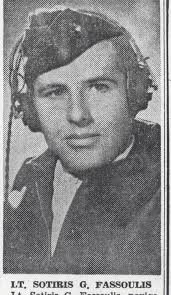
The vice-president of the CIC at the time was an individual known as Satiris Fassoulis. Previously Fassoulis had been a pilot for General Claire Chennault during the war. Chennault was a key figure in the China Lobby and the founder of Civil Air Transport (CAT). CAT would later become the infamous Air America.

When relations between Taiwan and the United States were normalized, the CIC would once again be enlisted. The impetus for this alliance came from a "fact finding" mission launched in 1949 that formalized military relations between the two nations.
"The plan to save Taiwan advanced on 7 November 1949, when privateer William S. Pawley received permission from Secretary of State Dean Acheson to lead a group of retired military officers, headed by Admiral Charles Cooke, to Taiwan to advise the KMT on security affairs. No stranger to political intrigues or the underworld, Pawley own sugar plantations, an airline and a bus system in Cuba, and was linked to Mafia leaders who had investments there too. He was well connected to the espionage Establishment as well: Bill Donovan met with Chiang Kai-shek's defense minister and secret police chief to grease the skids on Pawley's behalf, and William Bullitt in December began raising funds for the so-called Pawley-Cooke Advisory Mission – the lion's share of which was provided by a group of Texas oilman led by right-wing fanatic H. L. Hunt, a onetime professional gambler who, in his younger days, help finance his empire by running a private racing wire."
(The Strength of the Wolf, Douglas Valentine, pg. 78)
William D. Pawley and Admiral Charles Cooke would go on to become luminaries in the American Security Council (ASC), for years the black heart of the defense establishment in the United States. Nominally a think tank and a lobby group, the ASC was also a full blown private intelligence network. Its membership included numerous "former" high ranking military and intelligence officers. Much more in the ASC can be found here. The Texas oil magnet H.L. Hunt was a crucial figure in funding the modern conservative movement. He is also believed to have been a key figure in the Kennedy assassination, as was noted before here.


Pawley (top) and Admiral Cooke (bottom)
As such, the Pawley-Cooke expedition was a crucial alliance between the American national security establishment and the far right. This alliance would later have profound implication for these United States, as was noted before here and here.

There is also much evidence that the Pawley-Cooke expedition would play a crucial role in facilitating the import of KMT opium in the United States. Douglas Valentine would go on to note:
"... the Pawley-Cooke mission in Taiwan, which was funded by ultra Texas oilman like H. L. Hunt, in which, and which, in 1951, was facilitating the CIA-Kuomintang drug smuggling operation that entered the US by crossing the Mexican border at Laredo, Texas?
"There was certainly enough evidence for the Kefauver Committee to take a long look at the Lone Star State. In 1951, Lait and Mortimer had identified Hunt as a professional gambler who ran a private racing wire, which suggests Mafia ties. They had also claimed that the Mafia had 'taken over the age-old racket of running guns across the border,' under the aegis of Carlos Marcello."
(The Strength of the Wolf, Douglas Valentine, pg. 309)
H.L. Hunt
As far as the WCC is concerned, not only did Donovan himself personally intervene on behalf of the Pawley-Cooke mission, but the CIC (a subsidiary of the WCC) provided the mission with everything from gas masks to airplanes.

But in addition to providing military support to the KMT and helping bring the Nationalist Chinese into US Cold War strategy, the WCC also helped them procure a new supply of opium in the aftermath of the Chinese Revolution. Donovan himself was also deeply involved in these efforts, which began even before the end of the Chinese war.
"...With only token support from the Truman administration, the Nationalists' war with the Communist was faltering, and in Thailand a war had erupted between the police and army over the opium trade. Then a registered foreign agent of the Thai government, former OSS chief William Donovan traveled to Bangkok to unite the squabbling factions in a strategic alliance against the Communist. The Nationalist Chinese who served as middlemen in the production and transportation of narcotics from Thailand to Hong Kong, Macao, and other Asian markets, benefited greatly from Donovan's intervention."
(The Strength of the Wolf, Douglas Valentine, pg. 70)
Wild Bill
This intervention became crucial for the survival of the KMT in the aftermath of being completely driven from the Chinese mainland.
"...by 1956, the KMT had been driven from the Chinese mainland and that Chinese production of opium, even in remote mountainous Yunnan, had been virtually eliminated. The disruptions of a world war and revolution had created an opportunity to terminate the opium problem in the Far East. Instead, U.S. covert support for the Thai and KMT drug traffickers converted Southeast Asia, for more than two decades, into the world's major source of opium and heroin.
"The origins of the U.S. interface with these drug traffickers in Thailand and Burma are obscure. They appear, however, to have involved principally four men: William Donovan; his British ally Sir William Stephenson, the organizer with Donovan of the World Commerce Corporation (WCC); Paul Helliwell; and Willis Bird (both veterans of OSS China). After World War II, Sir William Stephenson's WCC 'became very active in Bangkok,' and Stephenson himself established a strong personal relationship with King Rama IX.
"Stephenson recruited James Thompson, the last OSS commander in Bangkok, to stay on in Bangkok as the local WCC representative. This led to the WCC's financing of Thompson's Thai Silk Company, a successful commercial enterprise that also covered Thompson's repeated trips to the northeastern Thai border with Laos, the so-called Isan, where communist insurrection was most feared and where future CIA operations would be concentrated..."
(American War Machine, Peter Dale Scott, pgs. 70-71)
James Thompson
Donovan himself would continue to maintain a strong presence in this region of the world well until the 1950s. In 1953, he appointed US ambassador to Thailand, where he appears to have continued to keep a watchful eye over the opium trade there.


Wetworks

It does not appear that Asia was the only region of the world where Donovan would collaborate with organized crime in anti-Communist activities either. By the late 1940s, the newly founded CIA had become deeply concerned over growing Communist influence in Italy. Specifically, there was an overriding fear that the Italian Communist party would come to power. By now it is well known that CIA provided considerable funds to influence Italian elections in 1948 to prevent this possibility, but there is evidence that even more extreme measures were resorted too.
"One covert and commercial use to which international drug traffickers were put was as a tool in the suppression of communists and labor organizers. In May 1947, for example, Mafioso Salvatore Giuliano and his gang killed eight people and wounded thirty-three in a Sicilian village that had voted for the Communist Party's candidates in elections held four days before. Frank Coppola, from his base in nearby Partinico, reportedly provided Giuliano with the bombs and guns, and was himself 'allegedly financed by former OSS chief William Donovan.'
" 'Coppola was the controller behind the scenes, the maker of Sicilian and Roman deputies,' author Gaia Servadio says in Mafioso, and 'the deus ex machina of the Salvatore Giuliano saga.'
"By 1948, the CIA was so influential in Italy that the leader of its Communist Party, Palmiro Togliatti, charged the US with subverting Italy's national elections. He also charged that reporter Michael Stern (who glorified Giuliano in a series of articles for Time Magazine in 1947) was a spy for William Donovan and China lobby Senator Carl Mundt..."
(The Strength of the Wolf, Douglas Valentine, pg. 76)
Frank Coppola
Earlier, Valentine had indicated that Donovan's work in Italy during the late 1940s was also linked to the WCC, a good possibility given that he had no other known intelligence connections at the time. And while this is all highly speculative, there can be little question that Donovan had had dealings with the Mafia going back to the time of Operation Underworld.

Now, let us step back for a moment. Clearly with its ties to SOFINDUS (and by default, Nazi gold) and the Southeast Asian opium trade, the WCC was clearly well capitalized by the early 1950s via a host of off-the-book sources. This provided a vast, clandestine source of funding for a host of equally clandestine operations. If Donovan's involvement with Coppola in Italy during the late 1940s is any indication, these operations likely included "wetworks."

This is what makes Otto Skorzeny's alliance with the WCC network during the early 1950s even more ominous. While this was no doubt partly related to Skorzeny's access to Nazi gold, there's no question that Skorzeny also had quite the stable of hardened killers at his disposal as well. Combine this with all the covert operations veterans from the OSS and SOE who ended up working with the WCC, and one is left with the specter of a well-funded, corporate version of Murder, Inc.

Otto "Scarface" Skorzeny
This is especially ominous in light of where Donovan was linked to political terror: Italy. Italy was of course one of the first European nations where a stay-behind network was erected. In Puppetmasters, the great Philip Willan alleges that this network was created immediately following the conclusion of the Second World War, well before NATO was established. The fashion and structure of this network shall be noted briefly in the next installment to illustrate the different levels of what is commonly referred to as Gladio in Italy. Hint: There appears to have been more than one Gladio network.

Another European nation that was an early recipient of this largess was France. In addition to a formal stay-behind network, there appears to have been a even more militantly pro-US secret army set up there in the years following the war. And recent evidence suggests that Donovan played a crucial role in these endeavors as well.
"The exact name of the covert group established by General Donovan authorized by U.S. authorities in 1947 is not known. The author has therefore created a name and special acronym unique to this book for ease of presentation and understanding. Henceforth, the author shall use 'Secret Paramilitary Group' or 'SPG' when discussing the hidden covert organization Donovan formed within the World Commerce Corporation. 
"The new anti-Communist operations of which the SPG would eventually be involved went under the code name Rose des Vents (Compass Rose)..."
(The Skorzeny Papers, Ralph P. Ganis, pg. 69)
The possibility of such a network will be explored in much further in the next installment, along with the postwar intrigues that rocked France during the late 1940s. It is likely these events set the stage of the rise of Cercle complex by 1953. And with that I shall sign off for now. Stay tuned dear readers until the next episode.


Sunday, October 14, 2018

Secret Armies and the Origins of the Cercle Complex Part II


Welcome to the second installment in my examination of the origins of the shadowy network variously known as Le Cercle, the Pinay Circle and a host of other names. I've already examined the Cercle complex at length before here, but for those of you just tuning in: Le Cercle is somewhat akin to the far right's answer to the Bilderberg Group. Both organizations were founded in the early 1950s and forged a kind of alliance during the first few decades of their existence. But differences always existed.

Bilderberg chiefly drew its membership from the ranks of international capital and the emerging technocratic class and was heavily dominated by the Anglo-American Establishment. Le Cercle's early backers largely hailed from Continental Europe and were chiefly comprised of members of the old aristocracy and various far right Catholic organizations such as the Sovereign Military Order of Malta and Opus Dei. What's more, while Bilderberg was chiefly a policy coordinating body, Le Cercle went far beyond that, effectively operating as a full blown private intelligence network. As such, it gained early support from the ranks of the Anglo-American intelligence services and by the 1970s a clique of British veterans of the Special Operations Executive (SOE) wielded enormous influence within the network

By the 1970s the Cercle complex became increasingly disillusioned with the Rockefeller-backed policy of detente. David Rockefeller and Henry Kissinger, one time affiliates, had formerly broken with the group by 1980. This was part of a broader break with the Bilderberg network. Le Cercle would throw its extensive intelligence resources behind Margaret Thatcher and later Ronald Reagan, the elections of which formerly reversed course from detente to full blown rollback against the Soviet Union.

Having covered some of the numerous outraged committed by the Cercle complex over the years in a prior series, my purpose here is to explore the possible origins Le Cercle had in what is commonly referred to as Operation Gladio. Gladio was only the name of the Italian component of what was a network spread across Western Europe that the Pentagon and CIA, along with their counterparts in the UK, established in the wake of the Second World War. "Gladio" was essentially a series of stay-behind armies that were set up to wage a guerrilla war against the Soviet Union in the event of an invasion of Western Europe.


Or at least that was the rationalization, anyway. Over the years, extensive evidence has emerged that these stay-behind armies were in fact used to wage campaigns of terrorism within Western Europe to ensure that said states remained within the NATO system. Italy and Belgium in particular faced especially intense terror campaigns in what is known as the Years of Lead and the Bloody Eighties in those respective nations.

There were essentially three organizations for which these stay-behind armies were modeled upon, two of which derived from the Anglo-American intelligence services. One was the above-mentioned SOE while the other was the American Office of Strategic Services (OSS), which was largely based upon the SOE.

The third organization hailed from Nazi Germany and was known as the Reich Main Security Office (RHSA). The RHSA, a component of the SS, was a Byzantine organization that included the dreaded Gestapo, among others. For our purposes here, I am mainly concerned with two departments of the RHSA: Amt VI and Amt VII. Amt VI housed the foreign component of the SD, which was the SS's intelligence service. Within the SD was a detachment known as Amt VI-S, headed by the infamous Otto "Scarface" Skorzeny. Amt VI-S possessed the bulk of Nazi Germany's special operations forces and was used extensively to train stay-behind networks to harass the advancing Allies.

And then there was the mysterious Amt VII, which is often described as the RHSA's "research library." In reality, it appears to have conducted a lot of arcane research into the occult. As the war was winding down, the infamous Italian philosopher and occultist Julius Evola went to work for the RHSA, likely in either Amt VI or VII, but most likely the latter. Evola in turn appears to have became involved in efforts by the Reich to establish of a postwar stay-behind network, likely as an ideological architect.

Evola
Such were the topics discussed in part one of this series. In this present installment I would like to consider these postwar networks in greater depth.


SOFINDUS

Over the years there has been much dispute as to whether there was a well organized network geared toward revving the Reich or a haphazard network thrown together as the war was winding down to spare as many of Nazi hierarchy as possible. The truth appears to lie somewhere in between.

On the one hand, plans for this network do appear to have been rather last minute and geared chiefly towards saving as many of the most notorious Nazis, especially as SS members, as possible. And on the whole, this network appears to have been rather decentralized. And yet, there appears to have been some type of formal hierarchy within this network that drew upon its resources. And as many of the longstanding ODESSA allegations have long maintained, this inner circle appears to have centered around Otto Skorzeny in the immediate decades following the Second World War. But rather than staging a revival of the Reich, Skorzeny and his associates appear to have been enlisted by the Anglo-American defense establishments in their Cold War against the Soviet Union.

Skorzeny
This inner hierarchy that Skorzeny was the figurehead of appears to have derived from a conglomerate called Sociedad Financiera Industrial, better known as SOFINDUS. Unsurprisingly, this company's murky origins are closely linked to the RHSA, and especially the SD.

The genesis of SOFINDUS can be traced to two prior holding companies:the Berlin-bases ROWAK and HISMA of Tetouan, Morocco. Both companies were headed by a German businessman known as Johannes Bernhardt. Bernhardt was not only close to the Nazi regime, but Franco as well. After the Nazi regime opted to support Franco during the Spanish Civil War, Bernhardt was tasked with funneling supplies to the generalissimo. Bernhardt effectively created ROWAK and HISMA for this purpose.


In 1938, ROWAK and HISMA were rolled into one operation, SOFINDUS. From the very beginning, SOFINDUS was close to Nazi intelligence. In The Skorzeny Papers, Ralph P. Ganis notes: "Bernhardt's SOFINDUS intelligence network was manged out of the Reich Main Security Office (RHSA) Section VI, or Foreign Intelligence Service, also known as Ausland-SD" (pg. 149).

But unlike ROWAK and HISMA, which were chiefly concerned with Spain, SOFINDUS had dealings across the world. Ganis goes on to note:
"The SOFINDUS business networks were expansive. In addition to operations in Spain and Morocco, Johannes Bernhardt also oversaw operations in South America (particularly Argentina) and France. One of the most important roles of SOFINDUS was the delivery of vital mineral resources from Spain, Morocco, and Portugal to the Third Reich. Foremost in this operation was wolframite (tungsten), a mineral that was vital in the production of armor-piercing ammunition. The SOFINDUS delivery of wolframite had to be protected by Germany at all costs. The war could not be fought without this critical mineral.
"Through the SOFINDUS network, Nazi intelligence services carried out espionage, sabotage, and even assassinations. SOFINDUS assassination operations are referenced in declassified documentation involving SS Lt. Col. Walter Mosig..."
(The Skorzeny Papers, Ralph P. Ganis, pgs. 149-150)
The above-mentioned Mosig is himself quite an interesting figure. He left SOFINDUS in 1945 as the Reich was coming to an end and would fall into the hands of US authorities in 1946. In  February of 1947 Mosig was "interrogated" US Army Counterintelligence (CIC) Officer Arnold M. Silver. Silver, who would sign on with the CIA in 1948, had also interrogated Otto Skorzeny and is widely believed to have been the man who recommended his use to the US intelligence community. It is likely Silver did the same for Mosig, as both "former" SD men managed to escape from US custody after being interrogated by Silver. In 1948, Mosig would turn up in Argentina, working for the successor of SOFINDUS. But more on that in a moment.

On the topic of Arnold Silver, it is also interesting to note that after he was drummed out of the CIA in 1977, he signed on with Brian Crozier's 6I intelligence network. As was noted in the prior installment, Crozier was very close to many of the former SOE men who signed on with Le Cercle in the 1970s. His 6I network would become a key intelligence network for Le Cercle by the late 1970s. According to David Teacher in his long suppressed Rogue Agents, Silver is known to have attended Le Cercle meetings in 1982 but it is unknown if he became a member. The significance of Silver's connection to SOFINDUS via Skorzeny and Mosig will be more evident in a future installment.

Before moving along, a note should be made concerning SOFINDUS's resources: they appear to have been quite extensive, to put it mildly. Indeed, SOFINDUS appears to have been one of the key institutions used to launder gold out of Nazi Germany:
"... It is worthwhile to note that the Allies had computed the amount of gold coming into Spain from Nazi Germany during the period of the war as more than 122 tons (conservatively; other estimates put it at more than 200 tons). These calculations were based on records obtained from Sofindus and from trucking manifests out of Germany to Spain. The final disposition of this gold is unknown, but it would be worth more than US$100 million in 1945 dollars."
(Ratline, Peter Levenda, pg. 60)
Today, this gold would be worth in the billions. Clearly then it was no insignificant amount of funding SOFINDUS had its disposal by 1945, when these shipments were at there peak. SOFINDUS would seemingly put these resources to good use in one particular project the conglomerate became deeply involved in as the war was drawing to a close.


Ratlines

When key figures in the SS began drawing escape plans for the aftermath of the Reich's inevitable defeat, it was the SD that they turned to devise escape routes. And it would seem that the SD in turn made good use of the SOFINDUS network in creating what has become known as the "Ratlines." As such, it is hardly surprising then to find that the earliest Ratlines led from Spain to Argentina, where various Nazi war criminals could flee even deeper into South America, depending upon the extent of their crimes. 

Reportedly the first such Ratline was established by a Buenos Aires-born Frenchman known as Charles Lesca. During the 1930s Lesca had been most active in various far right movements in France, most notably Action Francaise. Lesca was an asset of the SD and appears to have been recruited even before the Nazi conquest of France. Afterwards, Lesca would have well placed contacts in the Vichy regime, most notably President Pierre Laval.

Charles Lesca
As the war wound down, Lesca became the figurehead of a group of French collaborators who ended up in Spain to avoid arrest. Lesca was tasked with smuggling them, along with various German SD men, to Argentina. Lesca and his associates frequently met at a German restaurant in Madrid known as Horcher's. This establishment was a key point of contact for various Nazi intelligence personnel in Spain and was likely set up by the SOFINDUS network. 
"The group often gathered at the exclusive Horcher restaurant on Alfonso XII Street, installed there in 1943 by Berlin restaurateur Otto Horcher with the help, according to American intelligence, of Walter Schellenberg. To open his Madrid branch Horcher allegedly transferred 250,000 Swiss francs out of Germany to Nazi diplomats in Lisbon and later converted the Swiss notes to pesetas on the black market, an exercise in money-laundering allegedly organized by another Schellenberg agent who ended up in Argentina, Walter Eugen Mosig. Schellenberg reportedly also helped Horcher transfer furnishings and silverware from Germany. The original Horcher restaurant on Berlin's Kurfurstendamn had been a regular meeting place for the Third Reich's hierarchy from Goring to Himmler. Unknown to most clients, it was planted the secret microphones to capture the conversations of foreign visitors..."
(The Real ODESSA, Uki Goni, pg. 74)

Walter Schellenberg was the head of the RHSA VI, the foreign intelligence branch of the SD. As was noted above, this was same branch of the RHSA that oversaw the SOFINDUS network, which Mosig was an agent of by 1942. As such, SOFINDUS likely played a role in establishing Horcher's in Spain, which in turn was clearly used as a cover for intelligence operations, most notably the first Ratline to Argentina. That it was established by French collaborators is most significant, as we shall see.

Before moving along, its also interesting to note that Lesca first arrived in Spain (1944) around the same time Skorzeny was training French collaborators there in sabotage and assassinations operations with eye towards infiltrating them back into France in the wake of the liberation. This was noted in the first installment of this series.

A much more tangible connection between SOFINDUS and the Ratlines comes in the form of Carlos Fuldner, another Argentina-born SD asset. Fuldner was born to German immigrants in Buenos Aires, but he and his family returned to Germany in 1922, just as the Nazi Party was starting to take off. Fuldner would join the SS in 1932 at the age of 21. Bizarrely, he was then booted out of the SS in 1936 as allegations of fraud and disloyalty hoovered around him. The charges were cleared up in 1937 and by '38 he attempted to reenlist in the SS. The next seven years of his life are shrouded in mystery.
"... He apparently had a close connection with Spain, serving as a lieutenant and German-Spanish interpreter in the Blue Division, the corps of 20,000 soldiers sent by dictator Francisco Franco to fight alongside the Nazis on the Russian front. He returned frequently to Berlin. At some point he joined the huge Nazi corporation Sofindus, which controlled widespread German business interests and provided cover and financing for the Nazi agents in Spain. True to character, Fuldner created trouble for himself even there and was dismissed for embezzlement. In the last months of war he traveled back and forth between Madrid and Berlin. An arrival by plane in Madrid was registered in 26 November 1944, then a return to Berlin in late December.
"But by that crucial Monday in March 1945 when he climbed down the German plane's stepladder in Madrid, Fuldner seems to have been restored to his former rank. He was now on a 'special mission' for Himmler's secret service for which he carried both his German and Argentine passports, and to which he would add the particular brand of financial chicanery which had distinguished his career. In the coming years, many former Reich officials and some of the worst Nazi criminals, including Adolf Eichmann, would owe their lives to the Argentine SS captain. Was Fuldner's mission the result of a plan laid by Schellenberg and Himmler? There is precious little documentation available even today about Fuldner's activities in Madrid in the immediate postwar period, but his later activity suggests high-level Nazi involvement."
(The Real ODESSA, Uki Goni, pg. 69)
It was Fuldner more than anyone else who managed to enlist Juan Peron, the Argentine dictator, to turn his country into a haven for Nazi war criminals. As was noted above, Eichmann and many of the most notorious Nazis who fled to South America were aided by Fuldner.

Peron
When examining Fuldner's career, there is a strong hint of sheep dipping. After being booted out of the SS he would apparently spend much time traveling in the late 1930s and early 1940s, frequently visiting South American and even the United States. He then ends up serving in Franco's Blue Division and employed by SOFINDUS.

As was noted above, the conglomerate was effectively a front for the SD and was used to smuggle tremendous amounts of gold from Nazi Germany to Spain. And here is Fuldner, allegedly booted out of SOFINDUS for "embezzlement" shortly before he was brought back into the SS and SD in 1945, apparently with high level support amongst the Nazi hierarchy.
Carlos Fuldner
This researcher suspects that Fuldner was serving as an agent of the SD for much of this time, and most certainly during his time with SOFINDUS. His dismal from the company was likely a ploy to confuse Allied intelligence as to Fuldner's actual mission. Curiously, there are also reports that Fuldner was linked to the Nazi "Werwolf" efforts at war's end. As was noted in the prior installment, Otto Skorzeny also had some involvement in these stay-behind efforts.

And that brings us to Scarface. Skorzeny does not appear to have had direct involvement with SOFINDUS during the war, but likely made use of its assets. After all, both SOFINDUS and Skorzeny's commandos were the control of Amt VI and SOFINDUS would have provided the kind of cover necessary for covert operations.

It was not until after the war the Skorzeny officially began to take an active role in SOFINDUS. In The Skorzeny Papers, Ralph Ganis notes that Skorzeny partnered with SOFINDUS founder and "former" SD agent Johannes Bernhardt in business venture in Spain shortly after Scarface arrived in Madrid in 1950. At the time, Bernhardt was still involved with the SOFINDUS network as an 'adviser.'

Around the same time, Skorzeny would emerge as a key figure in the Ratlines. H. Keith Thompson, an American recruited into the SD while allegedly still a teenager who later aided the escape routes in the postwar years, emphasized Skorzeny's importance to journalist Martin A. Lee: "Skorzeny was not an intellectual. He was a get-it-done type, a soldier. Very daring. He would take on anything. He played a significant role after the war in the escape routes" (The Beast Reawakens, Martin A. Lee, pg. 86).


Meet the New Boss

With its ties to Skorzeny, Mosig, Fuldner and likely Lesca, it seems clear that SOFINDUS was crucial in establishing the Ratlines in Spain immediately after the war. Other organizations, most notably the Vatican, would later pick up the slack, but SOFINDUS appears to have been the trailblazer. But smuggling Nazi war criminals does not appear to be the extent of SOFINDUS network's intelligence efforts in the postwar years.

But to put these activities into context, we must first consider who gained control of SOFINDUS after the war:
"...Several months before the end of the war Johannes Bernhardt had secretly contacted British Intelligence in an attempt to strike a deal with the Allies to turn over the SOFINDUS network. The Spanish government, which had investments in the company and had worked closely with German Intelligence, was also involved in this secret arrangement.
"As a result of these clandestine negotiations, SOFINDUS assets were eventually taken over by the Allied Control Commission (ACC) as soon as the war ended. This was a joint operation in which an American corporate president was placed in charge of SOFINDUS assets, with a British vice-president. Also involved in the transfer of assets was the Spanish government, which negotiated control in Spanish industry tied to SOFINDUS. Under the agreement, the former SOFINDUS network was rolled up into a government-controlled organization called Instituto Nacional de Industria (National Institute of Industry) or INI, under Juan Antonio Suanzes.
"The acquisition was announced publicly but details were not given, and the takeover of SOFINDUS was conducted in great secrecy. In one clever move, U.S. and British Intelligence had acquired the entire former SS intelligence network embedded in SOFINDUS. Subsequently, SOFINDUS companies were revamped and incorporated into the World Commerce Corporation (WCC) formed by General William Donovan and operated by Frank Ryan and Ricardo Sicre..."
(The Skorzeny Papers, Ralph P. Ganis, pgs. 147-148) 
Ah yes, the good old WCC. That organization is quite a story unto itself, one that I will take up in the next installment. Until then dear readers, stay tuned.